DEWA charts path to clean energy with AI-driven innovation and solar expansion
H.E. Saeed Mohammed Al Tayer reveals how Dubai’s utilities provider is leveraging public-private partnerships, digital transformation, and the world’s largest single-site solar park to exceed its 2030 clean energy targets
As Dubai accelerates its transition to a sustainable energy future, the Dubai Electricity and Water Authority (DEWA) is emerging as a global benchmark for utility innovation.
Under the leadership of H.E. Saeed Mohammed Al Tayer, MD & CEO of DEWA, the organization has transformed ambitious policy goals into tangible results by expanding the Mohammed bin Rashid Al Maktoum Solar Park to over 8,000MW by 2030, achieving world-record low solar tariffs through competitive tenders, and becoming the first utility globally to integrate Microsoft 365 Copilot across its operations.
Al Tayer also discusses how DEWA is translating the Dubai Clean Energy Strategy 2050 into measurable milestones, the lessons learned from attracting over AED 43 billion in private investment, and the critical role of artificial intelligence (AI) in building a resilient, future-ready energy ecosystem that positions Dubai as a leader in the global green economy.
The CEO also shares how DEWA is committed to building a robust ecosystem that supports innovation, sustainability and meets Dubai’s growing energy needs. He explains how, by weaving together clean energy, smart infrastructure and collaborative partnerships, DEWA is positioning Dubai as a benchmark for green mobility and climate resilience.
DEWA raises Mohammed bin Rashid Al Maktoum Solar Park’s 2030 capacity target by 60 percent
How does DEWA translate the Dubai Clean Energy Strategy 2050 and the Dubai Net-Zero Carbon Emissions Strategy 2050 into actionable milestones, and what do you consider to be the key pillars driving progress towards achieving 100 percent clean energy by 2050?
DEWA’s journey to realize Dubai’s clean energy ambitions is anchored in a holistic culture that fuses technology, policy, collaboration and measurable progress. Guided by the wise leadership of His Highness Sheikh Mohammed bin Rashid Al Maktoum, Vice President and Prime Minister of the UAE and Ruler of Dubai, we have transformed the Dubai Clean Energy Strategy 2050 and Net-Zero Carbon Emissions Strategy 2050 into a series of actionable milestones.
These include scaling up the capacity of the Mohammed bin Rashid Al Maktoum Solar Park, deploying advanced energy storage and maintaining leading results in efficiency and reliability.
Our approach is comprehensive, combining large-scale renewables, digitized smart grids and the integration of energy systems with water management and mobility solutions. Artificial intelligence (AI), the Internet of Things (IoT) and automation are embedded throughout our operations, enabling real-time optimization and resilience.
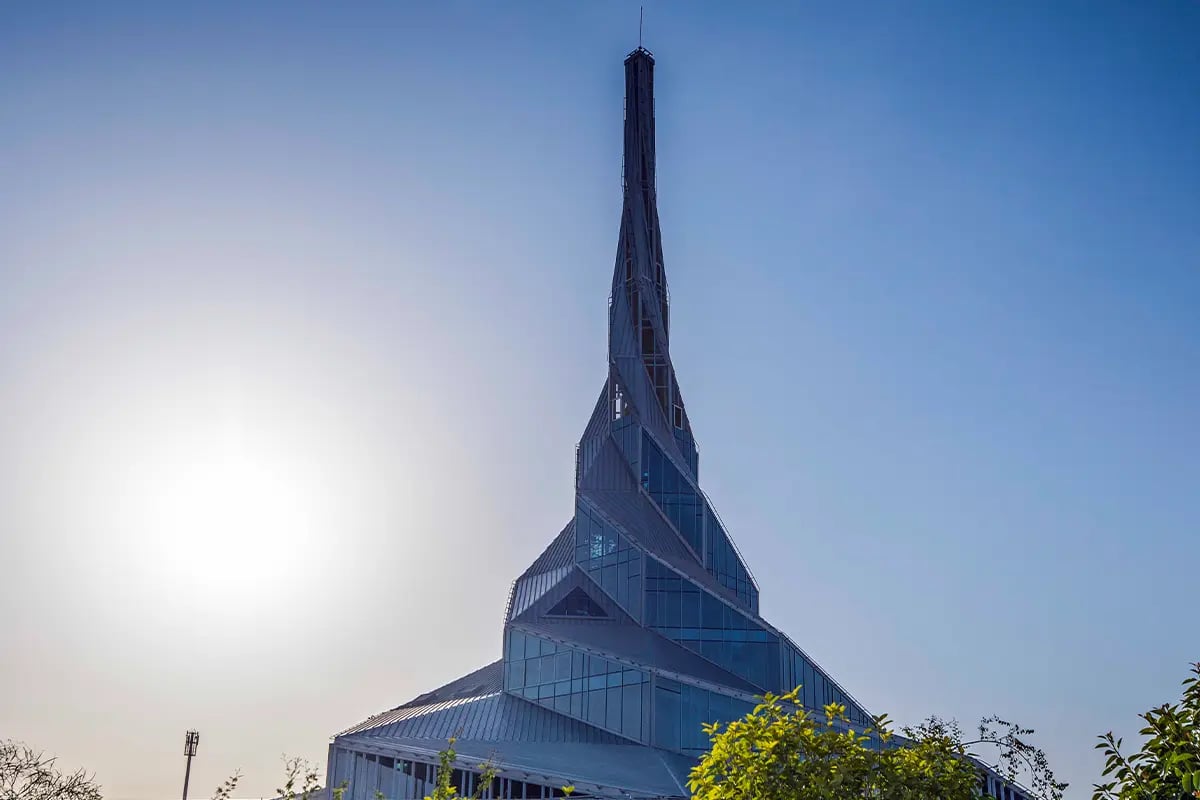
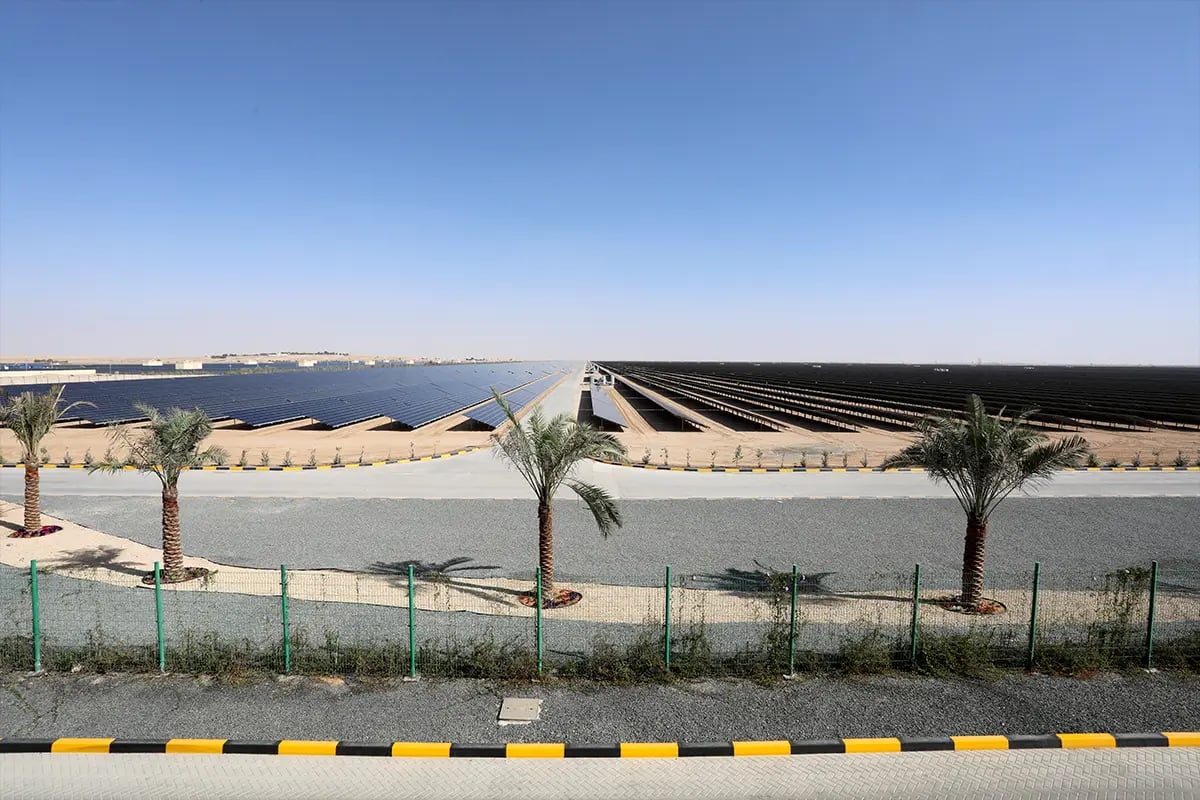
The Mohammed bin Rashid Al Maktoum Solar Park, the world’s largest single-site solar facility developed under the independent power producer (IPP) model, is central to this transformation.
Its current capacity of 3,860MW is set to surpass 8,000MW by 2030 (up from the originally planned 5,000MW), raising clean energy’s share in Dubai’s energy mix to 36 percent (from the original target of 25 percent) and reducing annual emissions by over 8.5 million tons (compared to the initial estimate of 6.5 million tons).
A cornerstone of our strategy, which is considered a very important pillar in our transformation, is the cultivation of knowledge and talent through robust partnerships with leading international universities and the implementation of advanced education programs.
DEWA’s Research and Development Centre has published over 300 research papers on topics ranging from solar energy and water to energy efficiency, smart grid integration, space and the Fourth Industrial Revolution.
These publications play a vital role in advancing specialized scientific knowledge and enriching both the local and international research communities. Our collaborations with institutions such as Stanford University and Khalifa University, alongside our professional training courses and youth-focused initiatives, ensure that Dubai’s energy transition is supported by a pipeline of skilled researchers, engineers and innovators.
By leveraging AI-driven grid management, pioneering hydrogen solutions, and robust public-private partnerships, we are building a resilient, future-ready energy ecosystem. Our journey is defined by relentless innovation and a steadfast commitment to making Dubai a global benchmark for sustainable urban energy.
What lessons from the development of the Mohammed bin Rashid Al Maktoum Solar Park can be applied to other large-scale renewable projects globally, and how does DEWA plan to maintain its leadership in solar energy innovation?
The Mohammed bin Rashid Al Maktoum Solar Park stands as a global model for large-scale renewable energy projects. Its success is rooted in visionary leadership, robust public-private partnerships and a relentless focus on innovation.
The IPP model has enabled DEWA to attract world-class expertise and investment, driving down costs and accelerating deployment. DEWA has attracted more than AED 43 billion of independent water and power producer (IWPP) model projects (7 awarded projects).
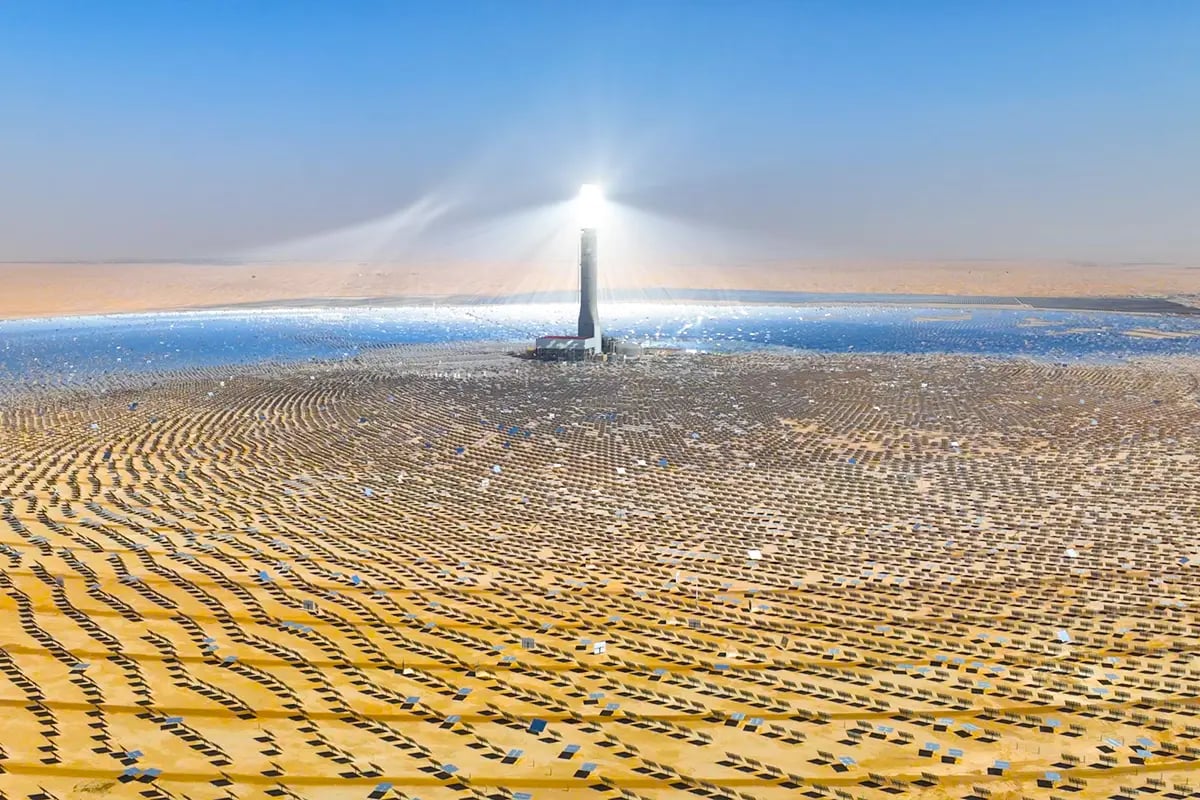
A key lesson is the value of hybrid engineering – leveraging several technologies to overcome intermittency and maximize output. The solar park’s integration of concentrated solar power (CSP), photovoltaic panels and the world’s largest thermal storage has set new benchmarks for reliability and operational flexibility.
The fourth phase, for example, combines 600MW of CSP, 100MW from a solar tower and 250MW from PV panels. The solar park also boasts the largest thermal storage capacity globally.
To maintain its leadership, DEWA continually benchmarks itself against global best practices. We ranked first across 12 global key performance indicators (KPIs), including the world’s lowest electricity interruption rates and line losses, as well as the highest levels of customer satisfaction and institutional ability in anticipating and adapting to future challenges.
In 2024, DEWA recorded the world’s lowest electricity customer minutes lost (CML), at just 0.94 minutes per customer, significantly outperforming leading European Union utilities, which average about 15 minutes.
DEWA successfully reduced electricity line losses from transmission and distribution networks to just 2 percent, compared to around 6-7 percent in Europe and the US. Similarly, water network losses have been brought down to 4.5 percent, compared to around 15 percent in North America.
These milestones reflect our relentless pursuit of operational excellence and our commitment to harnessing disruptive technologies for the benefit of Dubai and beyond.
The solar park’s role as a living laboratory that hosts researchers, students and policymakers ensures that knowledge is shared and innovation is sustained.
DEWA’s commitment to R&D is evident in its partnerships with leading institutions and its investment in emerging fields like green hydrogen. The park’s Green Hydrogen project, the first of its kind in the MENA region, exemplifies how pilot initiatives can catalyze broader industry transformation.
By empowering the next generation of engineers and scientists, DEWA ensures that its leadership in solar innovation is both sustainable and inclusive.
As we look ahead, our strategy is to remain at the forefront of technological advancement, global collaboration and talent development, ensuring Dubai’s continued role as a global hub for clean energy.

How have public-private partnerships and competitive tenders contributed to DEWA’s ability to achieve world-record low solar tariffs, and what future opportunities do you see for collaboration in the energy sector?
DEWA adopted and developed an innovative independent water and power producer (IWPP) model based on global best practices and experiences from developed countries. This model was designed to meet the specific requirements of the Emirate of Dubai and its legislative and technical environment.
DEWA adopted a sophisticated partnership model to achieve integrated energy and water technology solutions. It provided its private sector partners with the necessary support to streamline procedures and expedite the implementation of energy and water projects in Dubai, aligning with the emirate’s strategies.
DEWA has already shifted away from the traditional Engineering, Procurement, and Construction (EPC) model for power and water production projects, moving towards the IWPP model.
DEWA has invited qualified companies and consortiums to submit proposals for the seventh phase of the solar park. This phase will add 2,000 MW from photovoltaic solar panels and include a 1,400MW battery storage system with a six-hour capacity, providing a total storage capacity of 8,400 megawatt-hours. This makes it one of the world’s largest solar-plus-storage projects.
DEWA also adopted the independent water producer (IWP) model for the Hassyan desalination plant, the world’s largest solar-powered desalination plant and DEWA’s first IWP project.
DEWA’s approach to public-private partnerships and competitive tenders has been pivotal in driving down the cost of solar energy and accelerating the adoption of renewables in Dubai. By leveraging the IPP model, DEWA has attracted leading global players, fostering a competitive environment that incentivizes innovation and efficiency. Transparent tendering processes ensure that only the most advanced and cost-effective solutions are selected, resulting in some of the world’s lowest solar tariffs.
As DEWA aims to be the world’s first AI-native utility, what are the key opportunities in integrating AI, IoT, and blockchain into core operations, and how do you measure success in digital transformation?
Our digital transformation journey is redefining the utility sector, positioning DEWA as a pioneer in the integration of AI, IoT and blockchain across our operational and service landscape.
This is in line with the vision of His Highness Sheikh Mohammed bin Rashid Al Maktoum for the UAE to be a global leader in AI adoption to accelerate government progress.
Our corporate agility initiatives are central to this ambition, fostering a culture of rapid adaptation and continuous improvement. By empowering teams to experiment and swiftly implement new technologies, DEWA ensures the seamless integration of digital solutions across its operations.
DEWA’s AI journey began in 2017 with the launch of virtual employee Rammas, and the organization continues to enrich its services with AI-powered technologies across all its core operations.
DEWA’s virtual employee Rammas, powered by OpenAI’s ChatGPT technology, offers 11 transactional services, including easy pay and DEWA Store offers. It also provides multilingual support around the clock across DEWA’s various channels, helping customers with inquiries, completing transactions and providing service updates (having answered more than 11.4 million inquiries since launch up to the end of 2024).
DEWA has also adopted Microsoft 365 Copilot and Security Copilot, becoming the world’s first utility and government organization in the UAE to empower its employees with generative AI tools.
This has boosted efficiency, accelerated performance and enhanced cyber security. The opportunities are vast: Predictive maintenance, real-time grid optimization and enhanced customer engagement are just a few examples of how digitization is driving operational excellence.
AI and IoT enable DEWA to process millions of data points daily, ensuring optimal performance and rapid response to changing conditions. The Smart Grid Program, which has replaced all conventional meters with smart devices, is a central pillar of this transformation.
At present, we have installed about 2.4 million smart meters, which provide customers with detailed insights into their consumption habits. This empowers them to monitor and optimize their electricity and water use with greater efficiency.
With the rapid expansion of the EV Green Charger network, what strategies is DEWA employing to support the UAE Green Mobility Strategy 2030, and how do you see the future of electric mobility evolving in Dubai?
DEWA’s EV Green Charger initiative is a cornerstone of Dubai’s strategy to become a global leader in sustainable mobility. We see the evolution of mobility not merely as the rise of self-driving electric vehicles (EVs) but as a shift towards smarter, greener solutions.
By integrating clean energy generation, smart grid management and digital platforms, DEWA is enabling the seamless adoption of EVs across the emirate.
Our approach combines infrastructure expansion, regulatory innovation and public-private partnerships. The EV Green Charger initiative, in collaboration with our partners, has established a network of more than 1,500 charging points, delivering clean energy for over 211 million kilometers of EV travel.
The backbone of Dubai’s electric vehicle charging infrastructure is a seamless integration of the Mohammed bin Rashid Al Maktoum Solar Park, Shams Dubai and our advanced Smart Grid Strategy. The solar park and Shams Dubai rooftop systems feed renewable electricity directly into a digitally enabled grid, delivering reliable power to charging points citywide.
Thanks to the Smart Grid’s automated decision-making and real-time responsiveness, we can meet the growing energy demands of EVs without compromising grid stability.
This synergy gives DEWA the confidence to expand our EV network, knowing that each new charging station is powered by a robust, clean and intelligently managed energy ecosystem — one that truly reflects Dubai’s vision for smart, sustainable mobility.
In 2024, DEWA introduced a Regulatory and Licensing Framework for EV charging infrastructure, opening the market to private sector operators and fostering competition. The goal is to ensure that 50 percent of vehicles on Dubai’s roads are electric by 2050.
Our digital platforms, including the DEWA smart app and website, provide seamless user experiences, making it easy for residents and visitors to access charging services.
The green data center at the Mohammed bin Rashid Al Maktoum Solar Park, powered by solar energy and the largest of its kind globally, provides the digital backbone for Dubai’s EV charging network. We also promote EV adoption through education and partnerships with government and private sector stakeholders.
Looking ahead, the future of electric mobility in Dubai is dynamic and inclusive. At DEWA, we are committed to building a robust ecosystem that supports innovation, sustainability and meets the needs of the Dubai community.
By weaving together clean energy, smart infrastructure and collaborative partnerships, DEWA is positioning Dubai as a global benchmark for green mobility and climate resilience.