
This day in history: Cheney City Council reversed course on nuclear project. Spokane Valley fruit packing plant destroyed before completion
From 1976: In reaction to a “sizable public protest,” the Cheney City Council reversed an earlier decision to participate in the Washington Public Power Supply System’s two proposed nuclear power plants.
A crowd of about 150 – nearly all supporting a repeal – showed up at the City Council meeting. They were opposed to the project’s costs and other uncertainties.
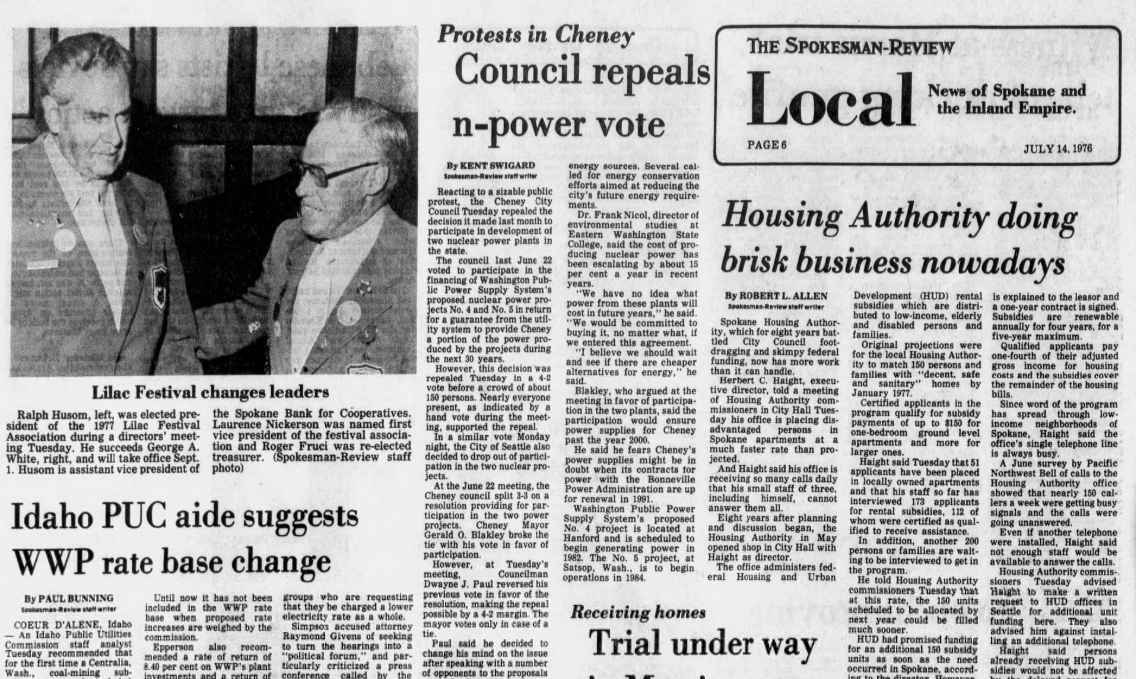
The council had originally voted 4-3 to participate in the nuclear projects. One council member reversed his vote after speaking with a number of the opponents.
The Cheney council was not alone in dropping out of the projects. The Seattle City Council had also just voted to cancel its participation.
Nobody knew at the time, but the trouble was just beginning for the ill-fated Washington Public Power Supply System.
From 1926: Nothing but ashes remained of E.H. Stanton’s under-construction fruit-packing plant north of Opportunity in Spokane Valley.
A fire tore through the building, leaving only the “still-glowing embers” and a “skeleton mass of twisted refrigerator pipes.”
Construction of the plant had begun in February and was scheduled to be completed the following January. The loss was estimated at $125,000.
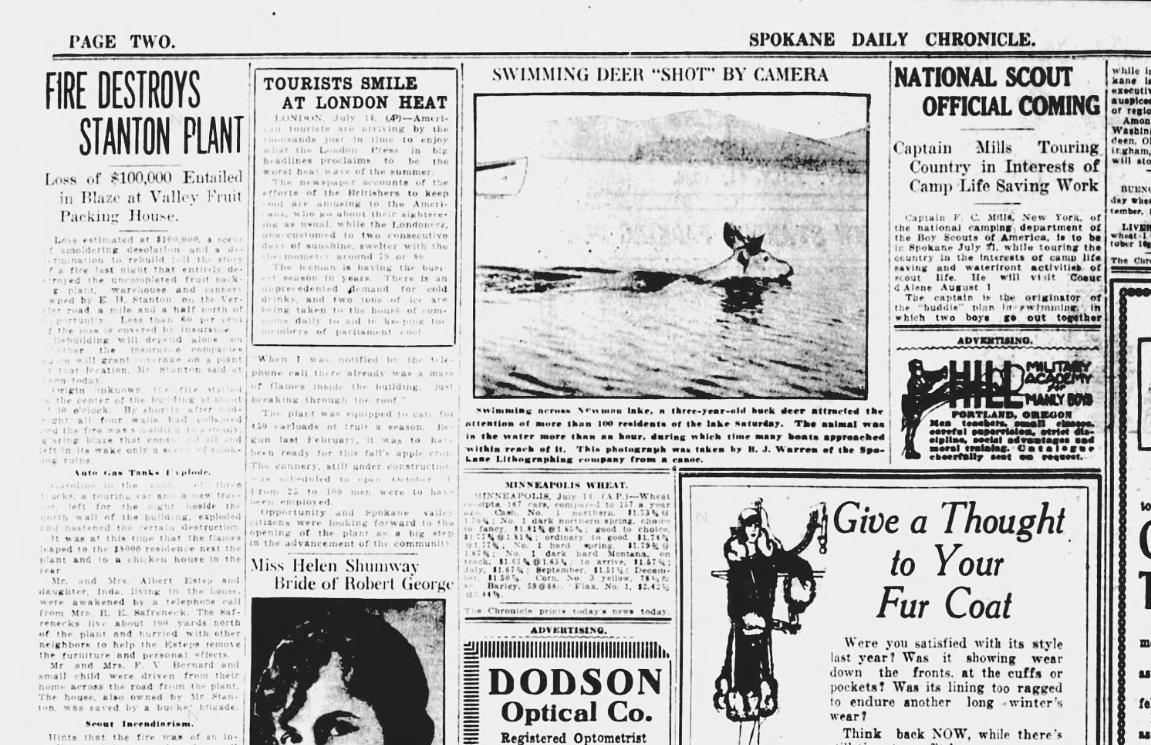
The fire, of unknown origin, started in the center of the building at about 10 p.m. Within two hours, all four walls had collapsed.
“I know of no enemies who would wish to harm me,” said Stanton. “It’s a mystery to me.”
A house across the road was “saved by a bucket brigade.”