
Cummins Built One Engine Block That Runs On Diesel, Natural Gas, Or Hydrogen
Imagine the panic at the pump, once you realize that you’ve accidentally put diesel into your gasoline-powered vehicle. Now, imagine an engine that simply does not care what sort of fuel you put into the tank. That’s the magic of the revolutionary Cummins X15N engine. It boasts something called HELM architecture, short for “Higher Efficiency, Lower Emissions, and Multiple Fuels”.
As it stands now, the X15N can take diesel, natural gas, or hydrogen fuels. Cummins has already put the X15N through more than 1.5 million miles of real-world testing across several trucks and multiple total fleets. Even major operators, like Walmart and UPS, have got in on the action. The basic idea behind the mill is, rather than produce an all-new engine every time heavy industry changes its mind about a certain fuel, why not just make an engine that can take multiple types?
Instead Of Building Three Engines, Cummins Built One Flexible Foundation
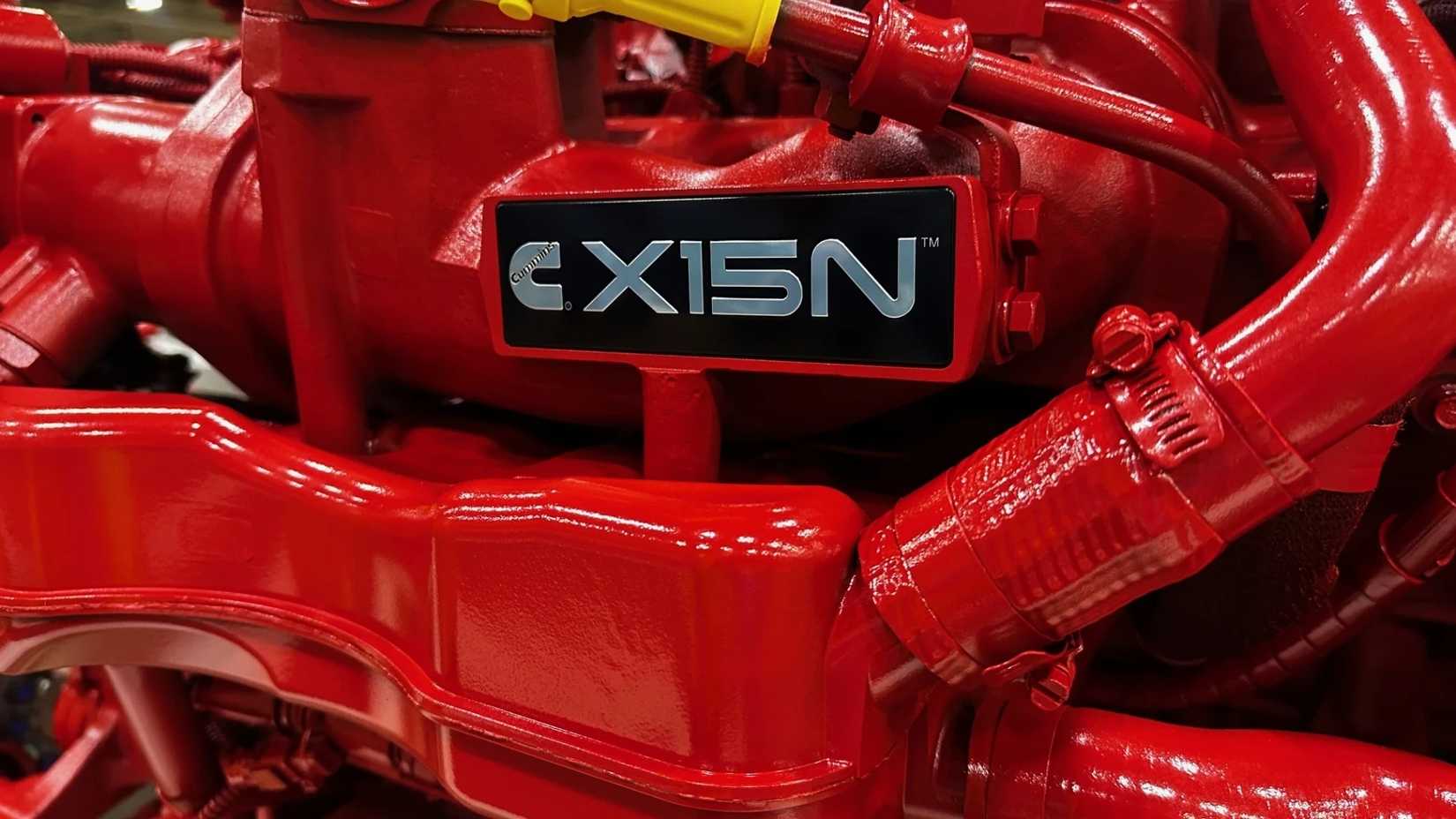
The crux of the X15N’s multi-fuel magic lies in its HELM architecture, as producing an engine that can run on multiple fuels isn’t exactly easy. For one thing, diesel combustion differs greatly from natural gas combustion, and hydrogen fueling is exceptionally finicky to get right. Despite those three fuels not playing nice with one another, Cummins decided to create a single engine that could use them all anyway.
The X15N makes use of 15 liters of displacement total, so don’t expect the mill to be found under the hood of your Ford Ranger any time soon. When called upon, the mill can produce up to 500 horsepower and a whopping 1,850 pound-feet of torque without skipping a beat. As one could imagine, with a displacement and torque figure as high as the X15N’s, it’s designed specifically for heavy-duty use.
In the same engine family, Cummins has also created the X15 diesel. Because it doesn’t have to worry about utilizing multiple fuels, the X15 diesel can pump out 605 hp and 2,050 lb-ft of torque. The new X15N, while closely related to the diesel-only variant, wasn’t created to try and dethrone the X15 diesel. Instead, Cummins saw a major opportunity within the X15’s existing architecture.
But does the X15N actually perform on these fuels in the real world, or is this a lab-only promise?
The X15N Shows Us That Natural Gas Can Power More Than Just Stoves And City Buses
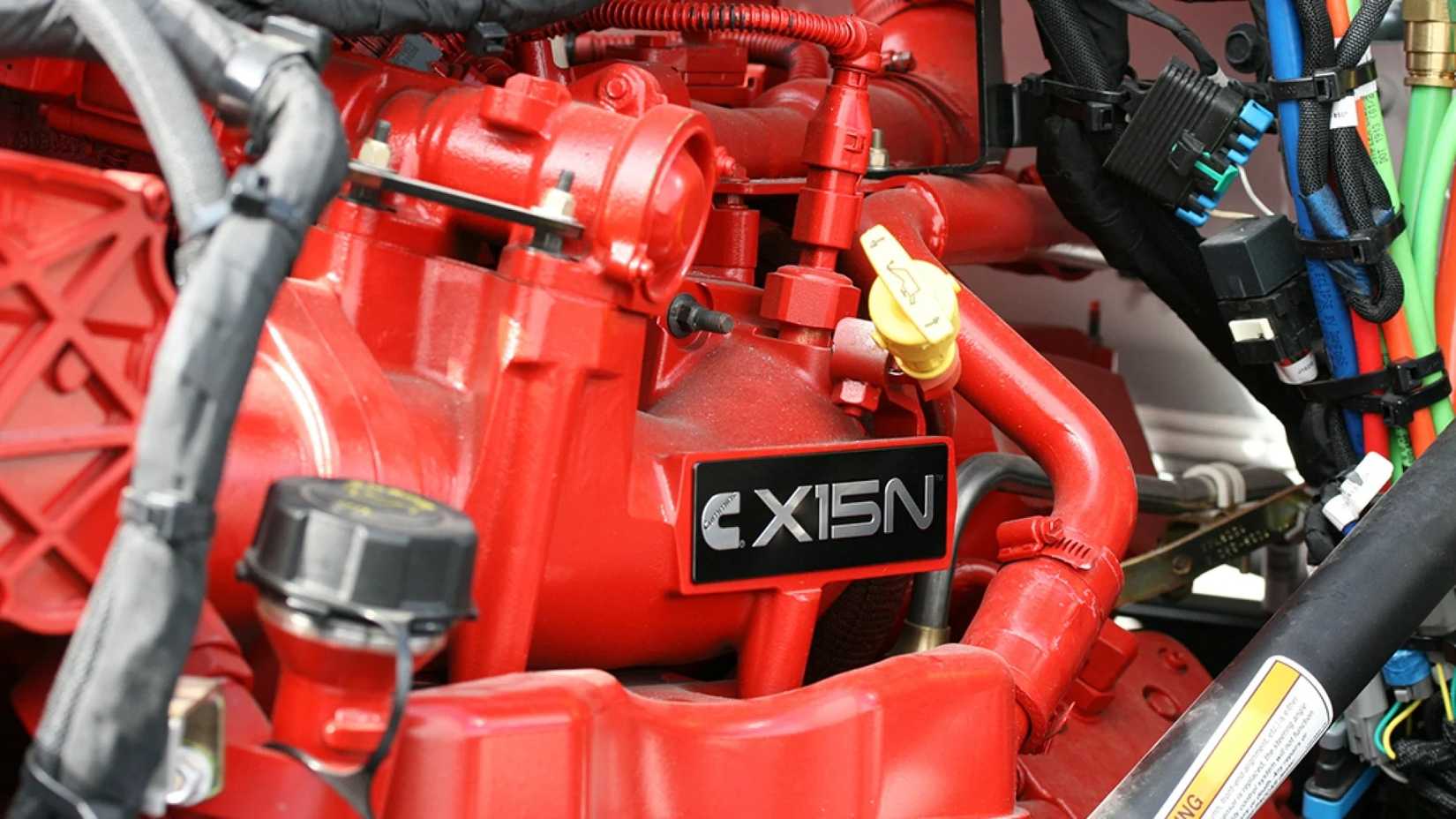
The X15N is responsible for bringing natural gas to the forefront of heavy-duty applications, rather than leaving it relegated to buses and converted passenger cars. Despite natural gas being slightly less powerful as a fuel than diesel, the X15N can still produce its full power output on natural gas. The X15N is also 10% more fuel efficient than the Cummins ISX12N, another natural gas-powered mill. And, it manages to achieve a 50 mg NOx certification, meaning it meets 2024 EPA and CARB emissions requirements.
In order to ensure the X15N was actually up to snuff, Cummins subjected it to over 1.5 million miles of testing prior to its release. The company outfitted a total of 24 trucks across 16 fleets with the motor, and sent them off with reportedly tough requirements to fill, including high-altitude hauling, steep-grade towing, and long-distance highway cruising.
Both Walmart and UPS have been major champions of the engine and were among the first involved when it entered its real-world testing phase. Currently, UPS operates a single test mule, whereas Walmart operates five total. Both companies’ involvement in the program points to a much larger picture: the Cummins X15N is much more serious than a simple laboratory experiment. The engine appears to have a strong future ahead.
Reinforcing the point is Freightliner’s recently announced rollout of X15N-powered semi trucks for the Cascadia model’s fifth generation. At this point, the X15N has officially moved away from test-mule drudgery and certification red tape. The engine’s natural gas capabilities have been thoroughly tested, proven, and now applied to production semi trucks.
Natural Gas Is Renewable, Making The ICE Survival Argument More Interesting
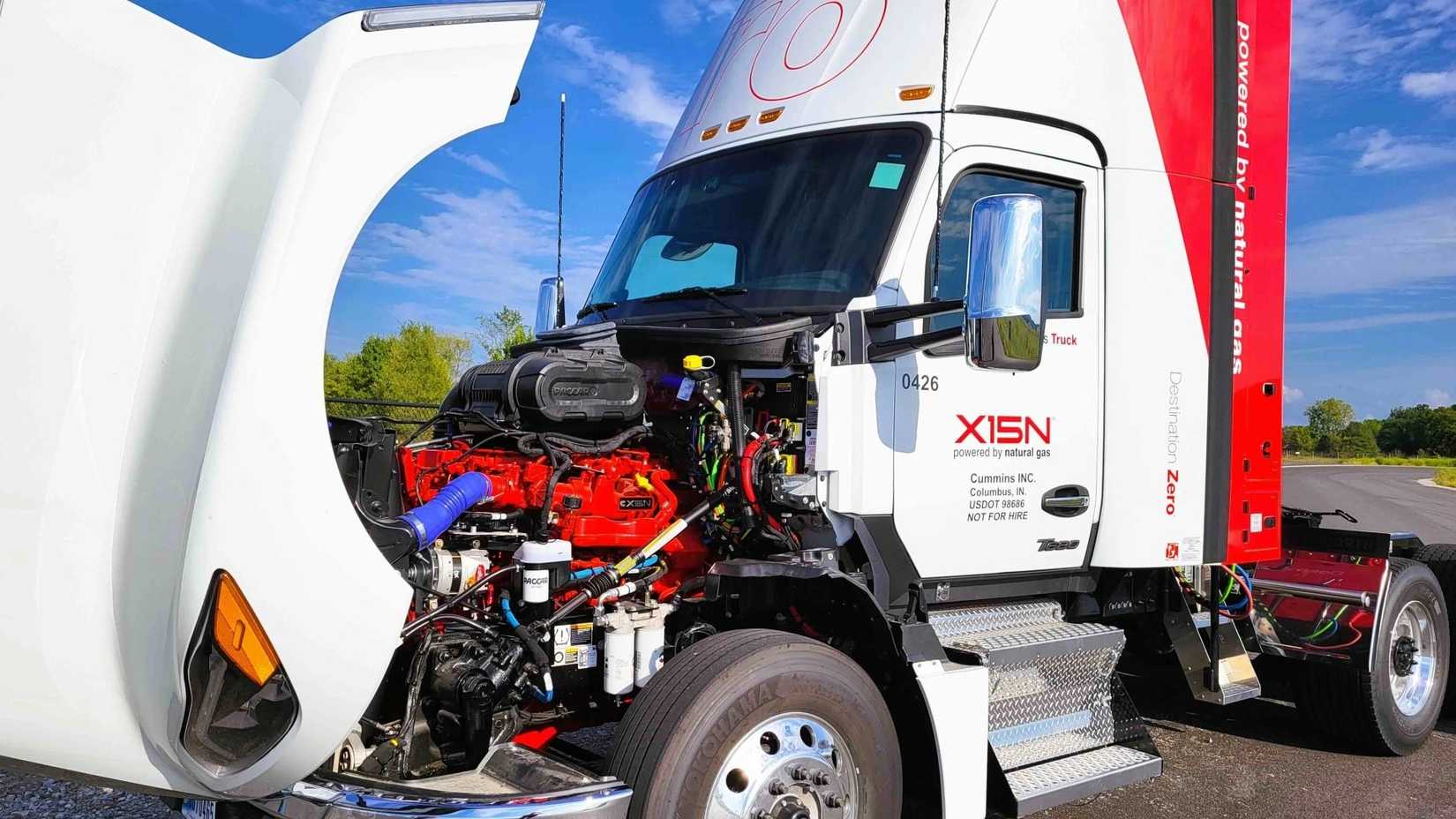
Not all natural gas is the same, and some is specifically produced for use in engines. To this end, the Cummins X15N is designed to utilize renewable natural gas, or RNG. According to Cummins, the X15N can officially achieve sub-zero well-to-wheel carbon emissions when operating on RNG.
There’s an important distinction to be made at this point, however. The X15N’s sub-zero well-to-wheel life cycle calculation doesn’t mean that the engine emits zero carbon dioxide from its tailpipe. Rather, that means the engine puts fewer harmful emissions into the atmosphere than it takes out over the course of its life. The mill’s tailpipe emissions are still extremely low, measured at an average of just 0.02 g/bhp-hr of NOx, 90% lower than current EPA standards require.
Among the further advantages of the X15N is its rather surprising simplicity. For example, the mill doesn’t require any sort of brand-new electric powertrain, meaning fleet mechanics can wrench on the X15N in ways similar to existing, conventional heavy-duty engines. In addition, wherever existing RNG infrastructure is, the X15N will likely be able to utilize it, too. This means less investment on the customer’s part.
As far as the X15N’s hydrogen profile is concerned, the fuel itself is a bit less energy-dense by weight compared to RNG. Despite this, the X15N’s power output when utilizing hydrogen fuel is, reportedly, nearly the same as it is with RNG or diesel.
Cummins is showing its hand with the X15N, signaling that the brand isn’t comfortable betting exclusively on electric power as the future of heavy industry. Instead, it’s letting its customers decide which sort of combustible fuel medium they’d like to use, broadening its client base tremendously.
Cummins’ Bet Is Freight Won’t Have A Single Fuel Answer Any Time Soon
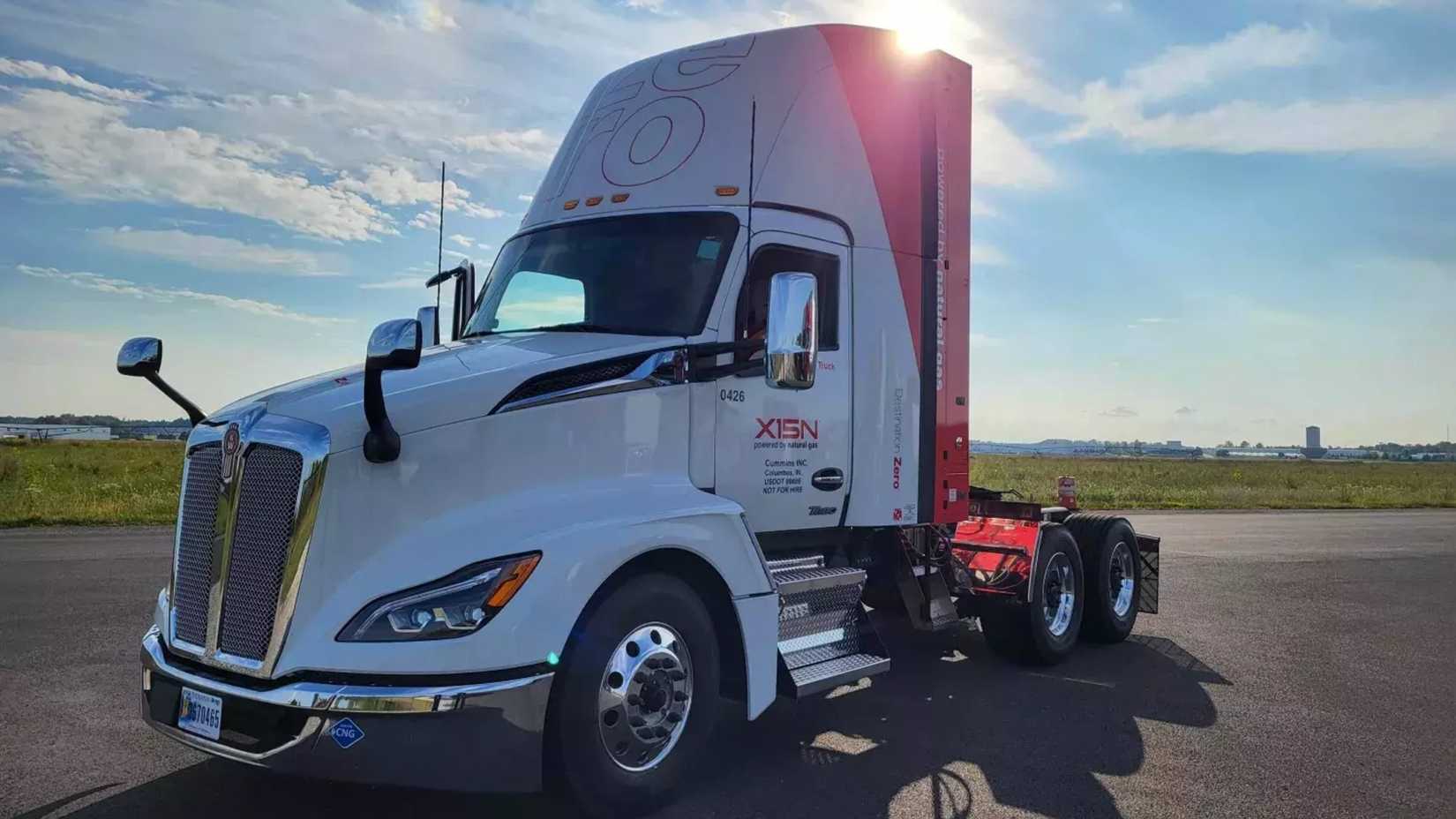
As much as some folks may like to hear it, Cummins’ HELM architecture doesn’t mean electric power has no future, or won’t work in the long-term. The fact of the matter is, propulsion systems have been advancing in so many ways and at such a fast rate that no one can definitively say which sort is going to win out. With the X15N, Cummins is saying, “Here, use whatever fuel you want, and the engine will handle it.”
Cummins is also accounting for the many differences in how heavy-duty transportation companies fuel their fleets. For example, nearly all city buses use some form of natural gas, whereas loads of semi-trucks take advantage of diesel fuel. Virtually all sections of the heavy-duty transportation market have differing requirements with regard to fuel than passenger cars, as well.
This gives Cummins an enticing edge for any accounting executive at a large transportation conglomerate. Instead of guessing and buying several different types of engines while simultaneously trying to determine which fuel will win out in the end, why not invest in a fleet of Cummins X15Ns and let the industry decide for itself? After all, having hydrogen, diesel, and RNG at the engine’s disposal means many of your bases are already covered.
Fundamentally, the Cummins X15N performs best as a diesel engine, as that’s the fuel type it’s based around. You’re going to get the most power, the best economy, and likely the longest-lasting performance from using diesel fuel in the X15N. However, its ability to utilize RNG and make virtually the same amount of power means the engine can produce much lower emissions. Hydrogen offers another, alternative fueling route, as well.
No, the Cummins X15N isn’t coming to your Ford F-250 Super Duty any time soon, and it’s not necessarily trying to save the heavy-duty diesel engine from extinction. Instead, it’s providing a three-in-one transitional tool for the heavy industry that allows companies and the regulatory bodies that preside over them to work out the future of fuel among themselves.
The largest advantage to the X15N is cost. Developing three separate, clean-sheet engine designs to run on three different types of fuels would prove to be vastly more expensive than producing just one mill that can handle multiple fuel types. Seeing as fuel tech tends to evolve rapidly these days, Cummins is getting ahead of the money-sink curve by simply combining three popular, heavy-industry fuels into one engine.
Sources: Cummins, ACT-News.com, FleetEquipmentMag.com.