
CSDDD survives corporate pushback, but is seriously weakened on climate
Now the EU’s CSDDD has finally been agreed, we assess how far it can go to protect the environment and human rights, after months of corporate lobbying to water it down
A pivotal chapter in EU legislation is drawing to a close. After a year marked by substantial revisions to the Corporate Sustainability Due Diligence Directive (CSDDD), the law’s final form has been confirmed, and EU Member States must now work to enforce it.
Following the pushback that sought to water down the CSDDD, can it still make companies respect the environment and human rights, while delivering justice for victims of corporate abuse?
For several years, Global Witness has been at the forefront of the push for a powerful CSDDD – one that can hold companies accountable, deliver justice to affected communities and steer corporate business models onto a 1.5°C-aligned pathway.
Time and again, our investigations have shown why a strong Corporate Sustainability Due Diligence Directive (CSDDD) is so urgently needed, and just how powerful it could be in preventing further harms if implemented properly.
We have traced the continued flow of minerals linked to human rights abuses and environmental damage into EU supply chains from Russia and the Philippines. In the Democratic Republic of Congo, we have shown how the CSDDD could give communities affected by the Lobito Corridor a vital tool to defend their rights when faced with potential eviction and other harms. Elsewhere, our reporting has exposed the role Dutch companies involved in the construction of a climate-risk airport threatening livelihoods and exacerbating an already fragile ecosystem.
We’ve even shown that EU banks made more than $3.5 billion backing companies linked to deforestation since the Paris Agreement.
These cases are not isolated. They point to systemic failures in corporate accountability the CSDDD can contribute to remedying.
And the law is popular: together with Amnesty International, we commissioned a poll across 10 EU countries about Europeans’ sentiment towards environmental laws – and it produced some striking results.
75% of respondents believe these companies should be held responsible for human rights harms, and 77% say they must be accountable for environmental harms found throughout their value chains. Almost two-thirds (63%) say large companies with more than 250 employees should face legal obligations to reduce their greenhouse gas emissions.
Implementation pushed further down the road
Yet, despite a majority supporting the environmental ambitions that the new law would support, last year saw the CSDDD significantly weakened. This dragged us back to debatesfrom the first round of negotiations on the CSDDD, which concluded in spring 2024.
The CSDDD had entered into force in July of that year, establishing binding human rights and environmental standards for large companies as EU law. However, its obligations were not yet applied in practice, as member states first needed to transpose the directive into their national legal systems. It also required companies with more than 1,000 employees and a global turnover of over €450 million to put into effect climate transition plans that would align their operations with the 1.5°C global heating threshold.
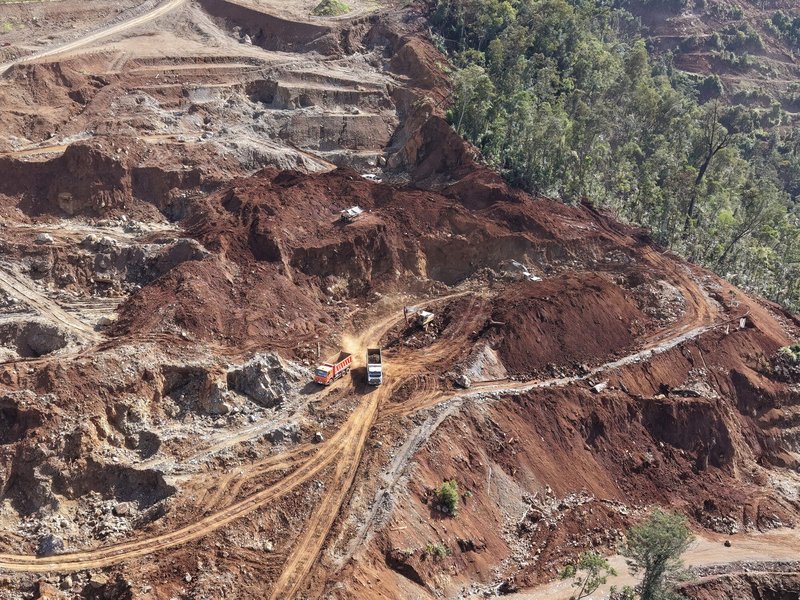
Nickel mining in the Philippines has been linked to soil erosion and habitat loss, fuelling vulnerability to landslides, flooding and droughts. Erwin Mascariñas / Global Witness
But the political landscape shifted dramatically in February 2025, when the European Commission reopened negotiations around the CSDDD, alongside other sustainability initiatives, via the Omnibus I process.
Amid intense corporate lobbying, a compromise emerged at the end of 2025 between centre-right and far-right EU political groups, which paved the way for a substantially diluted CSDDD. This involved major cuts to its ambitions and a stark narrowing of its scope.
Companies that are still covered by the trimmed directive will now need to comply with the revised regulations by July 2029.
Corporate pressure meets poor lawmaking
The path to a final agreement was far from straightforward. The legislative process fell short of the standards expected of good lawmaking.
Notably, the lack of robust impact assessments, meaningful stakeholder consultation, as well as the mandatory climate consistency check, cast a long shadow over the negotiations. In response, Global Witness and other civil society organisations filed a complaint with the EU Ombudsman, who later drew attention to these procedural failures and named them “maladministration” in her final assessment.
Meanwhile, the process was heavily influenced by corporate lobbying, particularly from major fossil fuel companies. These companies lobbied for exemptions and weaker requirements to protect their business models from any impending regulatory change.
An investigation by SOMO revealed that a group of predominantly US-based oil and gas companies had been particularly active in lobbying policymakers on the CSDDD, potentially playing a significant role in shaping the outcome of the negotiations.
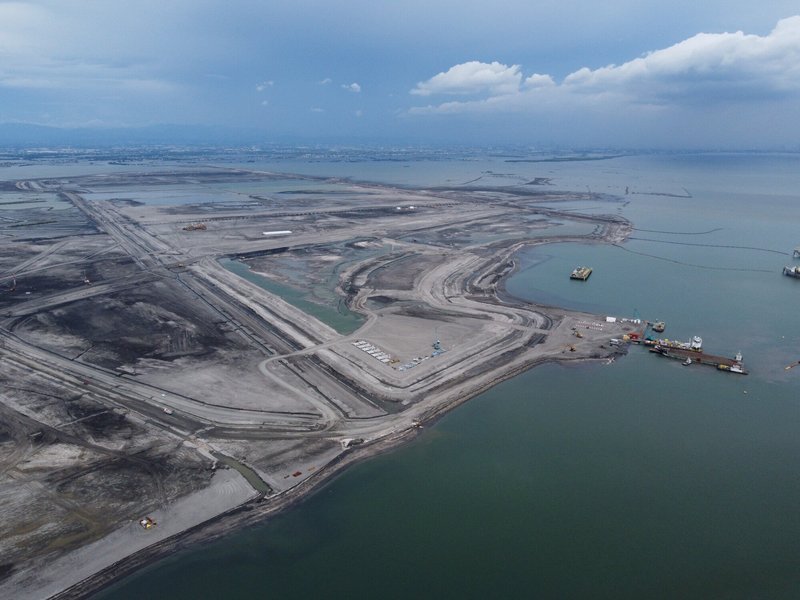
EU companies involved in the Manila Bay airport in the Philippines are exacerbating an already fragile ecosystem. Basilio Sepe / Global Witness
CSDDD final outcomes at a glance
The CSDDD has survived as a mandatory human rights and due diligence law, but with some significant caveats. Companies within the scope of the CSDDD must identify the most severe and likely risks in their chain of activities, then are required to address those risks.
The question of how to introduce civil liability regimes and allow victims of corporate abuse access to EU courts has been left to the different EU Member States. This could lead to a more fragmented legal situation, leaving victims in limbo and at the mercy of individual states’ attitudes towards implementing the CSDDD. If a harmonised EU approach to civil liability had been adopted, corporate abuse victims would find it easier to seek justice, regardless of where the company was based.
The significant reduction in the number of companies covered by the CSDDD also threatens to diminish the law’s impact on value chains and sectors.
The directive to implement climate transition plans, which aim to align a company’s business model with a 1.5°C trajectory, has been removed from the CSDDD. But some obligations to report on climate transition plains do remain in other EU legislation, such as the Corporate Sustainability Reporting Directive (CSRD).
We calculated just how many CO2 emissions could have been addressed with the CSDDD’s climate transition plans in place – over 2 billion tonnes to be exact, the equivalent of two-thirds of the EU’s total annual emissions.
Below, we break down the final CSDDD core components agreed in December:
- Scope of companies: The new threshold for EU companies is 5,000 employees with a worldwide turnover of €1.5 billion. This excludes a large number of companies, as in the 2024 agreement, but the CSDDD previously included those with 1,000 employees and a turnover of €450 million. For non-EU companies, the threshold relates to a turnover of €1.5 billion in the EU, with no explicit reference to employees.
- Risk-based approach with value chain cap: In line with international standards, the CSDDD takes a risk-based approach towards identifying adverse human rights and environmental impacts. But its effectiveness could be impacted by limitations such as a value chain cap. Though companies are required to conduct a scoping exercise of their entire value chain to identify where the most severe and likely impacts could occur, there are limitations on requests for information from companies with fewer than 5,000 employees. Companies may also prioritise assessing areas that involve direct business partners, when adverse impacts are equally severe and likely to occur elsewhere in their chain of activities.
- Civil liability, access to courts and justice for corporate abuse victims: Under the revised CSDDD, the EU has moved away from a harmonised approach to civil liability across its 27 Member States. Although the law retains the right of corporate abuse victims to obtain full compensation, Member States have been granted discretion in determining the conditions under which such compensation may be obtained through judicial proceedings. This outcome is disappointing, as it does not prioritise access to justice for corporate abuse victims and leaves them exposed to divergent national approaches and uneven levels of legal protection across the EU.
- Stakeholder engagement: The definition of a stakeholder has been narrowed down to individuals and groups who are directly affected by the operations and services of the company, its subsidiaries and business partners. This is a more limited approach than the inclusion of civil society organisations with experience in a geographic location or field relating to human rights or the environment. However, companies will have to engage with experts (including from civil society) who can provide credible insights when engagement with directly affected stakeholders and/or rightsholders cannot be reasonably carried out. Secondly, consultation with stakeholders is required when gathering information on actual and potential adverse impacts, when developing a prevention and action plan, and when adopting appropriate measures to remediate adverse impacts. Stakeholder engagement is not mandatory when deciding to terminate business relationships, nor has it been included in the process for prioritising adverse impacts to be addressed. The provision that companies shall address potential barriers to engagement and ensure that participants are not subject to retaliation or retribution remains in place.
- Climate transition plans: The obligation for companies to implement climate transition plans under the CSDDD has been removed from the law. This signifies a significant setback in the ambition to put companies’ business models on a 1.5°C pathway, reduce emissions and ensure they play a substantial role in addressing the climate crisis. But companies are still required to report on sustainability and climate in other pieces of related EU legislation, such as the CSRD, and comply with other related sector-specific and national climate obligations.
- Penalties: Financial penalties for non-compliance have been retained but lowered to a maximum of 3% of the in-scope company’s global turnover. In the 2024 agreement, the minimum pecuniary penalty was set at 5%.
- Financial institutions: Due diligence obligations for financial institutions were not part of the 2024 agreement, but a review clause was included that would facilitate their inclusion in the future. This “review clause” was deleted in the 2025 revision of the CSDDD, which makes the future inclusion of the financial sector less likely, although not impossible and still necessary.
- The opportunity to review in the future: A built-in review clause enables the effectiveness of the directive to be evaluated, which could lead to adjustments being made in the future based on emerging needs and challenges. While the review clause should not be overestimated, it is positive that it specifically mentions reviewing the effectiveness of the enforcement mechanism, including its protective effects on rights holders. This could be read as a reference to the reintroduction of harmonised EU civil liability at a later stage. The review will take place by July 2031.
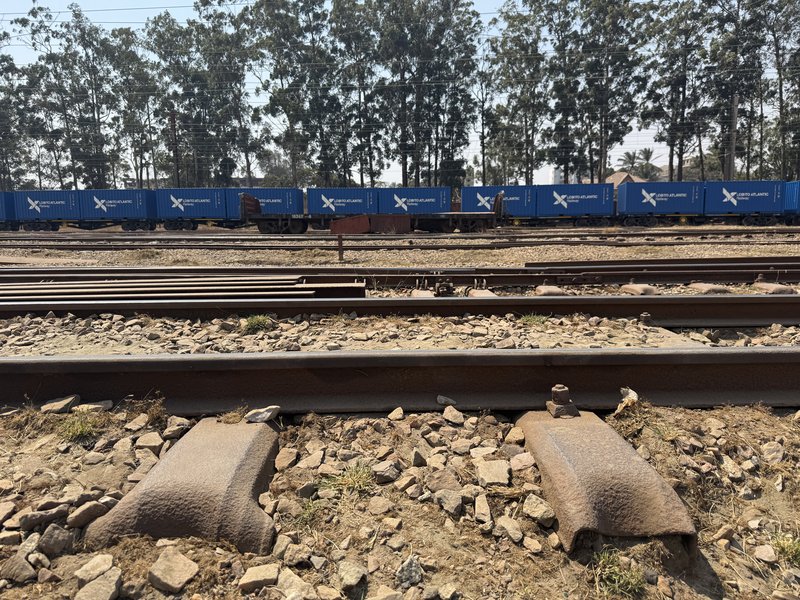
The CSDDD could provide a crucial avenue for accountability around mines linked to the Lobito Corridor in the DRC. Global Witness
Next steps and timeline
Looking ahead, the 27 EU Member States are now tasked with the job of transposing the CSDDD into national law by July 2028. Measures outlined in the directive shall apply to in-scope companies from 26 July 2029.
Companies must start preparing now to meet these upcoming obligations and implement the necessary due diligence practices. A review of the CSDDD is expected to take place before July 2031.
The law’s final version has failed to deliver the momentous victory for justice that we had hoped for. Not having mandatory climate transition plans for big polluters in place is a particularly big missed opportunity in the fight against the climate crisis.
But the introduction of mandatory human rights and environmental due diligence requirements for large companies is a significant step forward. It is now up to rightsholders and their supporters to consider how we can now deploy this law to the environment’s – and corporate abuse victims’ – advantage.
The battle over the CSDDD underscores the need to continue fighting to dismantle the corporate and fossil fuel capture that derails our policymaking. Now the fight continues to advocate for effective transposition and stronger provisions in EU Member States, and to ensure communities are educated about their rights under the CSDDD.
In the face of ongoing global political uncertainty, we remain committed to strengthening the rules that hold large corporations accountable.
Authors