
The cringiest headline and the most heartening journalism start-up
Sometimes you see a headline that just stops you with its lunacy.
Such was the case with the New York Times opinion headline last week, “Stephen Miller Is No Loser.”
Really, NYT? This perfectly awful specimen of human being, a white supremacist and a particularly nasty one at that is, by implication, a terrific winner?
The satirical social media account known as NYTPitchbot responded with a defeated shrug.
As is so often the case, of course, the piece by opinion writer Thomas Edsall, is much better. It is harshly critical of both Trump and of Miller, his newly appointed chief of staff. It seemed to have little to do with the headline.
Its conclusion: “No one is safe when Stephen Miller — a man bent on destroying the opposition, a man who would treat half of the nation as mortal enemies — is the guiding hand behind the president’s agenda.”
But why put a headline like that on such a piece? There can be only one reasonable answer, I’m afraid: To get attention — and clicky engagement.
As is often the case, Times readers had a few things to say.
“The whole problem with Stephen Miller is that he’s a loser. A loser who has alienated people since he was a teen and hates everyone who has seen through him. He’s won nothing.”
Another: “Miller began as a Goebbels lookalike, morphed into Himmler and has settled in as the resurrected Roy Cohn.”
This headline raises a broader question that, as a media critic, I’m often asked. Why must the mainstream media behave this way? What is the broader motivation, since editors at places like the Times are intelligent, experienced people who surely know better?
Why not use a headline something like this? “Stephen Miller Is Even More Dangerous Now.” That seems closer to the spirit of the piece, but, of course, tells us something that we already know. It’s less likely to get a ton of attention than a headline that promises to tell us something new, but doesn’t deliver.
That’s not a complete answer to “why does this keep happening?” but it is a big part of the answer. Another part may be a sort of “big tent” mentality — bending over backwards not to offend right-leaning readers who are part of the audience base. Big Media never wants to risk appearing to be on Team Blue, even when Team Red is so far off the rails.
Unfortunately, in this case, the bad headline jibes with many outlets’ timid sanitizing of who Miller really is, as Judd Legum’s research has noted. The media has portrayed Miller as a hard-liner — “zealous,” as the Wall Street Journal put it — but not a white nationalist.
And as I noted last week, the most direct description of Miller came from outside the United States in this LeMonde headline: “Stephen Miller, reactionary ideologue and white supremacist, promoted head of Trump administration.”
If you want to see an admirable treatment of how to cover Miller, do watch this dogged interview by a Chilean journalist, José María Del Pino, back in 2024. As the reporter presses him for actual numbers, Miller has a meltdown that’s worth watching.
American Crisis is a community-supported project where I explore how journalism can help save democracy. Please consider joining us!
Now on to the best media news of the week, which has to do with the much more civilized and uplifting subject of books — specifically, a new book publication called The Reader, just begun by the Washington Monthly.
CBS Sunday Morning did a good piece on it, which you can watch a part of here. The Reader is meant to fill the gap left by the demise of book sections and book pages at many media organizations, especially newspapers. The Washington Post killed off its beloved “Book World” section in February, after years of ups and downs.
But it’s not just the Post. Most regional newspapers published their own book reviews for many years, and if you look at the paperback copies of any major book, you would see blurbs from the Detroit Free Press, the St. Louis Post-Dispatch, the St. Petersburg Times — and yes, The Buffalo News. I wrote dozens of reviews myself for many years, assigned by our fine arts and books editor, Jeff Simon. I especially enjoyed reviewing debut novels by women and books about journalism; many of us in that newsroom had our book-review specialties — World War II history or cooking or pro sports, for example.
When the venerable DC bookstore Politics & Prose had an event — a “wake” — for Book World, the New York Times quoted co-owner Brad Graham: “It is heartbreaking and infuriating, not only a blow to the literary world, but it leaves a further cultural void in our alarmingly eroding democracy.” (To its credit, The Times still has a print Sunday book section, but almost all the others are gone.)
Now, as if to accompany some other encouraging news on the democracy front, The Reader emerges. It will feature award-winning writers and offer essays as well as reviews. (On a separate but related note, the largest new bookstore to open in NYC in a decade is launching tomorrow.) I love it.
Readers, please tell me what you are reading these days, and where you find your “next book.” (Browsing the public library shelves? Hoping the Amazon algorithm suggests something? Listening to that culture-vulture friend who reads and watches everything? Taking your assignment from your neighborhood book club?) Do you read books strictly in print, like my millennial offspring, or on a device, or (like me) a little of both?
Finally, I want to mention that I attended a moving memorial service in Baltimore over the weekend for Ann Hornaday, who was the Washington Post movie critic, and who died recently of glioblastoma, a form of brain cancer.
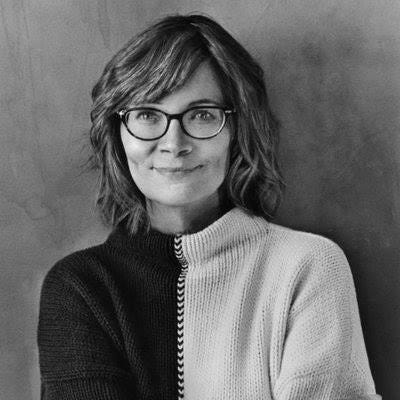
Former Post editor Marty Baron spoke eloquently, not only drawing on tributes he had sought from several of Hornaday’s former colleagues but offering his own, describing her as “the sort of colleague you hope for, you dream of, you treasure as a jewel, not just for talent but for character.”
Although never hesitant to make tough judgments, she also was never glib or mean-spirited. Her aim was to be a reliable, inviting and informative guide for readers. With reviews and essays that were consistently elegant, she always was. Those of us who worked at The Post with Ann knew her as so much more than a brilliant critic. What really stood out was her humanity — a limitless reservoir of collegiality, warmth, empathy and human. There was always an endearing smile.
As we waited for the service to start, I chatted about Ann with Liz Seymour, who eventually would be named managing editor — but back in 2014 was working hard to prove herself as the new head of the Post’s features sections. The charge (from Baron) was to respond nimbly to breaking news, and so when Philip Seymour Hoffman shockingly died, Seymour and her deputy David Malitz felt the pressure. They were scrambling to publish something that was not only immediate but that would stand out for quality and insight.
And so, Seymour told me, she rejoiced when Malitz texted her the following three words: “Ann will write.”
Here’s the piece that Hornaday produced that day, Sunday, Feb. 2, 2014. Read it all with this gift link. Its opening paragraph:
Philip Seymour Hoffman wasn’t a movie star in the conventional sense of the term. He wasn’t glamorous or given to the kind of serial-dating, motorcycle-riding, scene-making “lifestyle” that encourages fans to think they know all about you. Rather than a manufactured persona, filmgoers who mourn the 46-year-old actor’s death Sunday are remembering moments — those ineluctable instances in which Hoffman fused “being” and “seeming,” to create textbook examples of acting at its very best.
For me, too, Ann Hornaday was that colleague “you dream of,” helping me with her off-the-cuff but brilliant comparisons of two Joni Mitchell albums. I was struggling with an essay, having failed to score an interview with the songstress. I quoted Ann and her observations made the piece.
I know she will rest in peace, just as I know she will be deeply missed and mourned.
Readers, thanks so much for being here. I love to read your comments and your reactions to all that is happening. Here’s why one reader became a paid subscriber last week. Maybe you’ll consider following suit.
My background: I am a Lackawanna, NY native who started my career as a summer intern at the Buffalo News, my hometown daily. After years as a reporter and editor, I was named the paper’s first woman editor in chief in 1999, and ran the 200-person newsroom for almost 13 years. Starting in 2012, I served as the first woman “public editor” of the New York Times — an internal media critic and reader representative — and later was the media columnist for the Washington Post. These days, I write here on Substack, as well as for the Guardian US. I’ve also written two books, taught journalism ethics, and won a few awards, including three for defending First Amendment principles.
The purpose of ‘American Crisis’: My aim is to use this newsletter (it started as a podcast in 2023) to push for the kind of journalism we need for our democracy to function — journalism that is accurate, fair, mission-driven and public-spirited. That means that I point out the media’s flaws and failures when necessary.
What I ask of you: Shortly after Trump’s election in November of 2024, I removed the paywall so that everyone could read and comment. I thought it was important in this dire moment and might be helpful. If you are able to subscribe at $50 a year or $8 a month, or upgrade your unpaid subscription, that will help to support this venture — and keep it going for all. Thank you!