
Cretaceous climate data suggests icy interludes in dinosaurs’ greenhouse
Climate data gathered from oyster fossils is challenging the common belief that Antarctica was ice-free during the Cretaceous period 140 million years ago and offers insight into climate behaviour today, according to an international team of scientists.
During that time, a period in which dinosaurs dominated, the mid-latitudes of the southern hemisphere experienced seasonal temperature changes of up to 16 degrees Celsius – comparable to those of today. Polar ice was also present, according to the researchers led by the Institute of Tibetan Plateau Research of the Chinese Academy of Sciences.
01:17
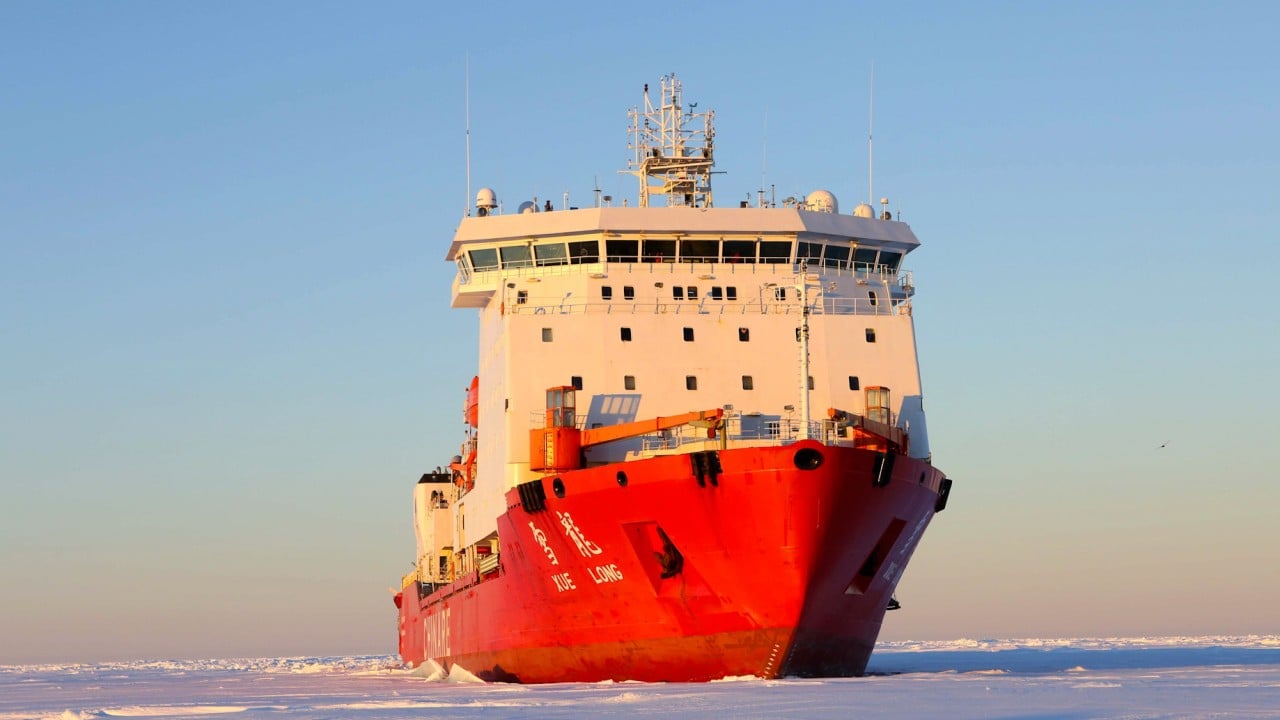
China begins 41st Antarctic expedition
China begins 41st Antarctic expedition
The scientists, joined by peers from the Senckenberg Biodiversity and Climate Research Centre in Germany, the University of Bristol and the University of Hull in Britain, and the University of Antananarivo in Madagascar, published their findings in the peer-reviewed journal Science Advances on May 2.
First author He Songlin, from the Institute of Tibetan Plateau Research, said that the “Early Cretaceous greenhouse Earth was like a symphony – its warm melodies occasionally punctuated by brief glacial notes”, according to the institute.
The team said that applying their findings to the present day offered insight into climate change.
“Given ongoing and anticipated global warming, reductions in Arctic and Antarctic ice are expected to continue, potentially leading to completely ice-free polar regions,” they wrote in the paper.
“Despite uncertainties in these predictions, we transition from a world with perennial glacier ice to one with only seasonal ice or shifting from a predominantly white winter planet to a blue one.”
To reconstruct the seasonal fluctuations in sea surface temperatures during the greenhouse Earth of the Early Cretaceous Valanginian stage, around 133 million years ago, the scientists analysed fossilised oyster shells from the ancient Neo-Tethys Ocean.
Oysters live in the ocean’s intertidal zone above the thermocline – a layer where temperatures change with depth – and have been the primary source of proxy data on sea surface temperatures, according to the study.
As oysters grow, they develop alternating light and dark growth bands, much like tree rings, according to the Institute of Tibetan Plateau Research. Rapid growth in warmer summer temperatures produces porous light bands, while slower, denser dark bands develop in winter.
Lead study author Ding Lin pioneered a method in 2014 based on this understanding and revealed that the Gangdese Mountains in Tibet predated the Himalayas.
In the new study, the team extracted seasonal climate signals from growth bands in well-preserved oyster shells gathered from Madagascar.
“The study revealed significant seasonal temperature variations and periodic glacial melt events, challenging the traditional view of ‘weak seasonality and rare glacial activity’ during greenhouse climates,” according to the Institute of Tibetan Plateau Research.
“This discovery illuminates the complexity and dynamics of Earth’s ancient greenhouse climate, offering fresh insights into planetary climate evolution.”
The scientists found that during the Weissert event – a global cooling event 133 million years ago that punctuated the Early Cretaceous greenhouse – winter sea temperatures in the mid-latitudes of the southern hemisphere were 10 to 15 degrees colder than summer temperatures. This seasonal variation is similar to that observed at comparable modern latitudes.
02:57
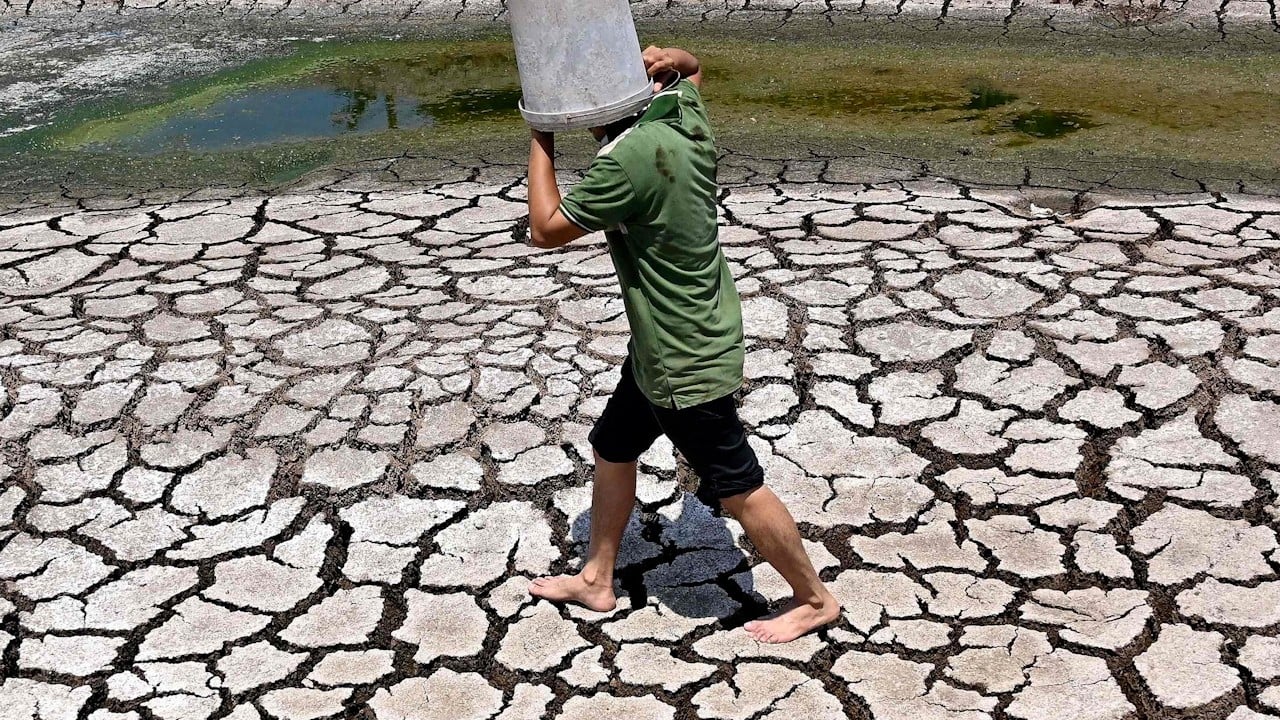
The world just witnessed the hottest year on record
The world just witnessed the hottest year on record
They also found there had been a seasonal freshwater influx from glacial melt, similar to modern Greenland ice sheet dynamics. The world’s second-largest body of ice lost 80 gigatonnes of water in 2023, according to the United Nations Regional Information Centre for western Europe.
The researchers said the study showed that the effects of global warming went beyond rising temperatures or uniform warming. Instead, elevated greenhouse gas concentrations might lead to greater seasonal extremes.
“Even in today’s warming world, regional geological events coupled with human activities could trigger unexpected cooling,” study author Wang Tianyang said.