
Cloudy with a chance of bankruptcy: US tariffs hurt China’s solar firms
The rain and gloomy skies during the SNEC PV Conference – the biggest in China’s solar-panel manufacturing industry – summed up the mood in the market, whose major players congregated in Shanghai earlier this month for the four-day annual event.
The scale was noticeably smaller this year. Several leading companies opted out for a variety of reasons, including tight budgets. More tellingly, CEOs from major producers Longi Green Technology and Tongwei – keynote speakers last year – gave it a miss.
The weariness is not surprising. The industry, billed as one of China’s three new economic drivers along with electric vehicle and lithium battery manufacturing, is facing a double whammy: producers are swimming in a sea of red amid a price war and supply glut at home, while tariffs are blocking access to export markets.
Prices in every segment of the solar panel supply chain plummeted by 60 to 80 per cent in 2024 from a peak in 2023, according to the China Photovoltaic Industry Association, with 39 of the nation’s 121 listed producers in the red. Losses in the photovoltaic (PV) manufacturing value chain reached US$40 billion, according to Gao Jifan, chairman of Trina Solar. Including other business lines, the tally was US$60 billion, he said.
“Everyone is questioning how deep and prolonged this downturn will be,” Yang Liyou, general manager of solar-panel maker Jinneng Clean Energy Technology, said at a panel discussion during the conference. “It has not eased. In fact, it’s become deeper and longer than we anticipated.”
Shares of Jinko Solar, the world’s top solar panel maker in terms of shipment volume, have declined by nearly 30 per cent in New York this year, bringing the slump to more than 60 per cent from a peak in 2022. Rivals like JA Solar, Tongwei, Trina Solar, Longi, and GCL have slumped by as much as 80 per cent since 2022.
China is the world’s biggest solar-panel producer, commanding 80 per cent of the global capacity from material processing to final assembly, according to the International Energy Agency. More than 50 Chinese companies along the solar supply chain have filed for bankruptcy this year, data compiled by market tracker Solarbe showed.
China’s solar-panel manufacturers enjoyed a bit of a honeymoon in the first half of this year as developers rushed to complete installations before incentives ended this month under China’s power market reform. The front-loading means the second-half outcome could be dire.
Citigroup forecasts project installations to slump by as much as 44 per cent from an estimated 160GW in the first half. Globally, growth in solar installations is expected to slow to 10 per cent in 2025 from 33 per cent in 2024 and 87 per cent in 2023, according to forecasts by Washington-based Global Solar Council, which represents the industry at key international forums such as COP and G20.
“Market prices for all solar products declined the week after SNEC on tepid demand,” according to Pierre Lau, an analyst in Hong Kong at Citigroup, who has sell ratings on major solar producers including Longi, Tongwei, Sungrow, Jinko Solar and JA Solar.
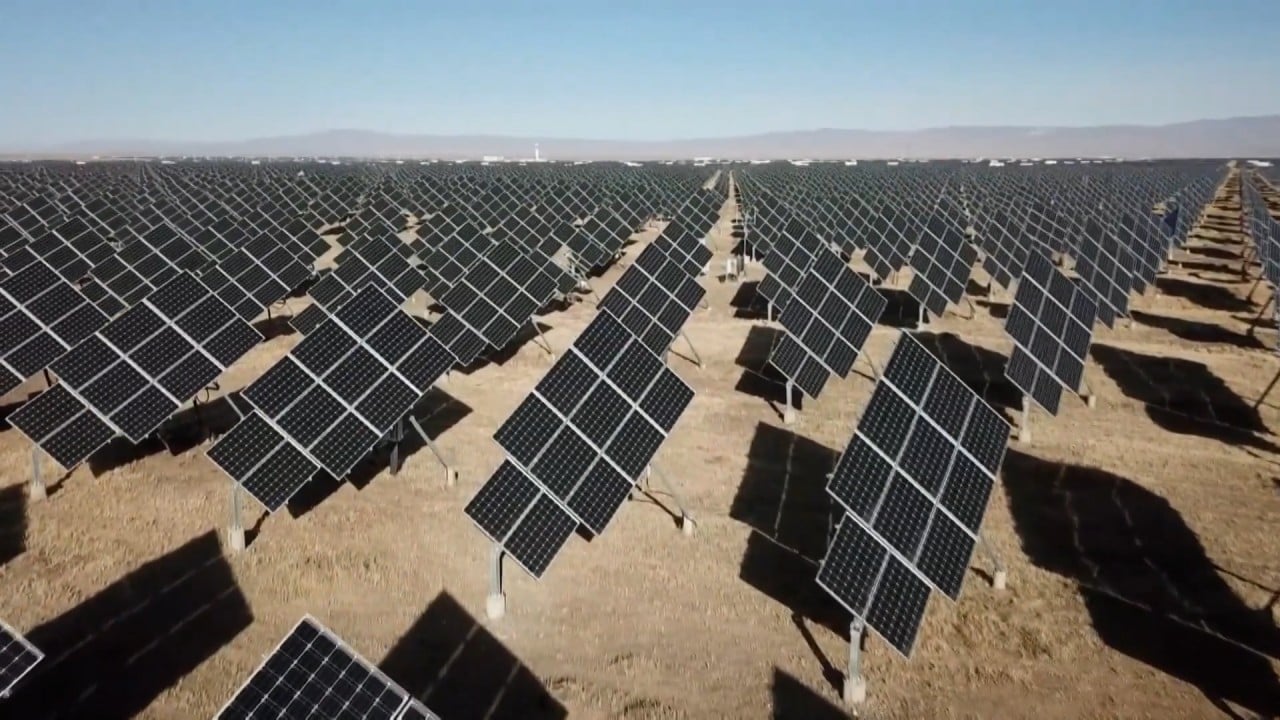
01:05
China installs record number of solar panels on rooftops in race for carbon neutrality
China installs record number of solar panels on rooftops in race for carbon neutrality
Over the past year, the industry has attempted to reorganise and reform without much success. Attempts to export their way out of the crisis were met with punitive US tariffs, with the Trump administration fixing the loophole by targeting Chinese factories located in Southeast Asia.
China’s solar module exports declined by 8 per cent in the first quarter from a year earlier, with shipments shrinking again in April. Sales to all overseas markets slumped, with the exception of Europe, according to data compiled by InfoLink, a renewable energy market research firm based in Taipei.
Solar-panel producers are working on alternative strategies, such as setting up factories in tariff-friendly markets in Europe, South America and the Middle East, expanding into new business lines and capacity rationalisation. Optimism remains scarce, industry analysts said.
The SNEC PV Conference organisers invited speakers from countries like Argentina, Australia, Germany and the Philippines to introduce Chinese manufacturers to the potential in their markets. Several producers stated that establishing factories in overseas markets to meet local demand, rather than relying on exports, was a necessity.
Currently, about 80 per cent of their overseas capacity – solar wafers, cells, and modules – is concentrated in Southeast Asian countries. However, due to US tariffs on products originating from these countries, nearly all of the “reshoring” plans were focused on the Middle East and Africa, according to data from S&P Global Ratings.
The regulatory environment is a crucial consideration when deciding on production sites. Conducive government policies and big local demand make the Middle East and Africa favoured destinations, said You Xin, an analyst in Shanghai at S&P. Ultimately, high margins make the US the most attractive market.
“Whether in Southeast Asia, Saudi Arabia or Ethiopia, the goal is to sell to the US,” said Zhang Haimeng, a vice-president at Longi, a producer based in Shaanxi province. “The US is one of the few countries where significant profits can still be made at this stage. Other countries don’t hold much significance.”
Yet, reshoring poses challenges due to supply chain complexities because it involves raw material mining, processing and manufacturing of solar wafers and modules. While China dominated all these steps, these upstream segments were difficult to replicate overseas, said Jessica Jin, a senior analyst at S&P in Shanghai.
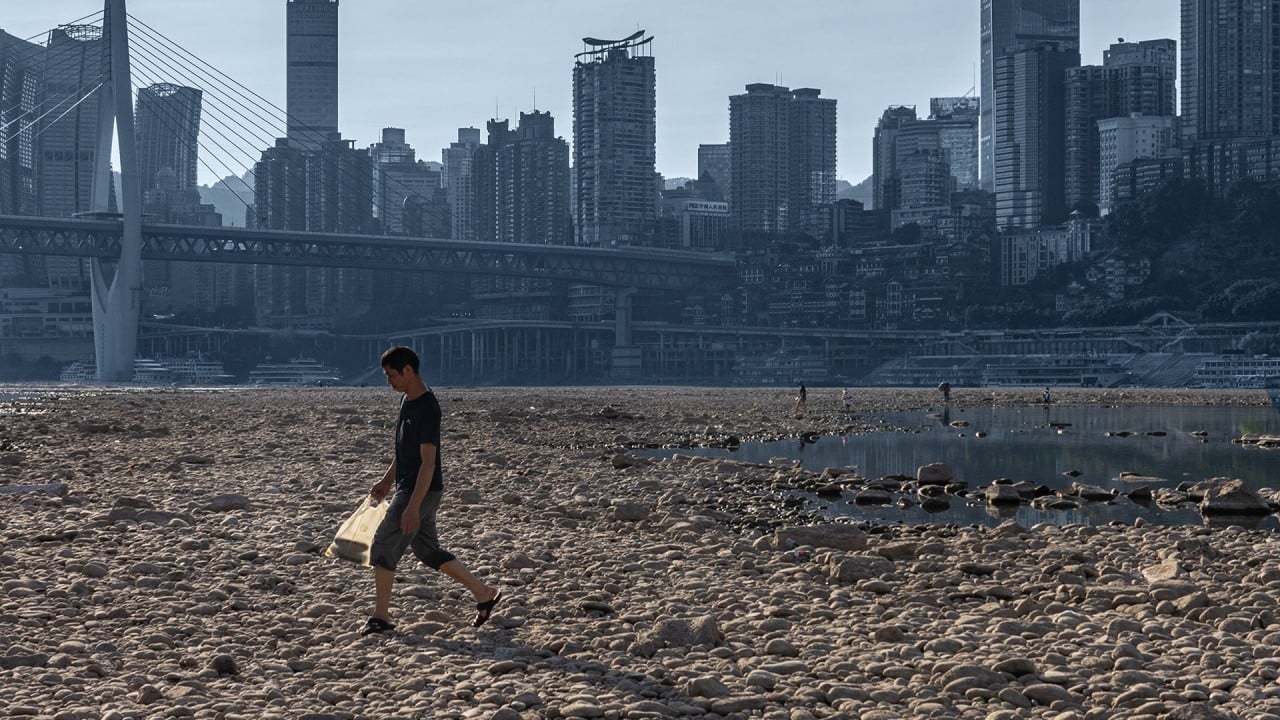
08:42
The surprising hurdle slowing China’s switch to green energy
The surprising hurdle slowing China’s switch to green energy
“Currently, most announced plans focus on downstream segments such as module assembly, which is easier to reshore but is also more susceptible to tariffs,” she said.
Expanding capacity overseas was a highly risky venture, according to Trivium China, a China-focused research firm.
“Domestically, we already face massive overcapacity, and increasing overseas production compounds the issue, especially when existing capacities in Southeast Asia are becoming stranded assets,” said Cosimo Ries, a Shanghai-based analyst at Trivium. “No matter how you look at it, there’s no way solar demand is going to catch up with the supply any time soon.”
In a challenging environment, companies are also diversifying by exploring other cleantech sectors, particularly energy storage systems and green hydrogen.
The SNEC conference highlighted this shift, featuring an inaugural energy storage forum, with major EV battery producers like Contemporary Amperex Technology (CATL), BYD and Eve Energy setting up booths. Market leaders Longi and Ming Yang Smart Energy Group showcased their ambition in hydrogen, with plans to manufacture electrolysers for generating this zero-emission fuel.
Energy storage systems, such as lithium batteries, can capture energy produced at one time for use at a later time and mitigate the intermittency of solar energy. Trina Solar, Jinko Solar, and GCL Group plan to manufacture battery cells for their own systems. However, the market is also plagued by falling prices and excess capacity.
“We are all suffering, only just slightly less than the solar industry,” said Cao Hui, general manager of REPT Battero Energy, a Shenzhen-based company that produces lithium batteries for electric vehicles and energy storage systems. “Battery prices are going down, prices of battery materials are also going down. So are the prices of energy storage systems. Everyone is feeling distressed.”
The hydrogen market in China is not much different. Despite strong government support, the nascent industry has yet to prove its commercial and financial viability, and it is already struggling with overcapacity and price wars.
Industry players were swimming in a sea of red ink amid mounting losses, said a manager at Refire, a Hong Kong-listed hydrogen electrolyser producer headquartered in Shanghai.
It’s not easy to diversify. Solar-panel makers were squaring off with established companies in the energy storage and hydrogen businesses and lacked the necessary technical experience, according to S&P’s You. Deep-pocketed CATL and BYD had supply chain and technology advantages, as did other hydrogen production companies, she added.
EV battery giants are also flexing their financial muscle to enter the solar sector. Robin Zeng Yuqun, founder of the Fujian province-based CATL, has been vocal about his ambition to become a holistic energy provider.
“If that happens at some point, it’s going to be even more difficult for the solar companies,” said Ries at Trivium.
Major players are calling for the elimination of low-quality manufacturing capacities. Zhu Gongshan, chairman of polysilicon maker GCL Group based in Suzhou in eastern Jiangsu province, said at the Shanghai conference that the industry needed “radical consolidation, adjustments, and changes across all segments.”
Some top players are taking action. GCL co-CEO Lan Tianshi said leading companies were forming a new entity run by professionals to help trim surplus capacity, control output through mergers and acquisitions, and facilitate orderly exits from the industry.
In April, Quzhou Industrial Holding, a state-owned firm in eastern Zhejiang province, acquired a controlling stake in DAS Solar, a PV cell producer in the same province that has been struggling with financial difficulties. However, such M&A activity remains minimal.
“We’re not seeing any meaningful acquisitions,” Ries said. “All the major players are losing over a billion yuan each quarter, so they’re not in a strong financial position to buy anyone out.”
China’s biggest solar panel producers last year agreed to a “truce”, accepting self-discipline measures to comply with a recommended floor price and production quota. None of that worked, and industry officials have again appealed for Beijing to intervene.
“There should be self-discipline and a reduction in capacity,” said Shi Yonghong, vice-president of the China Chamber of Commerce for Import and Export of Machinery and Electronic Products based in Beijing. “However, companies want to grow and are reluctant to cut production. So, intervention is necessary.”
Zhu, the chairman of GCL Group, said the industry faced a “crucial window” up to next March to enforce a supply-side reform. That applies to the EV industry too, as more players have gone belly up after aggressive price discounts drew a state rebuke.
“These are all pretty impressive industries, but they cannot continue to generate the type of growth rates that we’ve got used to over the years,” said Ries at Trivium. “The super high growth phase has passed.”