
Climate Change Is Warming US Unevenly
Rain Creates A Black Market For Ant Queens
If you’ve ever heard someone refer to climate change and say, “It doesn’t feel like it’s getting warmer here,” they might not be entirely wrong. However, they’re also not seeing the full picture.
A new study published in PLOS Climate suggests climate change across the United States isn’t as simple as steady, evenly rising temperatures across the board. Instead, it’s a splotchy patchwork of changes that look very different depending on where you live.
Why Averages Don’t Tell The Whole Story
Most climate studies focus on average temperatures, and not solely on temperature extremes. This particular climate research took a different approach by looking at daily temperatures across their entire range from 1950 to 2021. This included everything from the coldest days of the year to the hottest days of the year, and everything in between.
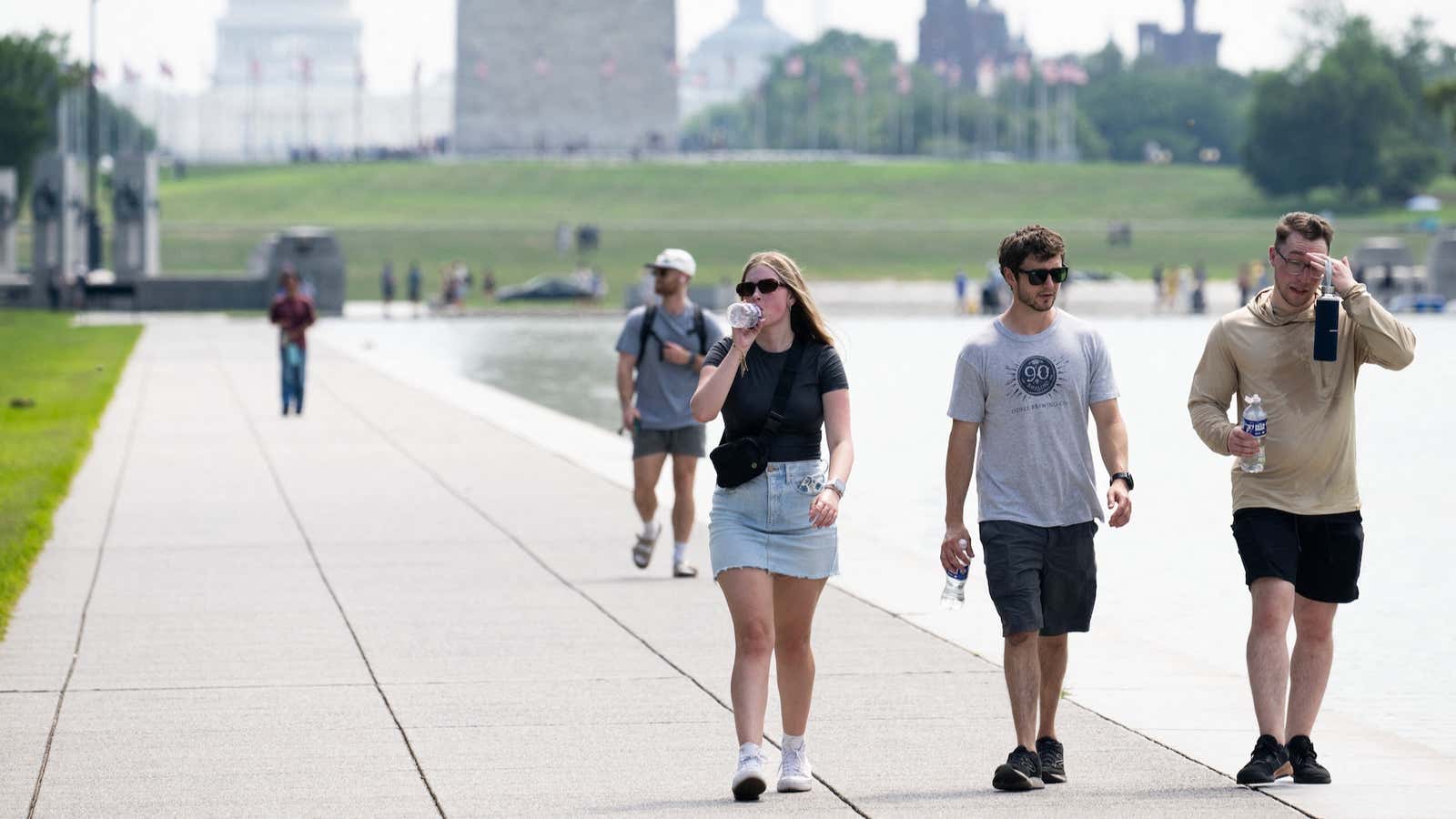
Tourists drink water as they walk along the National Mall near the Washington Monument in Washington on July 25, 2025, as a heat dome sits over the region leading to extremely high temperatures.
(Getty Images)
What the researchers found was that only about 55% of U.S. states show clear warming when you look at average temperatures alone. However, when they examined the full range of temperatures, that number jumped to 84%.
Atlanta, for example, sits on the edge of the study’s so-called “warming hole” region. This is defined as an area where average temperatures haven’t increased as dramatically as you might expect.
But if you look at Atlanta’s full temperature range, and not just averages, it is experiencing warmer overnight lows, more frequent heat extremes and fewer cold winter nights.
According to data from Climate Central, Atlanta sees 20-40 more warm summer nights now, compared to the 1970s. Warmer nights are considered nights that are warmer than average for a specific location.
Boise is another example of an area that shows gradual warming when you look at averages, but looking at extremes shows next level warming.
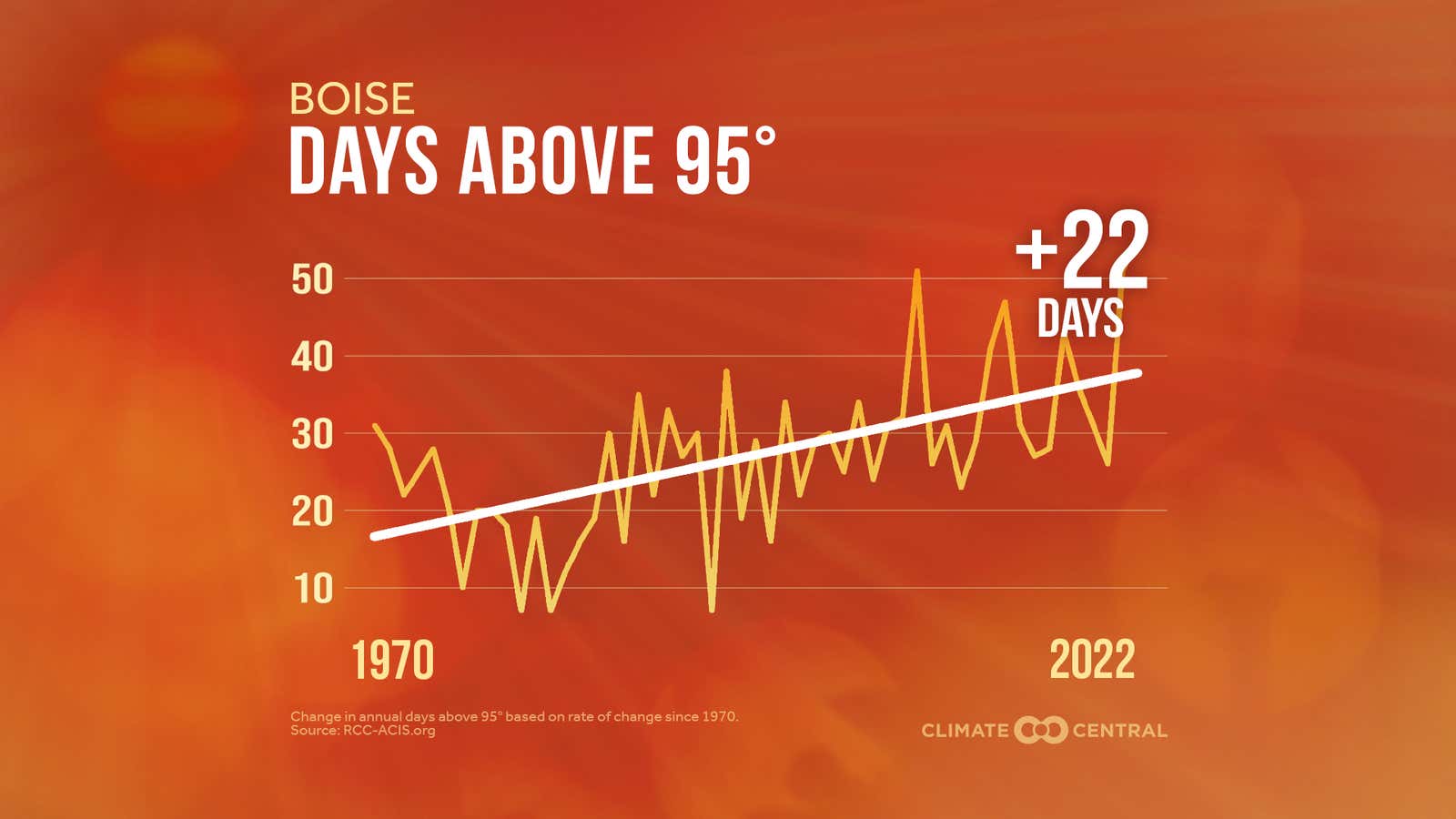
This image shows how Boise, Idaho is now experiencing 22 more extreme heat days compared to the 1970s.
(Climate Central)
They are averaging up to 40 more warm summer nights compared to the 1970s and an astounding 22 more days with temperatures above 95 degrees.
How Warming Shows Up in Different Ways
Instead of the entire country warming evenly, different regions are changing in different parts of the temperature spectrum.
This is showing up the most in the West. Western states are seeing more intense heat, which means higher highs during the hottest days.
Across the North, scientists say, cities are losing the number of cold extremes and increasing the number of warmer nights.
Yet, some places are warming across the board, and others are showing very little warming at all.
Climate change isn’t an even distribution of heat, but highly variable depending on your geographic location.
The ‘Warming Hole’ Surprise
One of the most surprising findings is a region researchers call the “Warming Hole.”
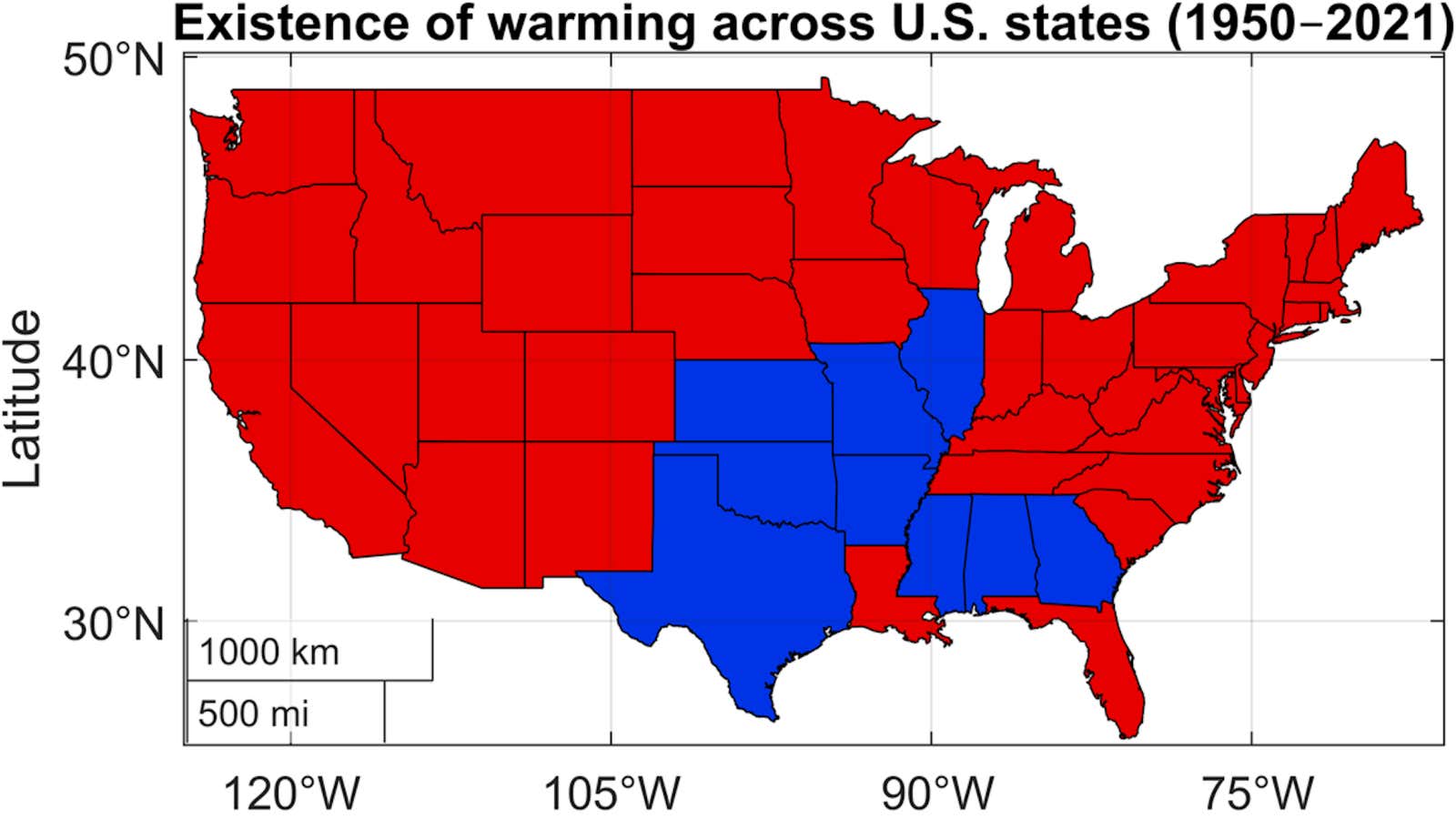
The states in red are showing warming. The states in blue indicate less warming, or no warming at all.
(MATLAB)
This cluster of states, mostly in parts of the South and Midwest, showed no statistically significant warming at any point in the temperature range.
Scientists say they aren’t entirely sure why, but it could possibly be air pollution reflecting sunlight, ocean patterns and/or land use changes such as agriculture.
Even so, this region stands out as an exception in an otherwise warming country.
This study shows that the climate change story shouldn’t just be told in terms of averages, because the extremes paint a different picture. And it can look very different from one state to the next.
Jennifer Gray is a weather and climate writer for weather.com. She has been covering some of the world’s biggest weather and climate stories for the last two decades.