
Climate change, US sanctions impact Venezuela's coffee revival
Venezuela’s centuries-old coffee industry faces tests posed by global climate change and U.S. sanctions after years of efforts to its revival under government support.
Once a leading coffee exporter in Latin America, Venezuela is now working to restore its coffee sector as part of a broader push for economic diversification. But erratic weather patterns and restricted access to international financial systems caused by U.S. sanctions are threatening the fragile momentum.
Reinaldo Mujica, a coffee grower in the Mirandinos, south of Venezuela’s capital Caracas, expanded his plantation from five to 14 hectares over the past five years, encouraged by rising global coffee prices. But last year, extreme weather slashed his harvest from eight tons to five.
“Climate change hit us hard last year. The mornings were unusually cold, which is normal for the highlands. But strangely enough, by eight in the morning, the sun was scorching, and it burned immature beans and resulting in a quality decline of the coffee beans. For a farm like ours that produces premium highland coffee, these beans are unusable,” said Mujica.
In addition to erratic weather, U.S. sanctions have made it increasingly difficult to access to foreign currency and raised the cost of fertilizers and other inputs, squeezing small and medium-sized producers.
Vicente Perez, executive director of National Agricultural Federation of Venezuela (Fedeagro) and head of the coffee department, said that although coffee is not directly sanctioned, financial restrictions still pose hurdles.
“It must be stressed again that the banking system is a real issue. In international settlement system such as SWIFT, if a transaction needs to pass through two or three banks, and one of them needs to view the transaction information, they may reject the transaction if they see the name of ‘Venezuela.’ Therefore, sometimes the funds between banks have to go through a very long circle before the money can reach Venezuela,” said Perez.
Despite these obstacles, Venezuela’s coffee output is approaching its historical peak of 1.8 million bags, and exports are on the rise. Last year, Venezuela exported 150,000 bags of coffee. The figure is expected to surpass 200,000 this year.
Venezuela currently has about 227,000 hectares under coffee cultivation, and the government has ramped up support for coffee growers, offering training, breeding programs, and fertilizer subsidies.
Gabriel Gonzalez, head of the Venezuela Specialty Coffee Exchange, said the sector must now embrace regenerative and smart farming practices.
“We need to promote the regenerative and smart farming practices, and encourage growers to adopt a more resilient, ecologically-friendly farming systems,” said Gabriel Gonzalez, president of the Venezuelan Specialty Coffee International Encounter (EICEV) Foundation.
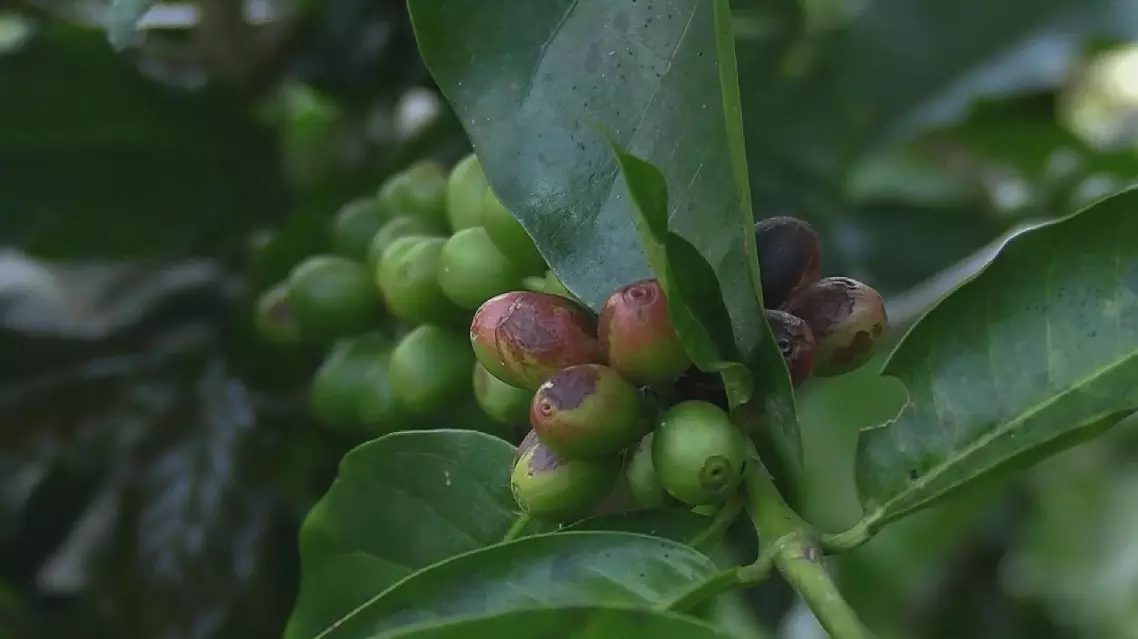
Climate change, US sanctions impact Venezuela’s coffee revival
The just-concluded United Nations Geospatial Knowledge and Innovation Week 2025, also known as UN GeoNow 2025, brought together over 1,000 representatives from UN agencies and more than 60 countries to discuss cooperation, innovation and sustainable development in the geospatial field.
With the tagline “Geospatial Ideas Benefiting Our World”, the event ran from Oct. 20 to 24 in Deqing County of east China’s Zhejiang Province, spotlighting exchanges and discussions on innovative application scenarios related to geospatial information.
Far beyond rudimentary mapping, geospatial information — any data that has a location on Earth, from satellite imagery and GPS coordinates to demographic data — has fundamentally reshaped a range of sectors through its integration with digital technology. From urban planning and agriculture to disaster response and national security, location data becomes critical intelligence.
Organized by the UN Global Geospatial Information Knowledge and Innovation Center, with support from the government of Deqing County and the Moganshan Geospatial Information Laboratory, the five-day event included discussions on emerging applications of geospatial information technologies in even more fields, including AI, ocean exploration, Earth observation, and urban-rural integration.
With so many new developments, a UN geospatial technology exhibition helped put guests on the same page.
Two major initiatives were also officially launched during the opening ceremony — the Proposal for the Establishment of the World Alliance for Geospatial Information Industry and the Initiative for the Establishment of the Global Alliance for Geospatial Public Goods Innovation.
Li Pengde, director of the UN Global Geospatial Information Knowledge and Innovation Center, said the event aimed to consolidate global consensus and put the spirit of collaborative innovation and knowledge sharing into practice.
China has made significant progress in advancing its geospatial information sector in recent years. The Ministry of Natural Resources actively engages in international cooperation, supporting UN geospatial initiatives, sharing sustainable development practices, and collaborating with the Association of Southeast Asian Nations (ASEAN) and African nations on satellite remote sensing. These efforts aim to foster a more open and inclusive geospatial technology environment.
2025 marks the 80th anniversary of the founding of the United Nations and the start of the final five-year stretch before the 2030 Sustainable Development Goals deadline. As a key technology supporting global development, security, and climate action, geospatial information continues to inject fresh momentum into international cooperation.
Dejan Jakovljevic, chief information officer and director of the Digitalization and Informatics Division of the UN Food and Agriculture Organization (FAO), was a second-time participant of the event. He was amazed to see a very diverse group of experts coming together to transform geographic information technologies into smart solutions to global challenges.
“This year I can definitely see more international community participating and I think that’s fantastic. I think the GeoNow series is very dynamic, so the continuation of the build-out of the GeoNow is significant and we can see that. We just closed the opening session and we held the high-level panel so we had distinguished guests from all over the world representing Americas, Africa, Europe and across Asia. So this is something we should really continue,” he said.
Over 20 geographic information-related companies also promoted the precise integration of technology and the market through exhibitions and exchanges. South Surveying and Mapping Instrument Co., Ltd., a leading enterprise in the surveying industry based in south China’s Guangzhou City, has been engaged in foreign trade for nearly 30 years. It hopes to grab a bigger overseas market share through this event.
“We have participated in this exhibition for two consecutive years here in Deqing. We are very grateful for this opportunity to bring us to such a large international stage, allowing more customers and guests from all over the world to learn about our brand and expand our brand influence,” said Liu Jie, a technical engineer at the company.
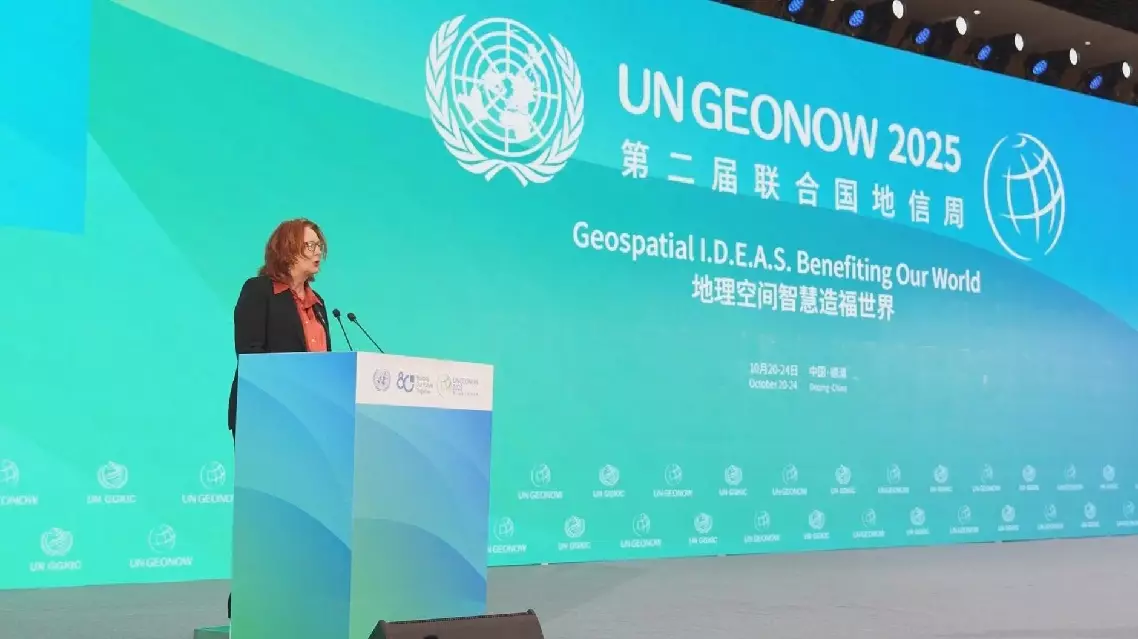
UN geospatial week held in east China, spotlighting cooperative initiatives