
Climate change threatens Winter Olympics, CSU researchers warn
Climate change threatens Winter Olympics, CSU researchers warn

Show Caption
Hide Caption
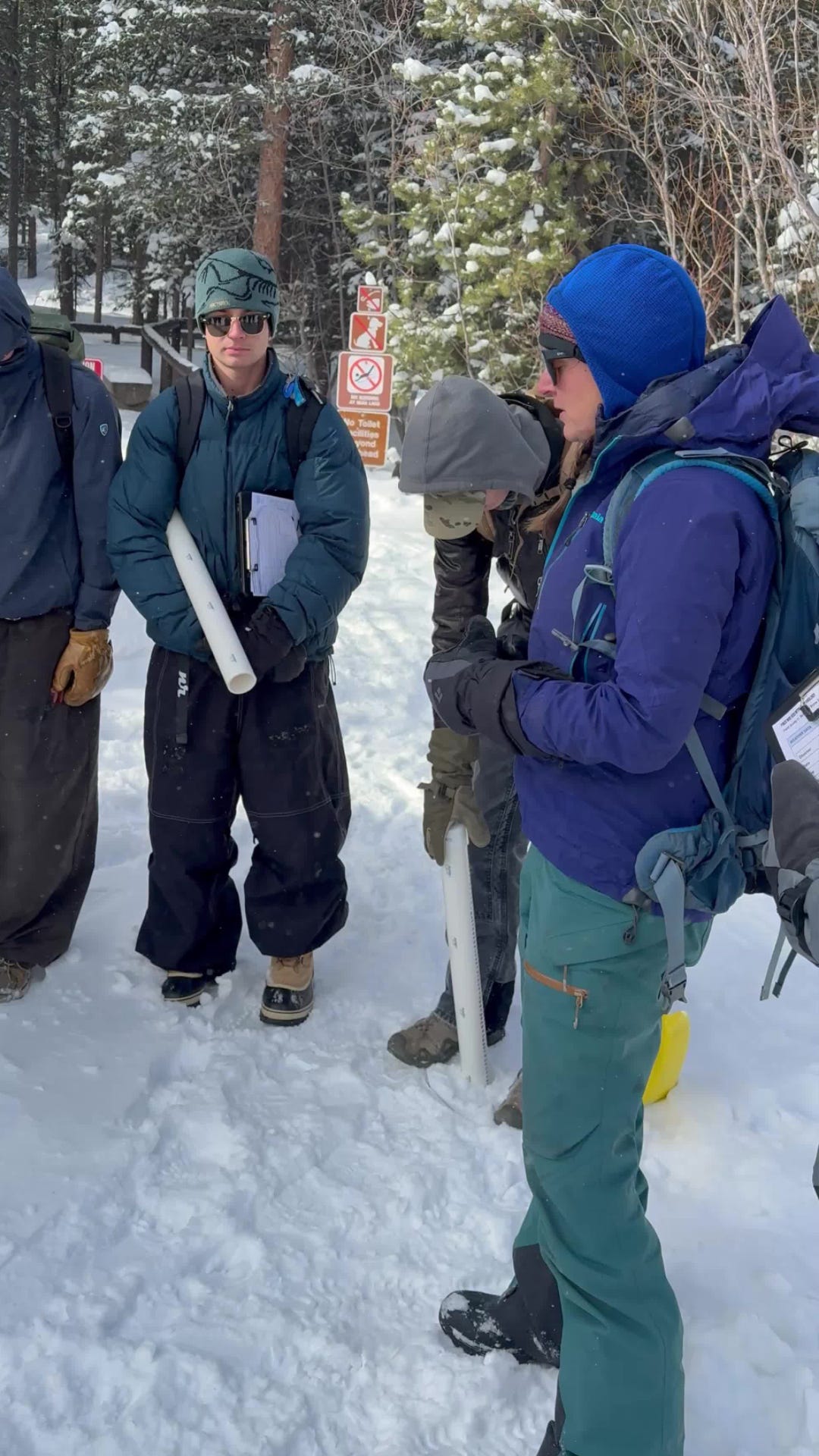
Polaris students conduct snow studies at Rocky Mountain National Park
Students in a Polaris Expeditionary School hydrology class take field trip to Rocky Mountain National Park to conduct snow studies.
- Climate change is threatening the future of the Winter Olympics by making snowfall less predictable.
- By the middle of this century, several former host cities may no longer have a reliable climate for the Games.
Enjoy the Winter Olympics while you can, because climate change threatens their future.
That’s the message two Colorado State University researchers shared in a recent article published in The Conversation — an independent, nonprofit news organization.
Citing several scientific studies in addition to their own research, CSU professor Steven Fassnacht and assistant professor Sunshine Swetnam warn that rising global temperatures are making winter snowfall and snowpack less predictable and reducing snow-making opportunities.
One study they cited found that the average daily high temperature in cities that have hosted the Winter Olympics since their start in 1924 in Chamonix, France, has risen by 13 degrees Fahrenheit — from 33 degrees in the 1920s through 1950s to 46 degrees in the early part of the 21st century.
Another study they cited looked at climate changes among 19 cities that have previously hosted the Winter Games. By the middle of this century, the study found, four of those cities — Chamonix; Sochi, Russia; Grenoble, France; and Garmisch-Partenkirchen, Germany — “would no longer have a reliable climate for hosting the Games, even under the United Nations’ best-case scenario for climate change.”
By the 2080s, the scientists conducting that study found, the climates in 12 former venues would be too unreliable to host the Winter Olympics’ outdoor events.
Many Winter Olympic events that used to be held on ice outdoors have moved to indoor venues, where the icy surface can be refrigerated, Fassnacht told the Coloradoan. Others, like bobsled, luge and Nordic ski jumping, have remained outdoors but are conducted on refrigerated tracks that require large amounts of energy to keep cool.
Refrigerating the narrow chutes used for those events, he said, is a lot more feasible than trying to refrigerate multiple slopes for alpine skiing events and multiple trails for Nordic skiing events.
The current dilemma for host cities, Fassnacht said in a Feb. 10 interview, is the unreliability of snowfall and snowpack. Weather conditions were too dry during the 2002 Winter Games in Salt Lake City, forcing organizers to rely heavily on snowmaking to provide adequate surfaces for skiing and snowboarding events, and too wet in Vancouver, British Columbia, where it rained frequently during the 2010 Winter Games.
Both of those locations still have adequate snow to host the Winter Olympics in some years but not every year.
“Not only are we getting less snow and having to rely more on snowmaking, but we’re in areas where if you pick the wrong year, you’re out of luck,” said Fassnacht, a professor of snow hydrology in CSU’s Warner College of Natural Sciences.
Current technology, he said, limits snowmaking capabilities as temperatures rise. So, snowmaking won’t necessarily be able to make up the difference in low-snow years at future Olympic sites, as it did in those years in Salt Lake City — which is also slated to host the 2034 Winter Olympics — Vancouver and Beijing in 2022.
“We likely will have to move the Winter Olympics to areas where snow is more predictable, and that’s probably not going to be in the lower 48 (U.S. states) anymore. Maybe if we’re lucky, we’ve got places in Idaho and Montana that could host, but we’re not going to Lake Placid (New York, which hosted the 1932 and 1980 Winter Games) again.”
Skiing and snowboarding venues for the 2026 Milano Cortina Winter Games used some snowmaking to supplement the natural snowpack. In anticipation, Italian officials had large reservoirs built near the venues to provide adequate water for snowmaking and put 1.6 billion cubic meters of artificial snow on the slopes and trails ahead of the Games, the Associated Press reported in a Jan. 23 article cited by the CSU researchers.
“The positive little bright spots are there’s always new technology that might help with snowmaking or moving natural snow around more, like they do at Copper Mountain where they put those big piles together so they can ski in August,” Fassnacht said.
The problem with that solution, he said, is that they can only cover a small portion of the mountain with snow. Enough to put an artificial surface down for skiing and snowboarding, but not enough for everyone.
“Think of the tourism component of people wanting to come to the Olympics,” Fassnacht said. “You’re not going to be skiing where they’re doing some of the events, but if you fly out to where the Games are to see these things, you probably want to get some turns in yourself. And if the snowpack is poor, that’s not going to be possible, and that’s going to have a huge impact on the local economy.”
Reporter Kelly Lyell covers education, breaking news, some sports and other topics of interest for the Coloradoan. Contact him at kellylyell@coloradoan.com, x.com/KellyLyell, threads.net/KellyLyell and facebook.com/KellyLyell.news.