
Climate change raises fear of new water crisis in São Paulo despite favorable short-term outlook
Although the reservoirs supplying the São Paulo metropolitan area are currently at “comfortable levels,” growing uncertainty over the climate, with frequent heatwaves and stretches of scarce rainfall, is raising calls for bigger efforts to ensure medium- and long-term supply, experts say.
As the rainy season nears its end, only Alto Tietê, one of seven systems supplying the Greater São Paulo, had below-average volume on February 27. At the same time last year, there were three. However, the increased frequency of temperature anomalies and decreased rainfall are raising concerns about the risk of water scarcity this year in Greater São Paulo, says José Marengo, general coordinator of the National Center for Monitoring and Early Warning of Natural Disasters (Cemaden). He admitted that forecasting is challenging in climatology and hydrology due to temperature fluctuations, he said.
“I wouldn’t call the scenario dangerous, but a preliminary alert,” he said. “In 2023 and 2024, we experienced El Niño, a phenomenon causing drought and high temperatures. However, in 2025, we are under La Niña, and the high temperatures persist.”
Home to 39 municipalities and over 20 million residents, the Greater São Paulo is supplied by the Cantareira, Alto Tietê, Guarapiranga, Cotia, Rio Grande, Rio Claro, and São Lourenço systems, whose average capacity stood at 61.7% on February 27. At the same period last year, the index stood at 77.3%, recalls Samuel Barreto, a water and food manager at The Nature Conservancy (TNC).
“Since practically October last year, considered the month when we resumed the rainy period, so to speak, almost no water source has reached historical averages in this region,” he said.
According to Mr. Marengo, rainfall has become irregular and occurring in storm bursts. “São Paulo is no longer the land of the drizzle,” he says, playing on the city’s old nickname to explain how the combination of reduced rainfall and increased temperature has become a significant issue, even leading to “bigger wildfires, as seen in western São Paulo” in the second half of 2024.
Ana Paula Cunha, a researcher at Cemaden, said intense rains recorded in the summer can create a misleading perception of above-normal rainfall. She compared data from the last 25 years and concluded that precipitation is more concentrated in fewer days, but it has rained less in the city of São Paulo. “From January to February this year, it rained on just 26 days [out of a total of 57], and the total rainfall on these days equates to 76% of what’s expected for the period,” she says. Previously, she noted, precipitation was more evenly distributed. “These data are a concrete example of extreme climate events: a lot of rain falling in a short period, leading to disasters.”
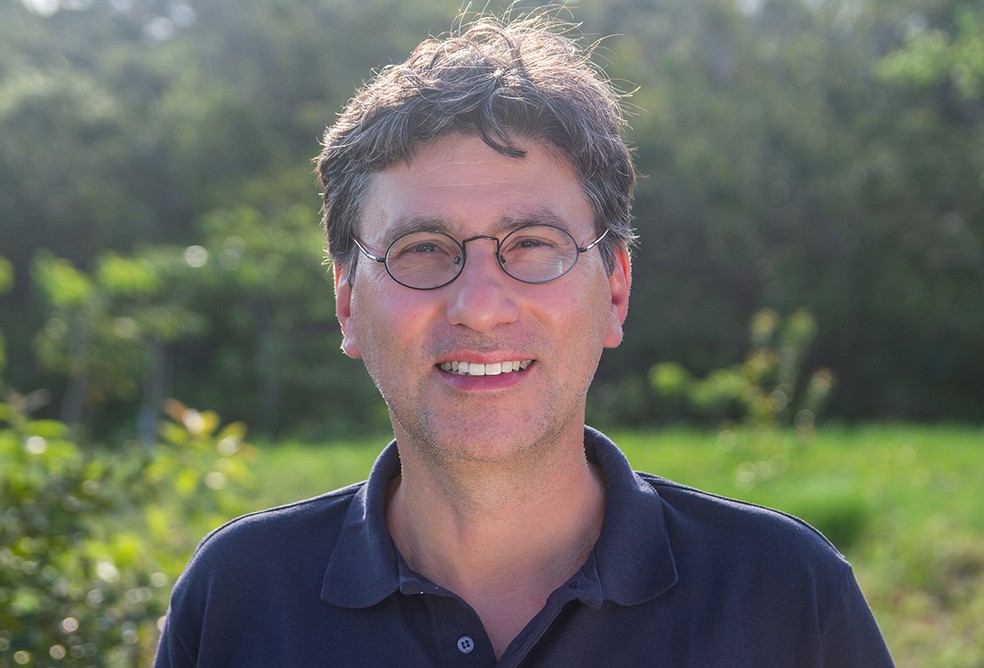
Samanta Souza, executive director of institutional relations and sustainability at water utility Sabesp, said the current situation is “quite comfortable, and the water security index is high. We also still have a rainy period ahead.”
Jerson Kelman, former president of the National Water Agency (ANA) who also has led Sabesp, said the water crisis that affected Greater São Paulo in previous years resulted in a significant number of engineering works, such as reservoir interconnections, which enhanced drought resilience. “The physical water supply situation in the metropolitan region is much better than it was ten years ago,” he says.
In February, when the country experienced two heatwaves, Sabesp set a record for water treatment, averaging 72.5 million liters per second. Even if only accounting for part of the month, this number is the highest since 2006. In February last year, the production average was 64.8 million liters per second. Mr. Kelman does is not too concerned about situation for the rest of the year, given current reservoir levels.
Mr. Marengo with Cemaden calls on sanitation companies and officials to improve the water transport and distribution system, as “poorly conditioned pipelines cause a lot of waste,” he said. “Society needs to understand that although Brazil is a country with great water wealth, it’s a finite natural resource.”
Ms. Cunha blamed changing rainfall patterns on the unregulated emission of greenhouse gases and is irreversible in the long and medium term. “There is no global project to reduce harmful emissions to the planet, and even if we zeroed this type of pollution today, we would see the results in the next 300 years,” she said. Collaborating in initiatives minimizing the impacts of these events is what can be done for now, she noted.
Ms. Souza acknowledged the increasingly frequent occurrence of climate events and said Sabesp has a water security plan already presented to the Regulatory Agency of Public Services of the State of São Paulo (Arsesp), which includes actions to keep the levels of reservoirs supplying the region stable.
In the short term, the company is expected to complete by mid-year the project to transfer raw water from the Itapanhaú River to the Alto Tietê reservoirs. The project will increase the system’s flow capacity by 2.5 million liters per second.
The plan to expand water collection systems from the Rio Grande and São Lourenço rivers for treatment and distribution stations in the metropolitan region is scheduled for 2027, she said. “We also have a robust management and loss reduction plan to collaborate in preserving these resources in our reservoirs,” Ms. Souza said.
The São Paulo Municipal Government’s Secretariat of Government (SGM) says that the sustainability of the water supply is a concern of the municipal water security plans, in the medium and long term.
The Executive Secretariat for Planning and Efficiency (Seplan) and the Secretariat of Green and Environment (SVMA) of São Paulo’s City Hall are developing a new municipal basic sanitation plan, expected to be completed by the end of the year with support from the United Nations Human Settlements Programme (UN-Habitat). The plan should update the city’s sanitation diagnosis to base investment in water security.
Mr. Barreto from TNC acknowledges the infrastructure improvements made since the 2014-2015 water crisis but says much more can be done amid climate unpredictability and water stress, which shows a continuous increase in temperatures, challenges in reaching historical rainfall averages, and unplanned urban growth near reservoirs.
“We can’t discard any type of alternative or assume that responses will come solely from what we call gray infrastructure measures [traditional, based on steel, concrete, and asphalt]. They are important but insufficient alone.”
Resilience and adaptation measures, must also be permanently incorporated and maintained, not only in potential risk scenarios, whose severity “tends to become more serious as we face these climate extremes and lose historical predictability,” he said.
Reforesting watersheds supplying the metropolitan region is one measure that could be leveraged, Mr.
Barreto said. During the water crisis that hit Greater São Paulo in 2014, the Cantareira system’s watershed and reservoirs had only 21.5% of their area covered by native vegetation, according to a study by the SOS Mata Atlântica Foundation.
“This also recovers investments as it reduces mitigation costs,” he says. A TNC analysis showed that Cantareira would have 130% more water during the 2014-15 water crisis if the vegetation in key points of the watersheds and reservoirs making up the system had been restored.
São Paulo State Secretary of Environment, Infrastructure, and Logistics Natália Resende states that since the beginning of the administration about 19,000 hectares have been reforested. Currently, São Paulo has 4.7 million hectares of protected environmental areas.
“By the end of March, Sabesp is expected to invest over R$55 million to reinforce water supply in the eastern and southern zones of the capital, areas historically suffering from drought. Three water treatment station modules and a reservoir in Jardim Europa will be constructed,” added the secretary.