
Climate Change Is Driving Up Fall Temperatures

This map shows the change in average fall temperature by county since 1970.
(Climate Central)
The start to meteorological fall began Sept. 1, (yes, meteorologists follow a different seasonal calendar), and while some areas across the U.S. have been enjoying cooler than average temperatures the last few weeks, that’s not the overall trend.
Data shows that autumn is warming nationwide, and it’s having an impact on everything from leaves to allergies to even hurricanes.
Falling Leaves, Rising Temperatures
A new study released by Climate Central shows that the fall season has warmed in every single county across the U.S. since 1970.

Weather in your inbox
The fastest warming region? The Southwest.
On average, cities have warmed by nearly 3 degrees Fahrenheit. However, in some of the fastest-warming regions, temperatures have warmed by more than 5 degrees. Interestingly, these locations are already known for their heat, and research shows, they are only getting hotter.
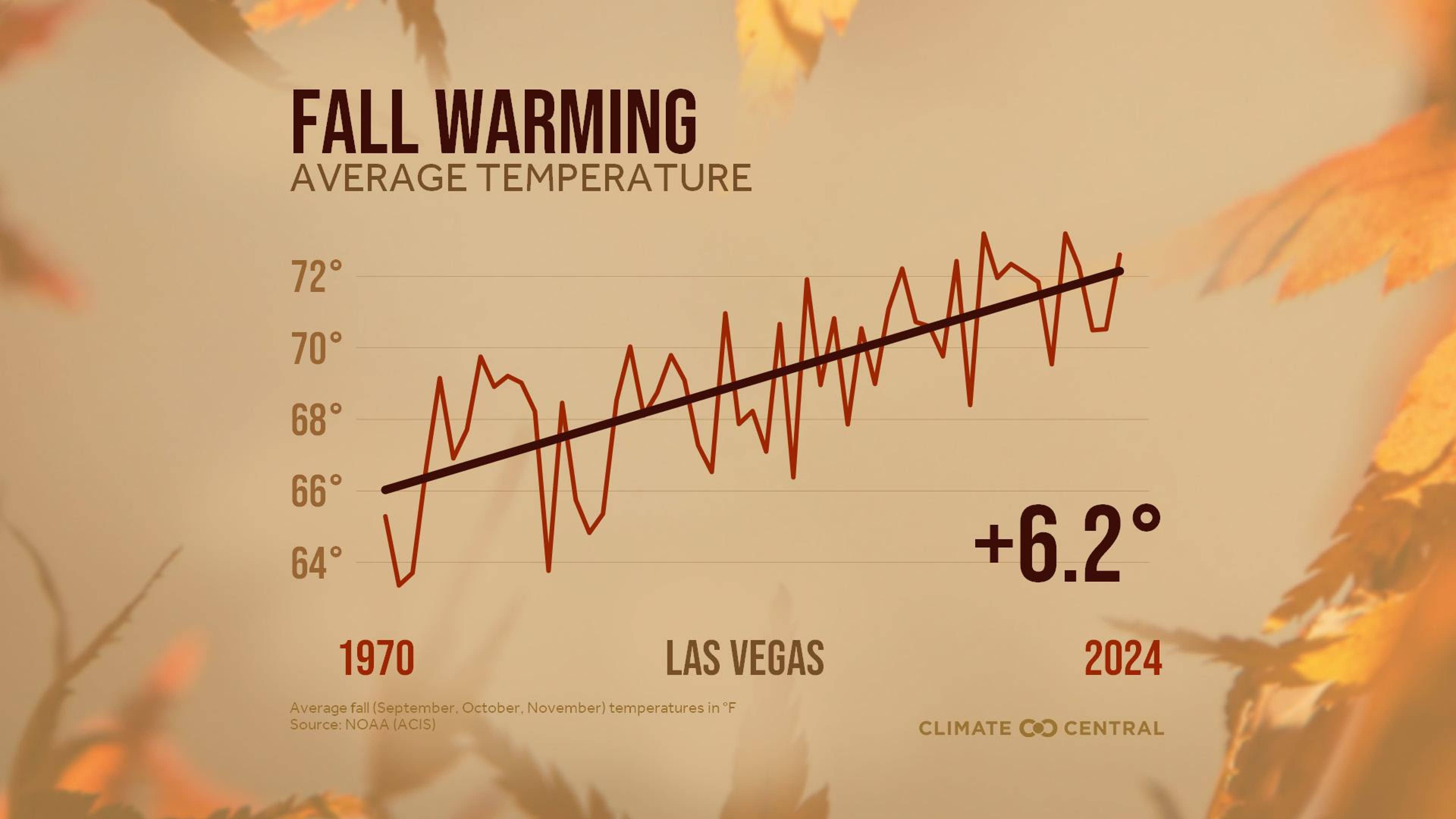
Temperature Changes During Fall in Las Vegas
(Climate Central)
Some of the top fall warming cities include:
- Reno, Nevada: 7.7 degrees
- El Paso, Texas: 6.5 degrees
- Las Vegas: 6.2 degrees
- Tyler, Texas: 5.8 degrees
- Tucson, Arizona: 5.8 degrees
Nearly half the cities analyzed now experience at least two more weeks’ worth of above-average fall days compared to 1970.
This autumn is no exception. According to the Climate Prediction Center, most of the country is expected to experience above-average temperatures through at least November.

This image shows the three month temperature forecast for the U.S.
(NOAA/Climate Prediction Center)
A Warmer Fall’s Global Complications
Not only will a warmer fall mean fewer cool, crisp mornings that we love to look forward to, but there are some pretty significant global impacts that can come from these rising temperatures as well.
Everything from heat-related illness to wildfires and allergies to hurricanes can be impacted by this warming trend.
Heat-Related Illness: A warmer fall also means a lingering threat of heat-related illnesses. This puts everyone from outdoor workers to student athletes at risk. The most vulnerable populations when it comes to heat are the elderly and young children.
Wildfires: A warmer fall is allowing for the wildfire season to continue longer and become more intense. This is especially true in the western U.S.
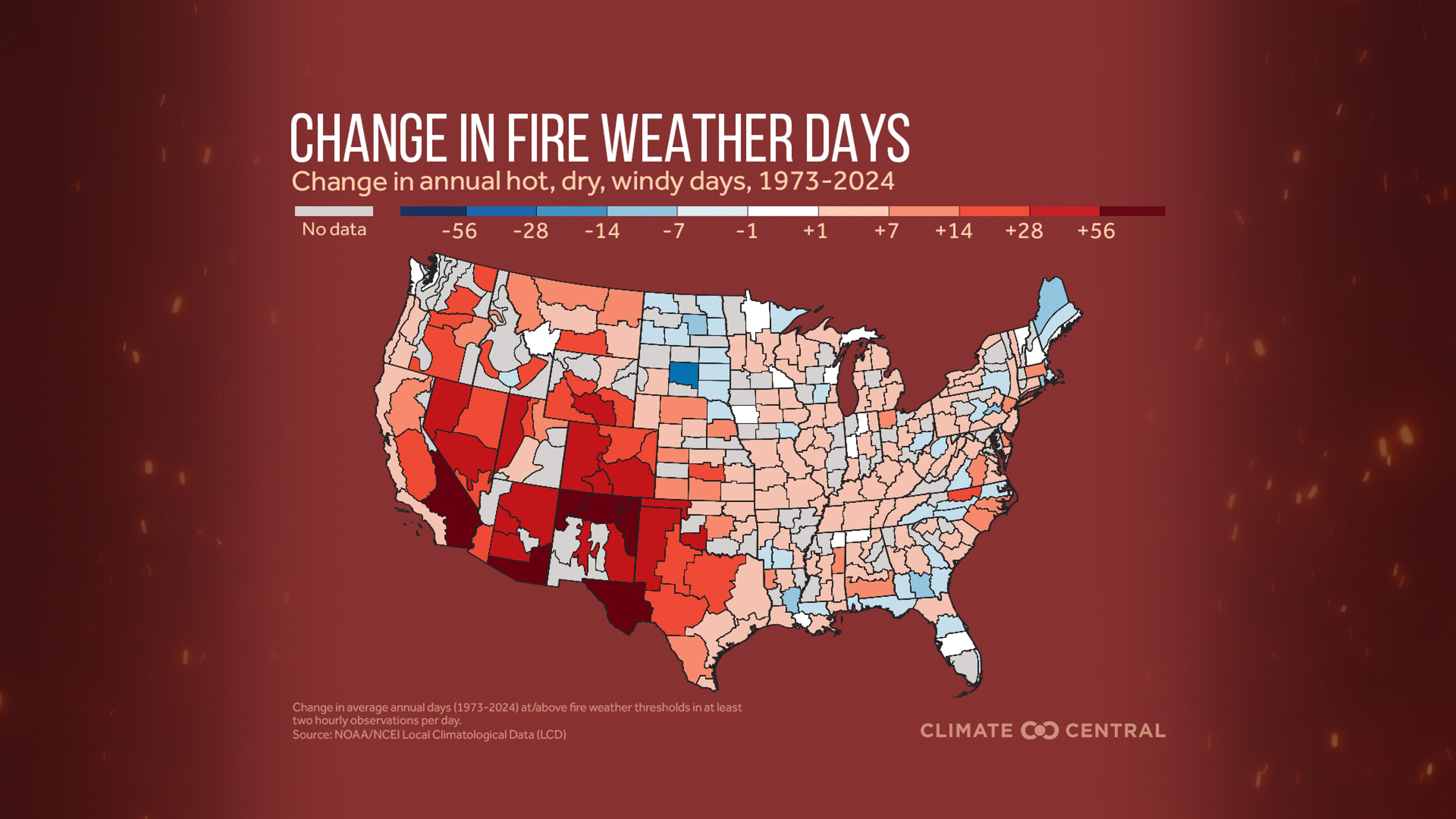
(Climate Central)
Fall Color: Conditions that trigger fall color each year are shifting with climate change. This has potential implications on everything from the ecological to the economic value linked to fall foliage.
Agriculture & Allergies: Warmer temperatures during the fall can be beneficial to some agricultural industries because it allows for a longer growing season. However, the longer growing season also contributes to more intense seasonal allergies for the millions of Americans suffering with allergies and asthma.
Insects: Warming allows disease-carrying insects such as mosquitoes to linger later into the fall.
Stronger Hurricanes: Warmer temperatures globally have caused ocean temperatures to stay warmer longer into the season. This year’s near-record ocean temperatures are part of the reason scientists have predicted an above-normal 2025 Atlantic hurricane season, which runs through Nov. 30. The warmer ocean temperatures help fuel stronger hurricanes.
We know that fall is not the exception. It’s part of a larger warming trend that’s affecting all four seasons across the U.S.
Jennifer Gray is a weather and climate writer for weather.com. She has been covering some of the world’s biggest weather and climate stories for the last two decades.