
Climate Change A Crisis of Nature, a Blow to the Poor
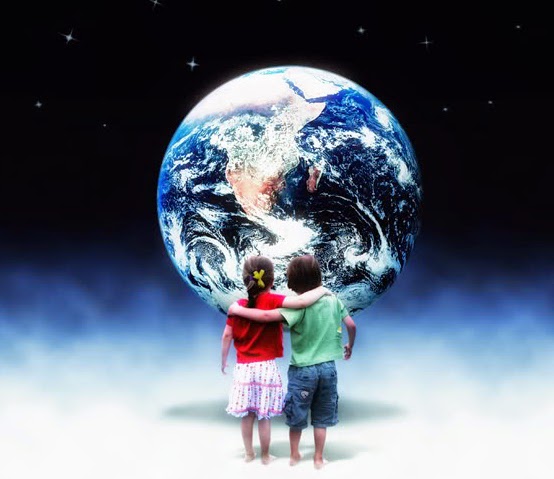
Climate change has emerged as one of the most serious challenges of our time, profoundly affecting the global economy and the environment. However, its impacts are not experienced uniformly across the world. Climate change is not merely an environmental issue; it is also a social, economic, and moral concern. Today, the consequences of the climate crisis are falling unevenly on different countries and communities. Poor and developing nations despite having contributed very little to the creation of this crisis are bearing its harshest impacts.
Across the globe, the intensity and frequency of natural disasters are steadily increasing due to climate change. Yet, these disasters do not affect all countries or social groups equally. Socially and economically vulnerable nations suffer the most, while developed countries, which are historically responsible for the bulk of greenhouse gas emissions, are relatively better equipped to cope with the crisis due to their advanced technology, economic strength, and access to resources. In this context, the need for climate justice becomes particularly urgent. Climate justice addresses this inequality and calls for fair, ethical, and sustainable solutions. Climate change is directly linked to social inequality, economic injustice, and moral responsibility. The principle of climate justice is grounded in the belief that those most affected by climate change must be given priority in policymaking and implementation.
Driven by unchecked industrialization and profit-oriented models of modern development, greenhouse gas emissions have risen dramatically, leading to a continuous increase in the Earth’s average temperature. As a direct consequence, natural disasters are becoming more frequent and more severe worldwide. Climate justice seeks to ensure that responsibilities for addressing climate change are shared equitably and that vulnerable communities are prioritized. The impacts of climate change vary widely across regions. Countries like Bangladesh and the Maldives are facing existential threats due to rising sea levels, while many African nations are grappling with intensifying droughts and deepening food crises. Financial support mechanisms such as the Green Climate Fund have been established to support climate adaptation and mitigation efforts. United Nations climate conferences have held extensive discussions on climate justice and have formulated certain policy frameworks. Every individual has a fundamental right to live in a clean and safe environment. If timely and effective action is not taken, future generations will be forced to endure extremely severe climate-related disasters.
During the financial year 2023, more than 2,100 people lost their lives across India due to extreme weather events such as floods and heavy rainfall the highest death toll recorded since 2014. In 2022 alone, India suffered economic losses of approximately USD 87 billion due to ten major climate-related disasters. According to the World Risk Report 2024 published by the Institute for International Law of Peace and Armed Conflict, India ranks third among 193 countries in terms of disaster risk. Climate change has placed fundamental human rights such as the right to life, the right to health, and the right to clean water under direct threat. In response, India has launched initiatives such as the National Solar Mission and the Green India Mission, which can serve as guiding examples even for developed nations. Expanding the use of solar, wind, and hydropower, reducing dependence on fossil fuels, promoting afforestation, strengthening water conservation, and adopting sustainable agricultural practices are critically important. Alongside these efforts, raising public awareness about the impacts of climate change and its solutions, strengthening cooperation between developed and developing countries, and adopting a shared global vision are essential. Climate justice and human rights are inseparably linked, as climate change is not only an environmental crisis but also a direct violation of the rights of vulnerable sections of society.
The principle of climate justice holds that the burden of environmental problems should be shared equally across all sections of society and that effective policies must be implemented to protect marginalized groups. The United Nations Development Programme assists countries in conducting comprehensive assessments of disaster risks and formulating effective, evidence-based policies. In reality, however, although developed countries have historically emitted far greater amounts of greenhouse gases, the most severe consequences are borne by developing nations. The principle of “common but differentiated responsibilities” is not being implemented effectively, and due to inadequate financial support, poor countries are deprived of the resources necessary to combat climate change.
The impacts of climate change are no longer confined to Earth alone; they are now causing serious disruptions even in Earth’s orbital environment. If global warming driven by the burning of coal, oil, and gas continues, the space available for satellites in low Earth orbit could shrink by one-third to as much as 82 percent by the end of this century. While the greenhouse effect warms the air near the Earth’s surface, it cools the upper layers of the atmosphere, reducing atmospheric drag on satellites and slowing the process by which space debris re-enters and burns up in the atmosphere. According to research by MIT, this phenomenon is contributing to the rapid accumulation of space debris. Data from The Aerospace Corporation indicate that millions of debris fragments at least three millimeters in size are orbiting the Earth at bullet-like speeds. In 2009, a collision between two satellites generated thousands of debris fragments. According to Ingrid Nomen, a space weather expert at the British Antarctic Survey, atmospheric density at an altitude of around 400 kilometers above Earth is decreasing by approximately two percent per decade, and rising greenhouse gas concentrations are likely to accelerate this process.
Climate change is severely affecting the environment, lifestyles, food security, water resources, health, and biodiversity. Over the past seven decades, the number of climate-related disasters has increased eightfold. As early as 1896, Swedish scientists warned about global warming. The first major report was published in 1975, and in 1988, NASA scientist James Hansen clearly alerted the U.S. Senate to the looming crisis. Despite countless efforts, conferences, and commitments, we have failed to effectively control the rise in global temperatures. As a result, 2024 has become the hottest year on record. The time for deliberation has passed. There is now an urgent need for immediate, decisive, collective, and ethical action to limit climate change; otherwise, this crisis will pose a direct threat to human existence in the future.
Subscribe to Our Newsletter
Get the latest CounterCurrents updates delivered straight to your inbox.
Vikas Parashram Meshram is a journalist