
China’s Yellow River will be choked by ice jams due to global warming: study
Ice jams will become more frequent in the Yellow River’s estuary by the end of this century, hitting Chinese coastal cities such as those in eastern Shandong province, according to a new study.
When warmer weather arrives in late winter and early spring, upstream ice begins to break apart and drift downstream. This ice then reaches colder downstream areas, where it can refreeze and accumulate, forming ice jams.
The localised hazard can be highly destructive. Flooding can occur behind the blockage, while a sudden ice jam collapse can release a torrent of ice and water, damaging downstream communities, wildlife and infrastructure.
“By integrating historical records with climate projections, we provide compelling evidence that climate warming is not only driving a long-term decline in ice jam flood frequency but also shifting the geographic distribution of hotspots downstream,” the scientists wrote.
Researchers from Jiangsu Normal University, the Chinese Academy of Sciences and the University of Bern in Switzerland published their findings – based on analysis of the dynamics of ice jam floods in the lower Yellow River over the past 160 years – in the peer-reviewed journal Science Advances last week.
The Yellow River is the second-longest river in China and the sixth-longest in the world. While it is considered the cradle of Chinese civilisation, the river is also called “China’s Sorrow” for its history of devastating floods that took millions of lives in the last two centuries.
In the latest study, the team found that since the end of the Little Ice Age at around 1850, one of the coldest periods of the past 10,000 years, climate warming has been systematically shifting ice jam patterns downstream along the lower Yellow River.

01:30
Riverside houses collapse after heavy rainfall hits southwestern China
Riverside houses collapse after heavy rainfall hits southwestern China
With every 1 degree Celsius rise in temperature, ice jam hotspots shift downstream by about 86km (53 miles), they found. However, in the long term, related floods were expected to diminish under climate warming.
Lead author Yu Shiyong, professor at Jiangsu Normal University’s School of Geography, Geomatics and Planning, said this would mean coastal cities such as Binzhou and Dongying were likely to face growing exposure to ice jam flood risks.
He said these neighbouring cities in the eastern province of Shandong were vulnerable regions that would require proactive adaptation measures.
When asked about the outlook of the river in the coming decades, Yu said: “The flow regimes will likely differ markedly from recent decades.
“Sediment loads will likely decline further due to upstream dams, soil conservation and shifting rainfall patterns, causing the riverbed to incise and narrow, lowering groundwater tables and reducing floodplain fertility, while the Yellow River Delta may erode without sufficient sediment supply.
“Global warming may continue to drive a notable northward shift in typhoon tracks and intensified atmospheric moisture transport, substantially altering precipitation patterns in the North China Plain and leading to more uneven rainfall distribution, with extreme rainstorms becoming both more frequent and intense.”
Yu said the Yellow River was entering “a new era of rain-dominated floods” with fewer ice-related hazards, pointing to the Henan deluge in 2021 and floods in Beijing, Tianjin and Hebei in 2023 from heavy rain.
01:05
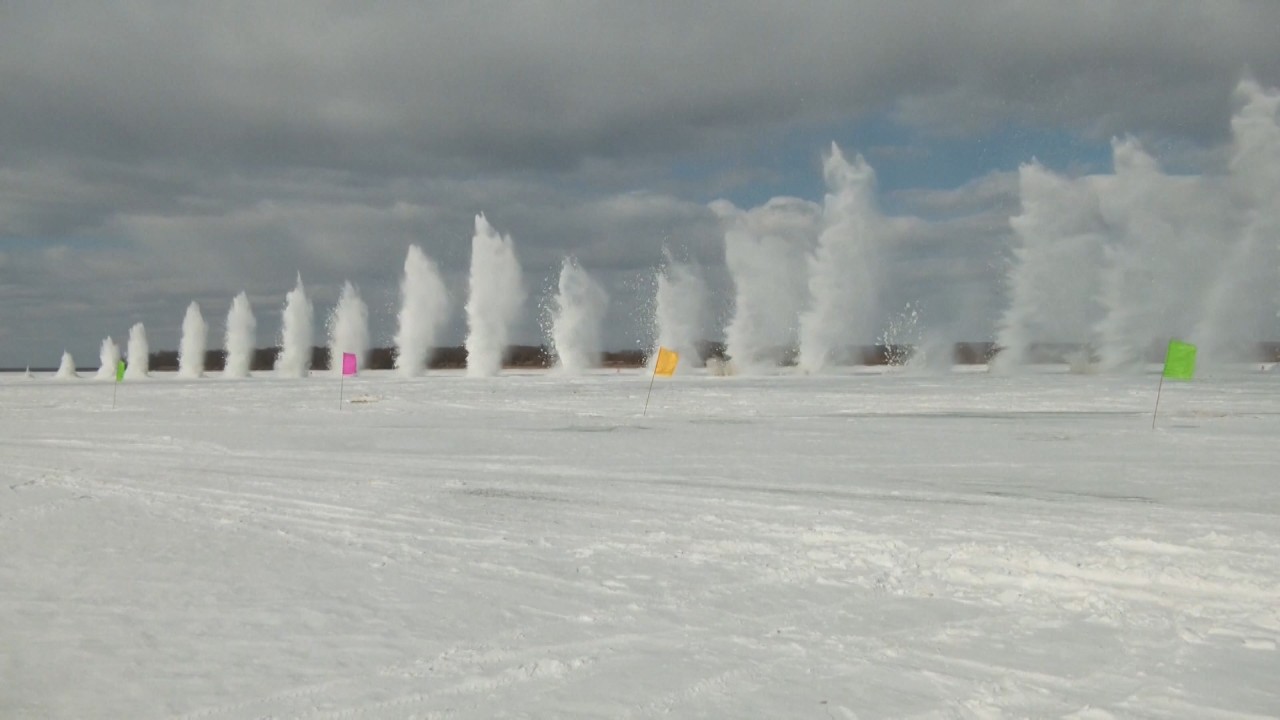
Chinese workers take explosive approach to clear ice jams
Chinese workers take explosive approach to clear ice jams
“Policymakers must prepare for both water scarcity and catastrophic floods in the same basin and also balance ecological needs with flood protection.”
He said the Xiaolangdi Dam in Henan province, built for the climate of the last century, “traps too much sediment and lacks flexibility for extreme rains”.
“The dam should not be used just as a flood controller,” he said. “Its role should shift accordingly from passive flood control to active sediment-water regulation, incorporating strategic sediment flushing, dynamic pre-storm reservoir drawdown and coordinated releases with upstream dams.”
As traditional levees alone cannot cope with climate-amplified storms, Yu said sponge city upgrades to absorb excess rain, floodplain reconnection and AI-powered early warning systems were needed to handle intense precipitation.
“This integrated approach is crucial to navigate between the dual threats of water scarcity and catastrophic flooding in a warming climate,” he added.