
Carpe Wine: The grapes built for climate change
There’s a wine grape out there that can shrug off temperatures colder than anything Vail Pass has thrown at us – we’re talking 71 degrees below zero. If that doesn’t sound like a grape you’re used to hearing about, you’re right. It’s not, it’s a hybrid. With the climate changing, and impacting all agricultural crops, hybrids are something you will likely begin to see more of. So, what exactly are they?
Most of the wine we drink – chardonnay, cabernet sauvignon, pinot noir, sauvignon blanc – comes from a single European grape species, Vitis vinifera. French-American hybrids are a new category that growers are starting to lean on as the climate changes. They’re created by crossing V. vinifera with a native American grape species, commonly Vitis labrusca, to produce an entirely new grape.
Wait, what? Two species making a baby grape? Let me explain.
Normally, grape crossings happen in nature between two grapes of the same species. Cabernet franc and sauvignon blanc, for example, are both V. vinifera – cross-pollinate them and you get cabernet sauvignon. Researchers have done this deliberately too, pinotage was bred by crossing two V. vinifera grapes, pinot noir and cinsault. Either way, the parents are the same species, so the offspring is still 100% V. vinifera.
A hybrid is different. It crosses two different species entirely – V. vinifera with V. labrusca.
Support Local Journalism
To understand why that’s a big deal, it helps to know about grafting, since people often confuse the two. Back in the 1860s, a root louse called phylloxera was wiping out European vineyards. Scientists found a fix, take a European V. vinifera vine and graft it onto the roots of a hardy American vine that naturally resisted the aphid-like insect. Picture cutting two separate vines and fusing them together at the joint – the American roots go in the ground, and the European vine grows on top. Grafting saved V. vinifera wine as we know it, and it is still standard practice today.
But here’s the key point, grafting doesn’t create a new grape. The fruit above ground is still pure V. vinifera. A chardonnay vine grafted onto American roots is still chardonnay — just a sturdier version of it.
Most of today’s research on French-American hybrid grapes happens right here in the U.S., at the University of Minnesota and Cornell University, and climate change has only added urgency to the work. The idea is simple, combine the winemaking quality of the European vines with the resilience of the American ones, and you get grapes that can handle brutal cold, disease pressure, pests without relying on heavy irrigation or a season’s worth of spray treatments.
This is where it gets relevant to all of us. Winemaking regions everywhere are dealing with the same set of problems: less predictable frost dates, hotter and longer heat spikes, drought years that strain irrigation, and pest and disease pressure moving into places that never used to worry about it. Just look at the horrible fires in Bordeaux this vintage.
Hybrids sidestep a lot of the climate issues, minus wildfires. They need little to no pesticides, they shrug off temperature swings that would outright kill V. vinifera, and they get by on a fraction of the water. For growers, that also means lower input costs at a time when farming margins are tight everywhere.
That combination, resilience plus sustainability plus economics is exactly why you’re going to start hearing more about hybrids. They’re no longer just a novelty for cold-climate pioneers in the upper Midwest; they’re a genuine climate-adaptation strategy, and more regions, including higher-elevation ones, are taking a serious look – including Colorado.
“Over the past decade, Colorado wine growers have started using more modern cold-hardy grape cultivars alongside the traditional Vitis viniferavarieties. Two harsh growing years in 2013 and 2014 resulted in a reduced yield of Vitis vinifera due to extreme cold damage. Since that time, cold-hardy cultivars have increased to roughly 20% of planted varieties, up from less than 5% of all vines,” said Kyle Schlachter, executive director of the Colorado Wine Industry Development Board.
Schlachter continued, “Losses due to extreme cold events in the 2020 and 2021 vintages further amplified the importance of using more cold-hardy grapes. These cultivars not only provide growers with viable harvests in tough vintages but also produce award-winning wines. In four of the past five Colorado Governor’s Cup competitions since 2021, we have seen a wine made from Chambourcin as part of the Governor’s Cup Collection – the top wines in the competition.”
Chambourcin, released commercially in 1963, is a wine grower favorite because of its high disease resistance, cold hardiness, deep red pigmentation, and balanced acidity. Along with consistently being included in the Governor’s Cup Collection, Chambourcin was part of the Best in Show winning blend in 2024! Over the past five years, we’ve also seen two rosés of St. Vincent, a Corot Noir, and an Aromella as part of the Collection. The Aromella was named Best White Wine in 2025. The quality of these wines combined with the pioneering spirit of Colorado winemakers and the curiosity of Colorado wine consumers will likely result in the continued use and success of these fun and innovative grape varieties.”
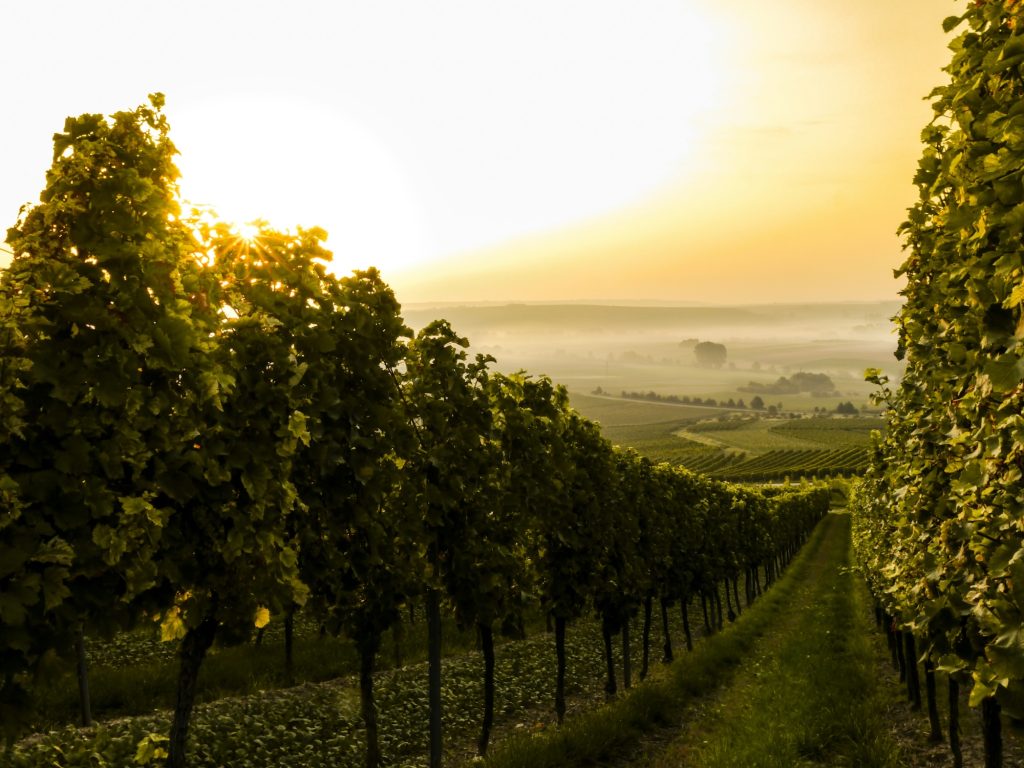
The trade-off with hybrids, historically, has been flavor. On their own, the American parent grape species can taste musky – “foxy” is the polite wine term, though “wet basement” gets the point across faster. V. vinifera, meanwhile, tastes wonderful but can easily fold under disease and cold. Hybridizing is the workaround, and researchers have gotten a lot better at it. Here are a few other hybrids worth knowing about and exploring.
Whites
Chardonel is a Chardonnay–Seyval Blanc cross with real richness and balance. This is one of my personal favorites and if you ever make it to Missouri, Stone Hill Winery and Montelle Winery both make great chardonel’s.
La Crescent is an aromatic, off-dry white wine with notes of caramel and green apple.
Traminette (pronounced tra-men-et) is a cross between the European grape Gewürztraminer and French-American hybrid grape called Joannes Seyve. It can go anywhere from bone-dry to sparkling to dessert-sweet wines.
Reds
Marquette was released by the University of Minnesota in 2006 from pinot noir and Frontenac parentage, makes a medium- to full-bodied red with pomegranate, cherry and baking spice.
Petite Pearl was bred in Minnesota and released in 2010, survives down to -32°F and produces something genuinely rich and complex – cassis, soft tannin, a long finish.
St. Croix and Sabrevois round things out with bold, structured, cold-hardy reds.
Hybrids still make up a small sliver of vineyards worldwide, and until recently most of Europe banned them outright. But as growers everywhere look for varieties that can handle unpredictable extremes, don’t be surprised if you start seeing more of these names on wine lists. The next time you’re in the wine shop or tasting room, snag a bottle or two and let your taste buds be the judge. Better yet, if you’re local to Colorado check out some of the award-winning hybrids right here.