
Can Phoenixville’s poop become ‘guilt-free coal’?
This story is part of the WHYY News Climate Desk, bringing you news and solutions for our changing region.
From the Poconos to the Jersey Shore to the mouth of the Delaware Bay, what do you want to know about climate change? What would you like us to cover? Get in touch.
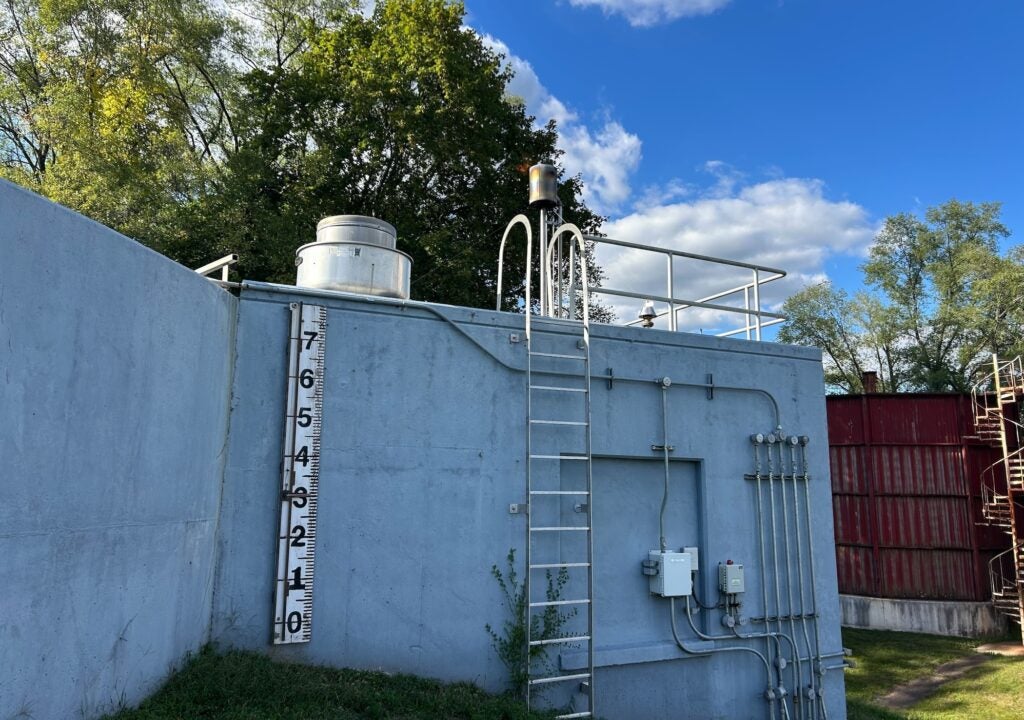
Inside a new building at Phoenixville’s sewage treatment plant, shiny, silver pipes wind between a heating apparatus, through green shipping containers and a giant hydraulic press. Nearby, against a wall sits a pile of a dark, brown substance that looks like dirt.
But it’s something much more valuable than dirt. It’s “pretty much” coal, said Dan Spracklin, the founder of a company called SoMax. But instead of being mined from deep underground, it’s made from sewage sludge, or as Spracklin puts it, “today’s carbon.”
“This was food that you ate,” Spracklin said, picking up a lump the size of a potato during a recent tour of the facility. “You went to the bathroom. We processed it.”
“This is like guilt-free coal,” he added.
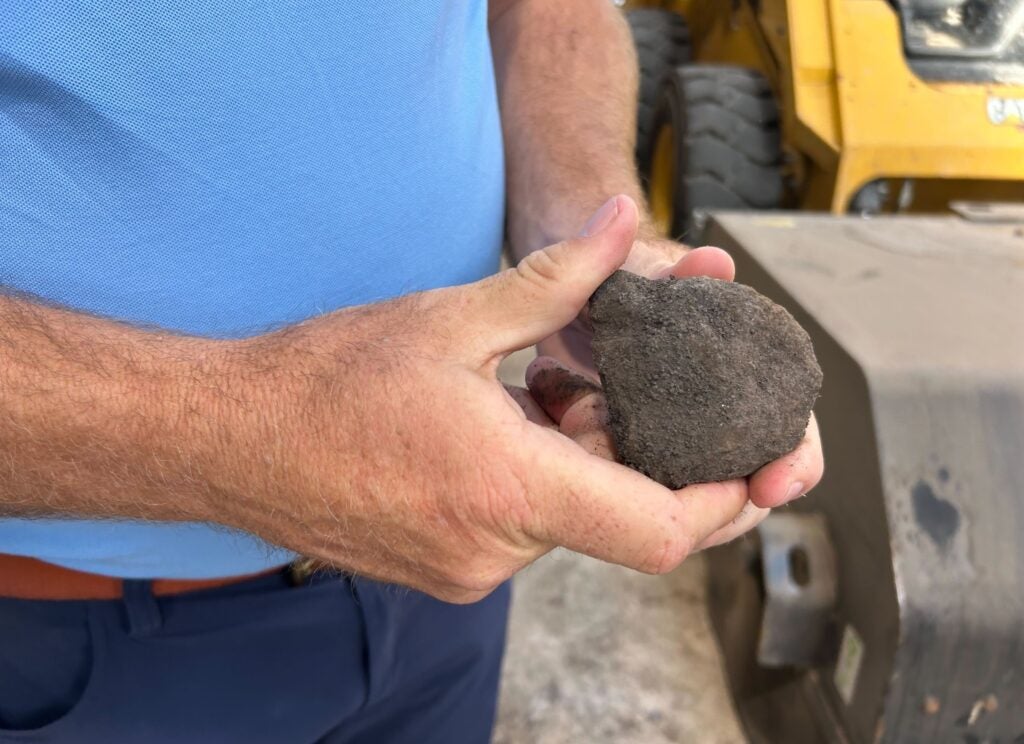
It’s “guilt-free” because when this coal-like substance is burned, it releases carbon dioxide — but only carbon that just months ago was pulled from the atmosphere by plants or consumed by animals to create the food that Phoenixville residents ate, Spracklin said. Mined coal, on the other hand, releases carbon that had been sequestered underground for millions of years.
To turn Phoenixville’s sewage sludge into this energy-rich substance known as hydrochar or biocoal, Spracklin’s company uses a process called hydrothermal carbonization.
It uses pressure and heat within the range of a home oven to speed up the natural fossil fuel formation process by millions of years.
The new facility in Phoenixville, called PXVNEO, is a collaboration between the borough and Spracklin’s company. It claims to be the first of its kind to break ground in North America, though a similar facility was also recently built in Mexico City. The facility could start processing Phoenixville’s sewage as early as this spring.
The borough first announced the project in 2022, with the goal of eventually creating a circular system at the sewage treatment plant, where the town’s waste generates more than enough power to run the plant. Officials hoped to start operating the facility in 2024.
But after a test run in 2023, neighbors noticed a new odor wafting from the wastewater treatment plant — one that smelled like “burnt coffee” or “burnt cabbage,” said E. Jean Krack, Phoenixville’s borough manager.
“There’s a little bit of [an] aroma here,” Krack said of the new hydrothermal carbonization plant. “We have to control that. We don’t want to offend our neighbors.”
So the borough ordered a “supercharged” air filter to control the odor, which should arrive by the end of this year, Krack said.
Next, Phoenixville needs to obtain an operating permit from state environmental regulators, which Krack hopes to receive early next year.
Why Phoenixville sees ‘guilt-free coal’ as a climate solution
SoMax and Phoenixville officials hope the hydrothermal carbonization facility will decrease the borough’s planet-warming emissions and advance its climate goals.
While “biocoal” may sound dirty, boosters argue it traps much of the carbon that would otherwise be released to the atmosphere from sewage sludge. When it’s burned for energy, it can replace coal that would otherwise be mined from underground — decreasing greenhouse gas emissions overall.
“If we did nothing to the biosolids, it would already emit that CO2,” Spracklin said. “Here we can gasify it or burn it for energy, and then burning that will release that same amount of CO2, but it’s not additive to the atmosphere.”
After it’s made at a facility like Phoenixville’s, there are three paths biocoal can take. It can be incorporated into building materials like bricks or cement, where its carbon stays sequestered for as long as the material survives. It can be burned for energy, and its carbon will be released into the atmosphere. Or it can be buried in a landfill, where microbes will release some of the carbon and the rest will remain trapped, said Juliana Vasco-Correa, a professor of agricultural and biological engineering at Penn State University.