
Breckenridge water treatment plant rehabilitation could cost up to $70 million as design progresses
The projected cost to rehabilitate Breckenridge’s aging Gary Roberts Water Treatment Plant has climbed to as much as $70 million as design work on the 54-year-old facility progresses.
Once final design, construction administration and contingency costs are included, town staff now estimate the entire project to cost between $65 million and $70 million.
That price has risen from the roughly $54 million estimate presented to Breckenridge Town Council in January, when plans were less developed. Town staff attributed the increase to a longer anticipated construction timeline and a more detailed understanding of the work required to rehabilitate the plant.
The cost estimate isn’t final. Phelps plans to return to council with an updated projection later this year, before a guaranteed maximum construction price is established in 2027.
Despite the mounting costs, town officials say rehabilitating Gary Roberts has grown increasingly unavoidable. Breckenridge’s peak water demand already exceeds what its newer North Water Treatment Plant can reliably produce on its own.
“We absolutely need two water treatment plants,” Phelps said.
He said the town’s maximum daily water demand sits at just over 5 million gallons. At times of peak use — typically summers, holidays and during large town events — Breckenridge cannot effectively produce that much treated water without both plants operating.
A 2014 feasibility study anticipated Breckenridge would reach that point sometime between 2026 and 2034. Phelps said the town is there now.
“Our maximum daily demand is greater than what one plant can operate.”
The town is currently working to update its water master plan to better understand how future population and development could affect demand. The work is proceeding alongside a water rate study examining how to finance the Gary Roberts rehabilitation and other long-term utility needs. (The study also accounts for the ongoing Silver Queen water main replacement and the installation of a new valve at the North water plant next year.)
Predicting future demand, however, is more complicated than tallying the number of housing units Breckenridge expects to add over the coming years.
Town Engineer Shannon Cahill said many homes see high seasonal use, while summer irrigation can significantly affect consumption. And if more second-home owners began spending additional time in Breckenridge, she said, water use could grow differently than current projections anticipate.
The master plan is expected to give council a clearer picture of the water system’s ultimate capacity and could eventually inform decisions about conservation, development and providing water outside town limits.
“We’re not there today, but there is a foreseeable point in the future — whether it’s 15 or 20 or greater years out — that we’ll have to have that build-out number and capacity in mind,” Phelps said.
Aging plant needs major overhaul
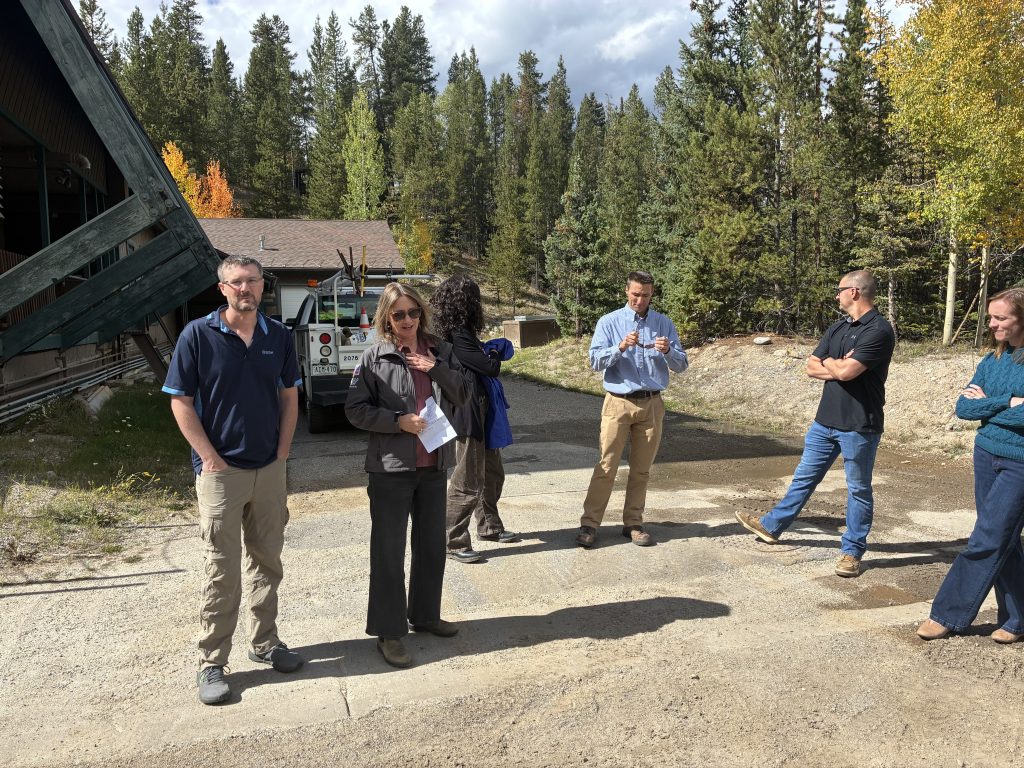
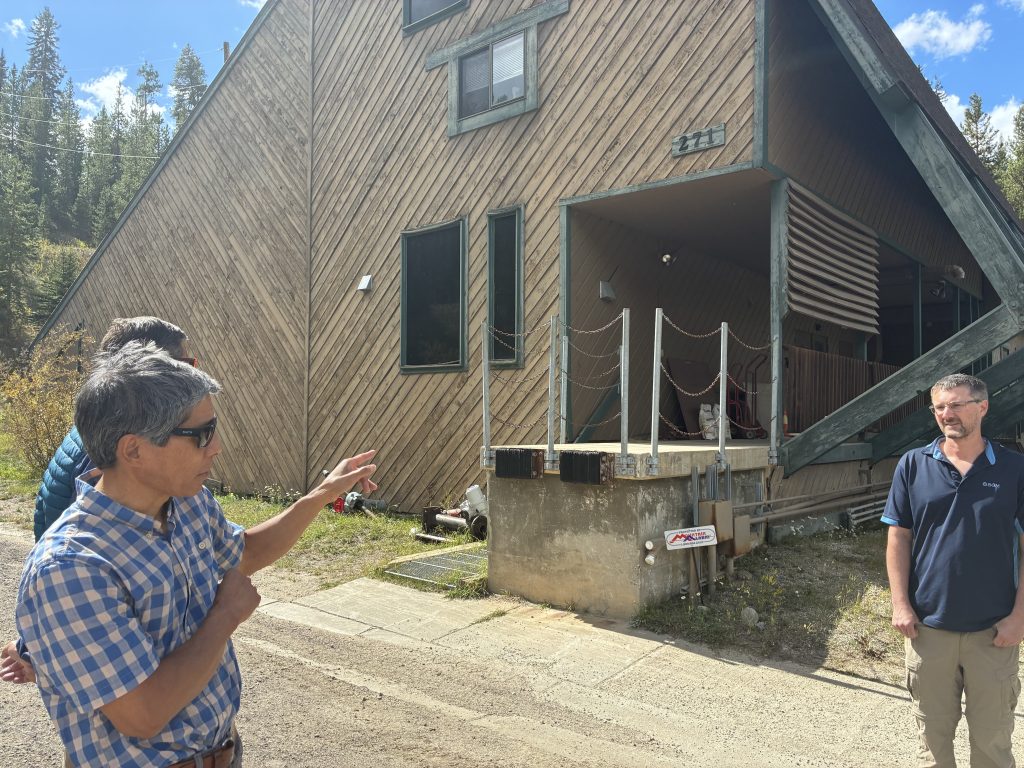
The Gary Roberts plant went online in 1972 near Goose Pasture Tarn and has since undergone a series of upgrades.
When Laura Lynch became water division manager in 1999, some of the shortcomings proved hard to miss.
“We didn’t even have a proper bathroom here, and we had an incinerating toilet,” Lynch recalled during a tour of the facility in Blue River before the council meeting Tuesday, Sept. 22.
The plant also lacked a backup generator, she said, meaning operators had to “hope” electricity returned quickly whenever the power shut off. The town addressed both issues that year.
But after more than five decades of operation, major components have deteriorated to the point that town officials say another round of piecemeal improvements will no longer suffice. Critical equipment has reached or exceeded its expected lifespan.
“The tanks are leaking,” Phelps said before the tour. “We have difficulty treating water, depending on the time of year. … It’s not efficient.”
The state has also previously flagged the lack of potable water inside the treatment facility itself, according to Lynch, who said the drinking water available to staff now must meet a stricter set of compliance standards.
Rehabilitation would replace the plant’s aging filtration system and install a new pretreatment process designed to remove sediment, organic material and algae from water before it reaches the filters.
Goose Pasture Tarn has a history of algal blooms, and design engineers said algae can complicate the treatment process. Lynch said the plant is currently undergoing a bloom of elodea weed, which can grow aggressively with high levels of nutrients like nitrogen from fertilizers and other runoff.
Without an effective pretreatment system, Lynch said the plant’s filters clog and require frequent cleaning. She said roughly 15% of the water moving through the facility is lost during treatment, though operators capture and recycle that water back into the system.
Due to those complications, Lynch said, “We have about 95% or greater efficiency at the North Plant.”
Plans also include installing deeper filter basins and new chemical storage areas intended to improve operator safety. The new pretreatment equipment will require an addition to the existing treatment building. Engineers continue evaluating upgrades to the plant’s disinfection system that could reduce the amount of chlorine needed while improving finished drinking water supply.
The pretreatment system could also help the plant handle changes in water quality if a wildfire ever affects the Goose Pasture Tarn watershed.
‘Gravity is free’
Despite its age and inefficiencies, the Gary Roberts plant has an advantage the town’s newer treatment facility cannot replicate: its location.
The plant sits directly below Goose Pasture Tarn — the town’s sole municipal water source — allowing water to flow by gravity from the reservoir into the treatment facility and then downhill into Breckenridge’s distribution system. The North Water Treatment Plant, by comparison, relies on pumps to move source water uphill for treatment, requiring more expensive equipment and maintenance.
“Gravity is free,” Phelps said.
Lynch said Gary Roberts currently produces around 70% of Breckenridge’s treated water, compared with roughly 30% from the North plant. She estimated the North facility costs four times as much in electricity to operate because of its reliance on pumping.
Phelps said Gary Roberts was always envisioned as the town’s primary treatment facility. And it remains tied to Breckenridge’s senior water right at Goose Pasture Tarn, which provides up to 3.1 million gallons per day and has helped determine the plant’s planned treatment capacity.
The town selected Moltz Construction this summer to provide preconstruction services.
Council members had previously questioned whether the project had been competitively priced and whether the town should bring in an outside consultant to further scrutinize the design and cost.
Cahill said Tuesday she doesn’t believe another review would provide enough benefit to justify the additional expense and delay.
“I think the process we’re going through is very transparent and very competitive,” Cahill said.
The town continues assessing how to finance the project, including possible state revolving-fund loans, federal funding and revenue bonds. Those options should become clearer by November, while the ongoing water rate study will evaluate what rate or fee adjustments may be needed to support the utility over the long term. The town hasn’t yet indicated whether it intends to increase water rates for residential customers.