
The Arctic Is On Fire — And No, It’s Not Normal
From The Expert: The Arctic Is On Fire
The idea of the Arctic catching on fire sounds counterintuitive. But in reality, it’s happening a lot more lately — at a 3,000-year high.
The Arctic acts as the “Earth’s early warning system,” because it responds to climate change more rapidly than other regions. And right now, it’s sending us some big signs of broader environmental impacts that will eventually trickle down to the rest of the globe.
Historically, wildfires were incredibly rare in the Arctic. But right now, their size and frequency have increased, according to Jennifer Gray, a meteorologist and climate writer at The Weather Channel.
“Much of Alaska’s north slope has really been nothing but a wet tundra, and this area has basically been kept as a fire barrier for thousands of years,” she said.
(MORE: Key Update On A Possible Super El Niño Later This Year)
Researchers can compare modern satellite data of “burn scars” with ancient records of peat layers (which contain preserved charcoal).
“That’s how scientists realized that this is something new that we haven’t seen in thousands of years,” Gray said. “And what that tells us is that this is not a climate cycle; this is abnormal.”
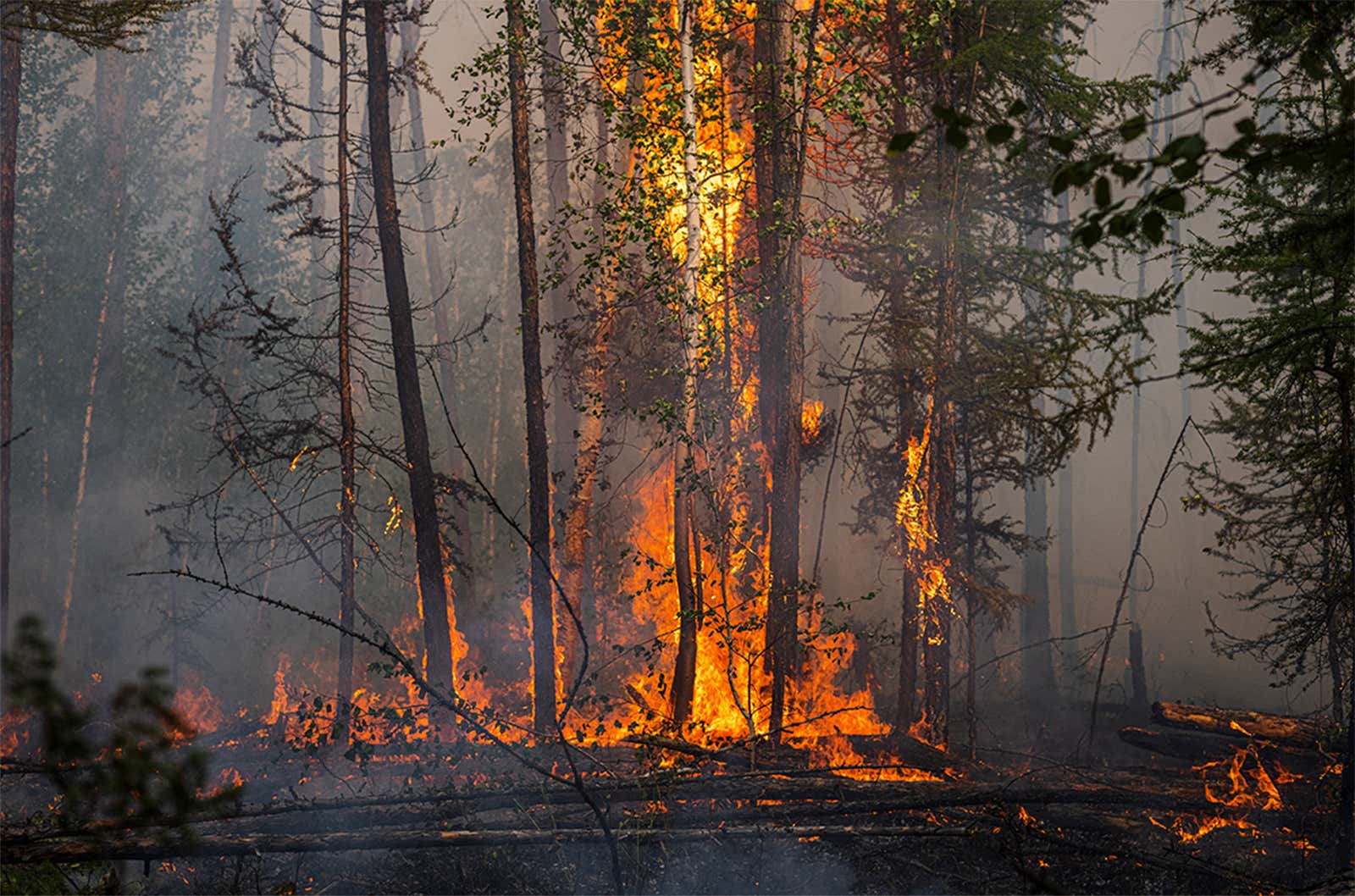
This photograph, taken on July 26, 2021, shows a forest fire outside the village of Byas-Kyuel. It was the third straight year that Russia’s coldest region — with a border on the Arctic Ocean — has seen wildfires so vicious that they have nearly overwhelmed its Aerial Forest Protection Service. Fuelled by a June heatwave, wildfires swept through more than 1.5 million hectares of Yakutia’s swampy coniferous taiga with more than a month still to go in Siberia’s annual fire season.
(Dimitar Dilkoff / Getty Images)
Historically, fires in this region occurred centuries apart; now, they are more frequent, bigger and increasingly difficult to extinguish because they burn deeper into the peat. From there, they can smolder underground for a very long period of time — and then all of a sudden ignite new fires.
“Unfortunately, you just have the perfect setup for fire conditions,” she said. “It also allows these fires to spread rapidly because it goes from shrub to shrub to shrub, and eventually you have a huge wildfire on your hands.”
(MORE: Here’s Our Summer 2026 Outlook)
The Arctic is warming four times faster than the global average. And this rapid heating has fundamentally altered the landscape.
Rising temperatures have dried out surface soils and melted permafrost. Areas that were once wet tundra are now seeing the expansion of shrubs and woody plants, burnable vegetation which acts as fuel for fires.
“This is something new in our warming world that we’re going to have to deal with,” Gray explains. “We also know that what happens in the Arctic doesn’t stay in the Arctic.”
(MORE: Mount Everest Climbers Warned About Massive Cracking Ice Wall)
And what might be the worst part? Each fire adds to the warming even more, creating a dangerous feedback loop that affects the entire planet.
Arctic soils and peat store massive amounts of carbon, so when they burn, that carbon is released into the atmosphere. Carbon accelerates global warming, which cycles back around to dry out the Arctic more, leading to even more fires — and that continues back around over and over.
“So, the biggest takeaway from this is that the Arctic used to resist fires and now it’s actually fueling them, and that’s having a bigger impact on the globe’s climate,” Gray said. “This is going to require scientists to have better monitoring and possibly mitigation practices in areas that we have never seen before.”
weather.com content writer Ada Wood enjoys exploring the stories that science and climate teach us about our natural world and how it influences the way we live in it.