
The AI browser wars are about to begin
The state of web publishing looks increasingly grim. Dotdash Meredith, which publishes sites including People and Food & Wine, said on its most recent earnings call that traffic from Google is now roughly half what it was four years ago. Business Insider said on Thursday that it was laying off 21 percent of its staff, saying the business “must be structured to endure extreme traffic drops outside of our control.” It joined a list of publishers that have laid off journalists this year that also includes CNN, Vox Media, HuffPost, and NBC.
The web is much larger than the collection of sites that publish journalism, of course. But nearly two-thirds of adults say that one of their main reasons for using the internet is to get information. And each year there are fewer journalists being paid to put that information online.
It’s enough that you could write a plausible obituary for the web — and I’ve tried. Publishers have fewer and fewer viable avenues to distribute their work, and their advertising-based businesses struggle to compete with those of the tech giants’. Meanwhile, vast swaths of their archives were hoovered up by AI companies to serve as the (uncompensated) basis for the chatbots that now serve as increasingly good substitutes for them. Google now serves its AI Overviews to more than 1.5 billion people — people who previously might have clicked a link.
Recently, though, the decline of the web has been met with a surprising counter-phenomenon: a huge investment in new web browsers.
On Wednesday, Opera — the Norwegian company whose namesake browser commands about 2 percent market share worldwide — announced that it is building a new browser.
Two days earlier, the Browser Company said it plans to open source its Arc browser and turn its efforts fully to a new one.
The moves came a few months after “answer engine” company Perplexity teased a new browser of its own called Comet. And while the company has not confirmed it, OpenAI has reportedly been working on a browser for more than six months.
It has been a long time since the internet saw a proper browser war. The first, in the earliest days of the web, saw Microsoft’s Internet Explorer defeat Netscape Navigator decisively. (Though not before a bruising antitrust trial.) In the second, which ran from roughly 2004 to 2017, new browsers from Mozilla (Firefox) and Google (Chrome) emerged to challenge Internet Explorer and eventually kill it. Today the majority of web users use Chrome.
But two forces are coming together to inspire a potential third browser war. The first is that Chrome is under direct assault from the US government, which is currently trying to force Google to divest it as a remedy to the company’s search monopoly. (OpenAI and Perplexity have both offered, helpfully, to take it off Google’s hands.) Whether or not that effort is successful, it is a hugely distracting battle that can open up room for competition.
The second force, of course, is AI. And just as the rise of ChatGPT highlighted users’ dissatisfaction with web search as it existed before 2022, these new browsers may reveal that Chrome no longer effectively serves them, either.
Search and browsers are two sides of the same coin. When you search for something on the web, you see your results in a browser. That’s what made Chrome such a great investment for Google. Its innovative omnibox address bar, which would go on to become the industry standard, encouraged you to search more than ever. And as Chrome gained market share, Google leveraged its influence to make the world increasingly Google-shaped: easy to index, to search, and to serve ads against.
Today, a new generation of companies are coming to the same conclusion that Google did a generation ago: if you’re really serious about search, you should build a browser.
“Traditional browsers were built to load webpages,” said Josh Miller, the Browser Company’s CEO, in a post announcing its forthcoming Dia browser. “But increasingly, webpages — apps, articles, and files — will become tool calls with AI chat interfaces. In many ways, chat interfaces are already acting like browsers: they search, read, generate, respond. They interact with APIs, LLMs, databases. And people are spending hours a day in them. If you’re skeptical, call a cousin in high school or college — natural language interfaces, which abstract away the tedium of old computing paradigms, are here to stay.”
Opera is making a similar pitch its forthcoming browser Neon. (It launched a different browser under the same name in 2017.) Here’s Jess Weatherbed at The Verge:
“We’re at a point where AI can fundamentally change the way we use the internet and perform all sorts of tasks in the browser,” Opera senior AI product director Henrik Lexow said in the company’s press release. “Opera Neon brings this to our users’ fingertips.”
A notable early adopter feature is an AI engine that Opera says is “capable of understanding and interpreting” what users request, and then making it with the help of cloud-based AI agents. For example, Opera says that Neon can make games, reports, code snippets, and websites, and can work on multiple tasks even when the user has gone offline.
Here, I think we begin to understand the opportunity that companies see here — and why “web browser” probably isn’t the best word for what they are building. Or, if it is, we should at least note that in this vision it is not a person who is browsing the web. It is an AI agent.
That this would be the near-term goal of every search-adjacent company has been clear since at least last year, when Google announced its intention to do the Googling for you.
What was not then clear, at least to me, is that so many companies would seek to challenge Google not just in search but in the software that generates those searches.
Will it work? Getting people to switch browsers is very difficult. Previous platform shifts that some entrepreneurs believed would create new opportunities turned out to be mirages. (Remember Rockmelt and the era of the “social browser”?) And surely Google will attempt to match any new entrant feature for feature in Chrome, just as it has with ChatGPT and search.
Still, it’s easy to imagine the possibilities for an AI browser. It could function as a research assistant, exploring topics on your behalf and keeping tabs on new developments automatically. It could take your to-do list and attempt to complete tasks for you while you’re away. It could serve as a companion for you while you browse, identifying factual errors and suggesting further reading.
In the first wave of AI disruption, challengers attempted to replace search engines with “answer engines.” The browser war to come, I think, will look similarly: seeking to replace browsing with actions taken on your behalf.
The question remains, though, what will be left to browse. The entire structure of the web — from journalism to e-commerce and beyond — is built on the idea that webpages are being viewed by people. When it’s mostly code that is doing the looking, a lot of basic assumptions are going to get broken.
To the browser warriors suiting up for battle, that looks like an exciting opportunity. To everyone else, though, it still feels mostly like a problem.


On the podcast this week: Kevin and I examine early data suggesting that AI is a reason that college graduates are having a harder time getting entry-level jobs. Then, Anthropic chief product officer (and Instagram co-founder) Mike Krieger stops by to discuss Claude 4. And finally, it’s time for another trip to the courthouse for Hard Fork Crimes Division.
Apple | Spotify | Stitcher | Amazon | Google | YouTube
Sponsored

Remove your personal data from Google and ChatGPT
Have you ever searched for your personal information on Google or ChatGPT? You’d be shocked to find out what people can find out about you. Your name, phone number, and home address are just the beginning. Anyone deeply researching you can find out about your family members and relationships, SSN, health records, financial accounts, and employment history. Incogni’s Unlimited plan puts you back in control of your online privacy, keeping you safer from harmful scams, identity theft, financial fraud, and other threats impacting your physical safety.
Governing
- Elon Musk said he’s departing the Trump administration and his DOGE work, conceding that the original goal of saving $2 trillion was more challenging than expected. Believe it when you see it. Or in this case, don’t see him. (Zachary Basu / Axios)
- A look at how Musk became disillusioned with Washington, and vice versa. (Tyler Pager, Maggie Haberman, Theodore Schleifer, Jonathan Swan and Ryan Mac / New York Times)
- Musk reportedly tried to derail OpenAI’s deal to build a massive AI data center in Abu Dhabi by saying Trump would not sign off on the deal if it didn’t include his own startup xAI. (Dana Mattioli, Josh Dawsey and Eliot Brown / Wall Street Journal)
- A look at how Musk’s connection to the White House allowed banks to offload $13 billion worth of debt tied to the Twitter takeover without losing a ton of money. (Eric Platt, Will Schmitt and Robert Smith / Financial Times)
- An appeals court later paused a lower court’s ruling that had blocked Trump’s ability to impose tariffs. (Dan Berman and Ramishah Maruf / CNN)
- The US will ban visas for foreign nationals it deems to be “censoring” Americans, and could target officials regulating US tech companies, Secretary of State Marco Rubio said. It’s crazy-making that these are the same people reading students’ social media posts in hopes of finding pretexts to block them from entering the country. (Simon Lewis and Daphne Psaledakis / Reuters)
- Meta reported a small rise in the prevalence of violent content and harassment in its first community standards enforcement report since abandoning many of its content moderation systems earlier this year. But it said it is also making fewer mistakes than it used to. (Karissa Bell / Engadget)
- Delaware’s attorney general is reportedly in the process of hiring an investment bank to help value the equity OpenAI’s nonprofit parent will hold in a new for-profit entity. (Berber Jin and Corrie Driebusch / Wall Street Journal)
- The Trump administration has reportedly told US companies that sell software used in designing semiconductors to stop selling their services and technology to China. (Demetri Sevastopulo, Zijing Wu and Michael Acton / Financial Times)
- An investigation into how North Korea found an undetectable backdoor into the American corporate network using everyday American workers. It involved one down-on-her-luck American woman and her laptop farm. (Robert McMillan and Dustin Volz / Wall Street Journal)
- South Carolina Republican congresswoman Nancy Mace has allegedly used her background in technology to deploy bots to monitor her image, and asked her staffers to make burner accounts to defend her. (Jake Lahut / Wired)
- Getty Images is spending millions of dollars in its lawsuit against Stability AI, CEO Craig Peters said, to battle a “world of rhetoric” around AI training on copyrighted material. (Ryan Browne / CNBC)
- AI companies and governments need to stop “sugar-coating” the potential mass elimination of jobs because of AI, Anthropic CEO Dario Amodei said. (Jim VanderHei and Mike Allen / Axios)
- The UK government must regulate the use of facial recognition by police and the private sector more, data privacy researchers say. (Tim Bradshaw and Josh Gabert-Doyon / Financial Times)
- The US restricts far more online content than the EU, EU tech commissioner Henna Virkkunen said in response to tech CEOs’ criticism of the Digital Services Act. (Anupriya Datta / Euractiv)
- The EU Commission said Apple’s App Store practices are still not compliant with the Digital Markets Act. Apple said the decision is “bad for innovation, bad for competition, bad for our products, and bad for users.” (Marcus Mendes / 9to5Mac)
Industry
- Meta is partnering with former VR chief Palmer Luckey’s Anduril Industries to build a line of headsets and other wearables for the US Army. More vice signaling from Meta to the Trump Administration. (Heather Somerville / Wall Street Journal)
- A look at the Orb, Sam Altman’s new device from his startup Tools for Humanity, which is designed to affirm a person’s humanity through iris scanning to fight AI impersonation online. (Billy Perrigo / Time)
- Netflix co-founder and chairman Reed Hastings is joining Anthropic’s board. (Shirin Ghaffary / Bloomberg)
- DeepSeek said it has completed a “minor trial upgrade” to its R1 AI model and is allowing users to start testing the model. (Luz Ding / Bloomberg)
- Telegram said it is partnering with xAI to integrate Grok into its app in a $300 million deal. Musk then tweeted that no deal had been signed. What a fun business partner. (Oliver Knight / CoinDesk)
- X said it is pausing its encrypted messages feature while it works on “making some improvements.” (Karissa Bell / Engadget)
- Google AI Overviews, when asked whether it is 2025, are telling everyone that it is still 2024. Wouldn’t that be nice. (Reece Rogers / Wired)
- Google Photos is getting more AI features and editing tools to help users quickly edit images without advanced skills. (Jess Weatherbed / The Verge)
- An experiment with an AI film directed with Veo and Runway AI. (Joanna Stern and Jarrard Cole / Wall Street Journal)
- YouTube’s biggest creators are increasingly creating longer videos and shows meant for viewing on television. (Lucas Shaw / Bloomberg)
- Apple will reportedly start identifying its operating systems by year instead of version numbers, which means the next versions of systems will be known as iOS 26 and iPadOS 26. (Mark Gurman / Bloomberg)
- The New York Times made a multiyear agreement with Amazon to license its editorial content for use in Amazon’s AI platforms. (Michael M. Grynbaum and Cade Metz / New York Times)
- Amazon’s devices unit now has a new team, ZeroOne, led by a former Microsoft consumer products chief J Allard focused on “breakthrough” consumer products. (Annie Palmer / CNBC)
- Match Group CEO Spencer Rascoff says he wants to move Tinder’s reputation away from hookups and is introducing more features to attract Gen Z users. (Chip Cutter / Wall Street Journal)
- Discord is beta testing a new in-app currency, “Discord Orbs,” that users can earn by interacting with advertiser content. (Wes Davis / The Verge)
Those good posts
For more good posts every day, follow Casey’s Instagram stories.

(Link)
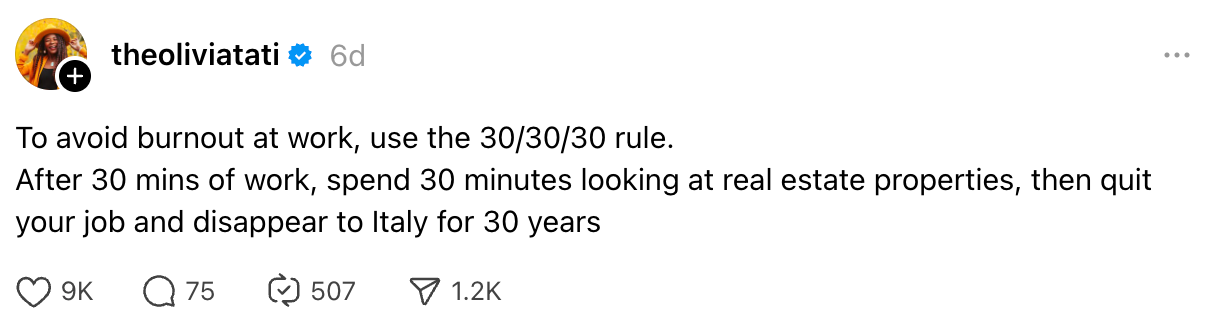
(Link)

(Link)
Talk to us
Send us tips, comments, questions, and AI web browser features: casey@platformer.news. Read our ethics policy here.
Related Knowledge Center: Artificial intelligence
On top of a failing business model, newsrooms must navigate the powerful — and not fully reliable — new capabilities of artificial intelligence and the deployment of large language models.
State of the business model | Copyright and intellectual property
Related Knowledge Center: State of the business model
The traditional journalism business model has long since collapsed, and news organizations have shrunk or disappeared entirely. While a number of promising experiments are under way, the public has not shown a willingness to buy what news organizations are selling.