
By adopting solar energy, Alvorada Palace has become a national symbol of energy efficiency. Renewable sources are expected to power the entire structure by the end of 2025
States
- Home
- / Solar energy
- / By adopting solar energy, Alvorada Palace has become a national symbol of energy efficiency. Renewable sources are expected to power the entire structure by the end of 2025.
By adopting solar energy, Alvorada Palace has become a national symbol of energy efficiency. Renewable sources are expected to power the entire structure by the end of 2025.
Published 28/10/2025 às 11:21
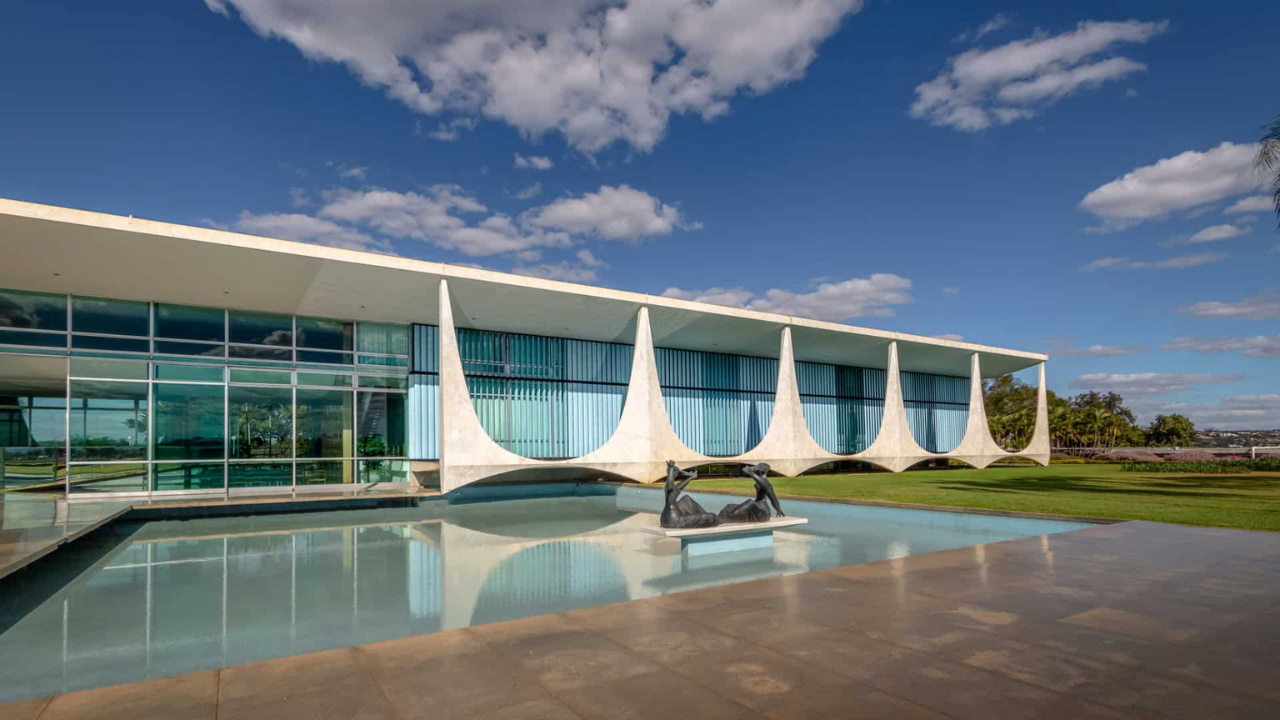
The Palácio da Alvorada, the official residence of the President of the Republic, has taken another step toward sustainability. The facility has begun receiving power from a solar power plant, the result of a project valued at R$3,5 million. The government’s goal is for all the energy used in the facility to come from renewable sources by the end of 2025. renewable sources.
The initiative was unanimously approved by the 32 councilors of the Federal District’s Territorial and Urban Planning Council (Conplan) and published in the Federal District’s Official Gazette (DODF). The project was analyzed in light of the Federal District’s Master Plan for Territorial Planning (PDOT), which requires prior approval for any intervention in protected areas.
Low-impact, high-symbolic-value solar structure
According to Aguinaldo Filho, of the Administration Secretariat of the Presidency of the Republic, the installation of solar panels will not alter the Palace’s architectural complex. “It’s a structure that will have minimal impact on the architectural complex, but it has a significant symbolic and economic impact,” he stated during the Council meeting.
The installed solar plant has a capacity of 1.095 kWp, which will guarantee an annual production of approximately 1.500 MWh, enough energy to supply the entire consumption of the Palácio da Alvorada.
The implementation of the photovoltaic system is the result of a partnership between the Civil House, the Ministry of Mines and Energy (MME) and the company Neoenergia Brasília, through the Energy Efficiency Program (PEE) of the National Electric Energy Agency (Aneel).
Over the past four years, Neoenergia has installed 17 photovoltaic plants and plans to implement four more by the end of 2025, expanding the country’s renewable generation capacity.
Public economy and environmental commitment
According to federal government data, the new solar plant at Palácio da Alvorada is expected to generate annual savings of over R$1 million for public coffers. In addition to reducing costs, the project contributes to the decarbonization of the electricity grid and is aligned with the UN Sustainable Development Goals (SDGs), particularly SDG 7 — Affordable and Clean Energy.
With the advancement of solar energy in one of Brazil’s most iconic buildings, the federal government is reinforcing its energy efficiency policy and consolidating the country as a leader in the transition to renewable sources.

He holds a degree in Advertising from UERN; a master’s degree in Social Communication from UFMG; and is pursuing a PhD in Language Studies at CEFET-MG. He has worked as a freelance writer since 2019, with texts published on websites such as Baixaki, MinhaSérie, and Letras.mus.br. Academically, his work has been published in books and presented at industry events. Among his research topics, he is particularly interested in the publishing market from a perspective that considers different social markers.

We would love your opinion on this subject, comment!
x